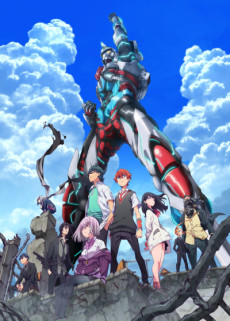
SSSS.GRIDMAN
Collaboration with Tsuburaya Productions.
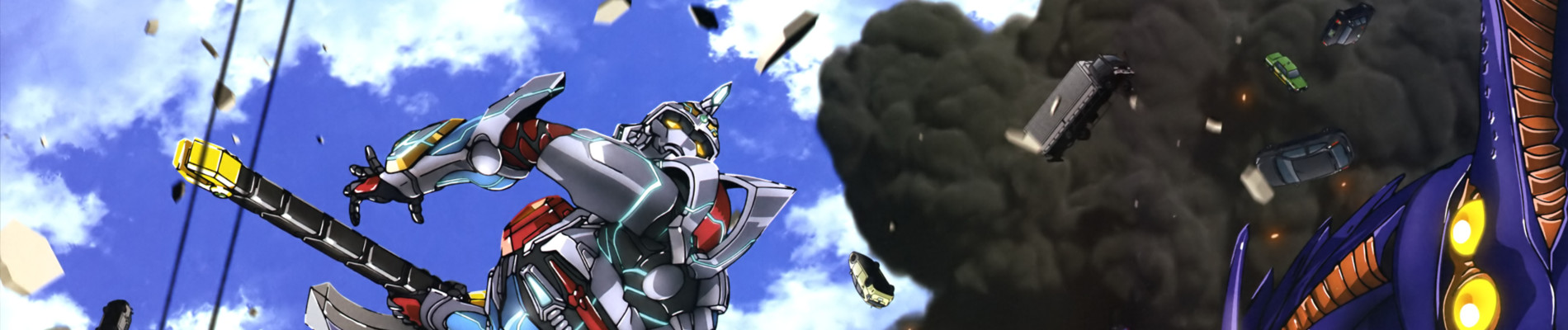
Yuta Hibiki awakens with amnesia and the ability see things that others cannot. He first encounters a Gridman in the reflection of his friend Rikka Takarada's computer and it tells him to "Remember his calling," but Yuta doesn't understand what this means. Later, in the distance, he sees an extremely large monster but it doesn't move. It's only when Yuta gets to school that the two sightings make sense: a monster attacks and the hero Yuta saw in the computer screen pulls him within the computer and transforms Yuta into a giant hero named Gridman.
(Source: Anime News Network)
📺Anime Details
📝Editorial Analysis
The flicker of Rikka Takarada’s laptop screen—cold blue light catching the edge of Yuta Hibiki’s confused, sleep-deprived face—as a voice cuts through static: “Remember your calling.” Not a command. Not a plea. A presence, half-remembered, half-dreamt, vibrating in the gap between reflection and reality. That moment isn’t exposition—it’s vertigo. You’re not watching a hero wake up. You’re inside the disorientation of a mind unspooling its own continuity, where the computer monitor isn’t a window into a game or a show—it’s a threshold, thin as glass, humming with something that shouldn’t be there.
What makes SSSS.GRIDMAN ache like this isn’t its kaiju battles or tokusatsu homage—it’s the weight of forgetting. Not amnesia as plot device, but as lived texture: the way Yuta stumbles through school hallways like he’s walking on film grain, how his friends’ laughter feels slightly out-of-phase, how even sunlight seems to carry a faint digital shimmer. It’s sci-fi steeped in adolescent exhaustion—the kind where your own memories feel like corrupted save files, and every “normal” interaction is a quiet act of translation. This isn’t nostalgia for childhood; it’s the dread of realizing you’ve been living inside someone else’s simulation—and worse, that you liked the version of yourself they built. The emotional DNA isn’t heroism. It’s recognition: slow, painful, necessary.
That same resonance pulses in Prince of Persia: Warrior Within, where Dahaka doesn’t just chase the Prince—he unmakes time itself, turning memory into a physical terrain you must outrun. The player review calls the Dahaka chase “still as goated as it was before”—and that’s the key: it’s not about difficulty, but inescapability. Like Yuta seeing the frozen kaiju from afar, the Prince feels the past breathing down his neck—not as regret, but as architecture. Both stories treat time not as a line, but as a glitching interface: one where stepping wrong rewrites your identity, the other where blinking might delete your last five minutes of coherence. And Prince of Persia: The Sands of Time, with its dagger rewinding seconds mid-fall, mirrors Gridman’s core tension—every action risks erasure, every recovery feels like reassembly. The review praises “tactical platforming… satisfying due to the locked directions”—that rigidity echoes SSSS.GRIDMAN’s own rules: Yuta doesn’t choose his role; he fits into it, like a gear clicking into place he didn’t know was missing.
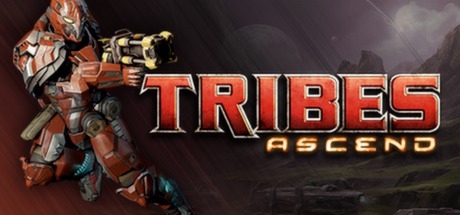
Then there’s Tribes: Ascend, buried under DLC packaging and “mindless fun” praise—but look closer. Its score hinges on Action Spectacle, same as the anime’s mecha clashes, and its player admits: “it had so much potential that…” That trailing ellipsis? That’s the emotional frequency. Not disappointment—but latent intensity, the sense of a world built for scale and velocity that hums just beneath the surface, waiting for someone to remember how to activate it. Like Gridman’s armor forming only when Yuta stops resisting the call, Tribes’ joy lives in the split-second physics of skiing across snowfields at impossible speeds—not because it’s flashy, but because it feels true, like muscle memory returning after years of silence.
And yes—Space Quest™ Collection, with its “you could pretty much do anything you, weather or not there were consequences…” That typo-ridden, breathless review nails it: the freedom isn’t chaos. It’s agency without scaffolding. Just like Yuta’s early scenes—where he wanders empty lots, adjusts his glasses, stares at vending machines—Space Quest trusts you to misinterpret, to break, to wander off-script, because meaning isn’t handed down. It’s recovered, piece by absurd piece.
This pairing isn’t for fans of “mecha” or “time travel” as tropes. It’s for the person who replays Warrior Within after ten years not for the swordplay, but because the weight of that chase still fits their shoulders. For the one who pauses SSSS.GRIDMAN not at the climax, but at the quiet shot of Yuta’s hand hovering over Rikka’s keyboard—not typing, just remembering the shape of the keys. For the player who locks The Two Thrones at 60fps not for smoothness, but because only at that cadence does the Prince’s fractured self finally sync. These are stories for people who feel memory like gravity—pulling, distorting, necessary—and who recognize the rare, electric relief of a world snapping back into focus, not because it’s fixed, but because you finally remember how to hold it.
🎮33 Games That Match the Vibe
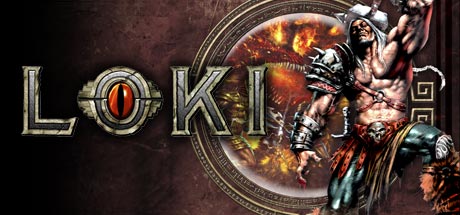
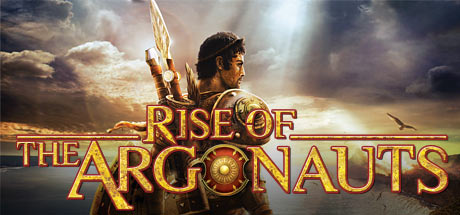
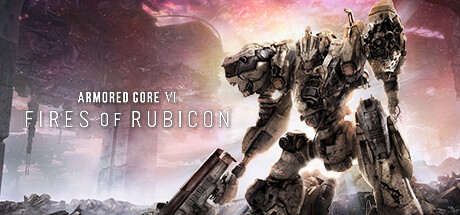
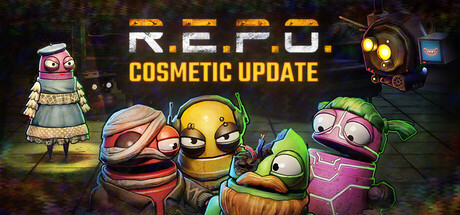


Match Dimensions Explained
❓Frequently Asked Questions
Why does Tribes: Ascend feel like GRIDMAN’s action spectacle but with mecha instead of kaiju?
Because both lean hard into kinetic, high-speed combat where movement *is* strategy—Tribes’ jetpacks and skiing mimic GRIDMAN’s aerial acrobatics and rapid repositioning during monster fights. The mecha-sci-fi dimension (shared with GRIDMAN’s aesthetic) shows up in its armored loadouts, orbital strikes, and that same ‘over-the-top military spectacle’ vibe—like when you’re dodging plasma fire mid-air while calling in a tank drop, just like GRIDMAN weaving through city-scale beam attacks.
Is there an anime or live-action adaptation of Prince of Persia that captures GRIDMAN’s blend of time-bending drama and heroic transformation?
No official anime or live-action PoP adaptation nails that exact GRIDMAN energy—but *Warrior Within* comes closest: its Dahaka chase sequences (those relentless, time-looping corridor pursuits) mirror GRIDMAN’s tense, reality-warping battles against glitchy, ever-adapting foes. And the Prince’s dual-wielding, sand-fueled transformations? That’s pure ‘analog warrior stepping into digital power’ energy—just swap the dagger for a grid-based interface and you’re in the same emotional ballpark.
How is Prince of Persia: The Two Thrones different from GRIDMAN in terms of tone and transformation mechanics?
GRIDMAN thrives on collaborative, almost theatrical heroism—think Akane’s support calls and Yuta’s synced transformations—while *Two Thrones* goes full psychological duality: the Dark Prince isn’t a partner, he’s a parasitic alter-ego who hijacks your controls mid-combo (like that infamous ‘rage mode’ interrupting platforming). Visually, GRIDMAN’s clean neon grids contrast *Two Thrones*’ grimy, sand-choked Babylon—but both use transformation as narrative punctuation: one for unity, the other for internal fracture.
What’s the best game like SSSS.GRIDMAN if I want that mix of nostalgic analog charm, absurd humor, and detective-style puzzle solving?
Go straight to *Space Quest™ Collection*—it’s got the same love of retro tech gags (think floppy disks, CRT glitches, and punny UI menus) and fourth-wall-breaking wit as GRIDMAN’s meta-commentary on tokusatsu tropes. Its mystery-driven structure—where you piece together clues by poking at absurd sci-fi objects (like a sentient trash compactor or a sarcastic robot bartender)—mirrors how GRIDMAN treats its own world like a self-aware, slightly broken simulation waiting to be debugged.