
Tiger & Bunny
Sternbild City is home to people called "Next," who use their special abilities to protect the people as superheroes. These heroes solve cases and save lives so they can wear sponsor logos or acquire "hero points." Their activities are documented on the popular program "Hero TV," which picks the "King of Heroes" in a yearly ranking. The veteran hero Wild Tiger has always preferred to work alone, but now he's been assigned the rookie Barnaby Brooks Jr., who has a different perspective on being a superhero.
(Source: Anime News Network)
📺Anime Details
📝Editorial Analysis
The fluorescent glare of Sternbild City’s skyline at dusk—neon sponsor logos bleeding across skyscrapers, a helicopter’s spotlight slicing through smog, Wild Tiger’s knuckles splitting open mid-punch as he lands a haymaker on a rogue Next while Barnaby’s voice crackles over comms: “Your form is inefficient and unprofitable.” That split second—sweat, static, corporate jingle fading beneath sirens—is Tiger & Bunny’s heartbeat. Not the flash of henshin, not the mecha roar, but the grind: heroes breathing hard in ill-fitting suits, checking hero points mid-chase, adjusting headset mics before delivering a line for Hero TV’s cameras.
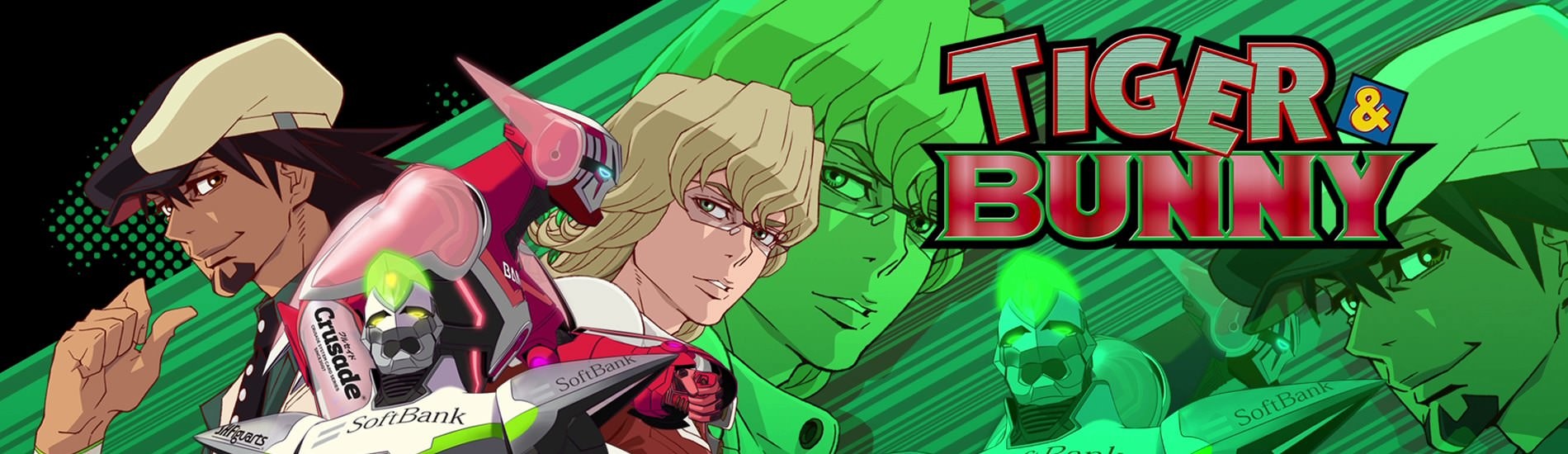
What makes it ache isn’t spectacle—it’s weight. The show doesn’t romanticize power; it treats superhuman ability like shift work. You feel the exhaustion in Tiger’s slumped shoulders after a rescue gone sideways, the quiet sting when Barnaby’s memory manipulation backstory surfaces—not as trauma porn, but as bureaucratic file dusted off during HR review. It’s loneliness, yes—but also dignity, even when wearing a cereal mascot’s logo on your chest. This isn’t about saving the world. It’s about showing up, day after day, trying to mean something in a system that measures worth in ad impressions and leaderboard rankings. You think about labor. About performance as identity. About how easily idealism gets edited out of the broadcast cut.
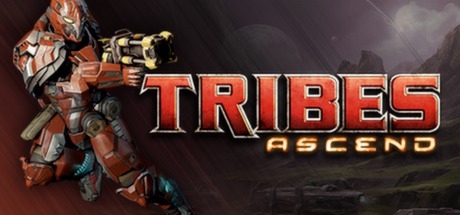
Tribes: Ascend hits that same frequency—not with story, but with motion. Its description cites “Action Spectacle” and “Mecha & Military Sci-Fi,” but what echoes Tiger & Bunny is the physical rhythm of effort: skis carving across ice, jetpacks sputtering mid-air, teammates calling out positions like co-workers coordinating a live broadcast. A player writes, “Man, I used to love this game. Just mindless fun. All be it, it could have been expanded or had much added to it, sadly it had so much potential that…” That wistfulness—the sense of something functional, joyful, yet structurally thin, abandoned mid-evolution—mirrors Sternbild City’s own half-built utopia. Both are arenas where skill matters, but context frays at the edges. You chase flags like hero points, glide past billboards like sponsor banners, and feel the same fleeting high of perfect execution—then land, breathless, staring at a scoreboard that feels less like honor and more like payroll.
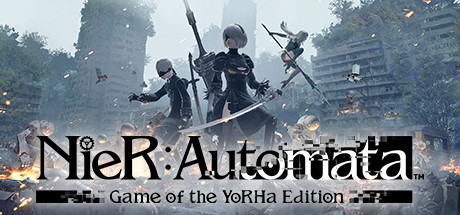
NieR:Automata™, meanwhile, shares Tiger & Bunny’s quiet devastation beneath chrome. Its description names “JRPG Narrative” and “Mecha & Military Sci-Fi,” but the real bridge is emotional architecture: androids 2B, 9S, and A2 fighting not for glory, but for recognition—not from gods or kings, but from each other, from history, from systems that erase them as easily as Hero TV edits out a hero’s stumble. The player review quotes: “We’re trapped in a never-ending spiral of life and death” — and that’s Barnaby’s childhood, Tiger’s fading powers, the entire Next generation cycling through contracts, sponsorships, and obsolescence. Both works ask: What does it mean to act with integrity when your body, memory, and purpose are all leased, rewritten, or repurposed? Neither offers catharsis—just moments of stubborn, human connection flickering in mechanized systems.
Who loves this pairing? The viewer who rewatches episode 13 not for the fight scene, but for the five seconds Tiger sits silently beside Barnaby on a park bench—no sponsors visible, no cameras rolling—just two men watching pigeons, breathing out steam in the cold. The player who boots up Tribes: Ascend not for rank, but to feel wind resistance again, to trust muscle memory over menus. The one who pauses NieR:Automata™ not at boss fights, but when 9S stares at a broken terminal, fingers hovering over keys, knowing every line of code he writes will be overwritten tomorrow. They’re people who find poetry in maintenance, beauty in repetition, and radical tenderness in the act of showing up—even when the system forgets your name, edits your memory, or replaces your suit with a limited-time cosmetic bundle. They don’t want saving. They want witnessing. And both Tiger & Bunny and these games, in their different tongues, offer exactly that: a shared, unblinking gaze—tired, true, and fiercely, quietly present.
🎮16 Games That Match the Vibe
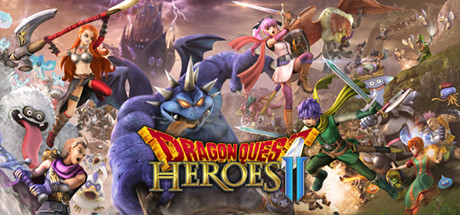
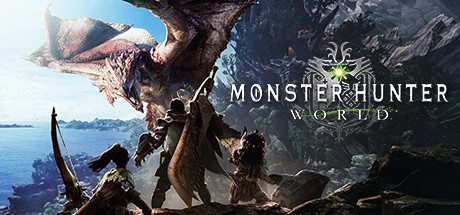
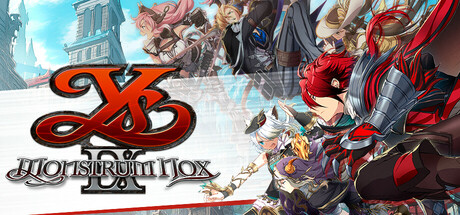
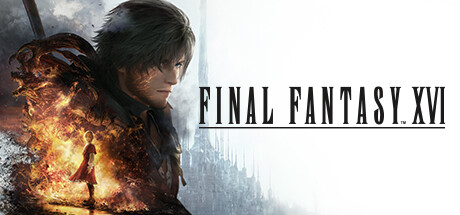


Match Dimensions Explained
❓Frequently Asked Questions
Why does NieR:Automata feel so much like Tiger & Bunny’s emotional whiplash?
Because both hit that rare sweet spot of high-octane mecha action *and* gut-punch humanity—like when 2B silently wipes her tears mid-combat after learning the truth about YoRHa, mirroring Kotetsu’s quiet breakdowns after saving civilians while his powers fade. The way NieR:Automata weaves philosophical dread into its bullet-hell spectacle (think the ruined Tokyo highway fight with A2) mirrors Tiger & Bunny’s balance of flashy heroics and grounded personal stakes.
Is there a Tiger & Bunny video game adaptation?
Nope—surprisingly, there’s never been an official Tiger & Bunny game, despite the anime’s popularity. Fans have turned to spiritual stand-ins like NieR:Automata (for its android heroes, moral ambiguity, and explosive city-battle setpieces) and Tribes: Ascend (for its fast-paced, team-based hero combat and over-the-top action spectacle).
Tribes: Ascend vs. NieR:Automata—which one captures Tiger & Bunny’s ‘hero teamwork + personal drama’ vibe better?
NieR:Automata wins on character depth and emotional pacing—2B and 9S bickering then sacrificing everything for each other feels straight out of Kotetsu and Barnaby’s arc. Tribes: Ascend nails the *spectacle* side: think jetpack-enabled team pushes across massive maps like the ‘Breach’ map, where coordinated flag captures mirror the synchronized hero combos in Tiger & Bunny’s climactic stadium battle—but it skips the drama entirely.
What’s the best game like Tiger & Bunny if I want that uplifting, hopeful-but-gritty superhero energy?
Go with NieR:Automata—it’s got the same blend of soaring optimism and quiet melancholy: the rooftop scenes between 2B and 9S sharing coffee while overlooking ruined skyscrapers hit *exactly* like Kotetsu and Barnaby’s late-night talks on the balcony. Its 82 Metacritic score reflects how well it balances that warm, human core against dazzling mecha action—no hollow power fantasy, just heart-first heroism.