
Attack on Titan Final Season
It’s been four years since the Scout Regiment reached the shoreline, and the world looks different now. Things are heating up as the fate of the Scout Regiment—and the people of Paradis—are determined at last. However, Eren is missing. Will he reappear before age-old tensions between Marleyans and Eldians result in the war of all wars?
(Source: Crunchyroll)
📺Anime Details
📝Editorial Analysis
The salt-sting of seawater on cracked lips. The hollow thud of a boot stepping onto foreign soil—not as liberators, but as targets. Four years gone, and the Scout Regiment stands on that shoreline not with banners raised, but with rifles slung low, eyes scanning horizons that no longer hold mystery—only certainty: war is coming, and it will not ask permission.

That silence before the first scream—that’s the atmosphere. Not dread, exactly, but the weight of irreversible choice settling like ash over every breath. Attack on Titan Final Season doesn’t trade in hope as fuel; it trades in consequence as gravity. You feel the exhaustion in Armin’s voice when he speaks strategy—not because he lacks conviction, but because every plan now carries the echo of Eren’s absence, the memory of past massacres, the knowledge that “victory” might mean becoming the very monster they swore to kill. It’s dystopian not because of ruined cities, but because ideology has calcified into architecture—walls built not of stone, but of inherited trauma, state-sanctioned grief, and the slow, suffocating logic of revenge dressed as justice. Time skips don’t offer relief—they deepen the ache, showing how survival warps people: Mikasa’s quiet fury, Levi’s hollowed-out discipline, Hange’s desperate, brilliant sorrow. This isn’t fantasy with escapism—it’s fantasy as autopsy.
Assassin's Creed™: Director's Cut Edition resonates in its bones. Its description calls it a Political Thriller, Tactical Warfare, Dark Fantasy—and yes, the textures may be dated, as one player notes, but what lingers is the tactical weight of every blade-draw, every rooftop pause before descent. Like Paradis’ soldiers weighing whether to fire on Marleyan civilians, Altaïr must navigate factions where morality blurs at the edges of doctrine. The player review admits flaws—but also implies something deeper: endurance matters more than polish. You stay not for spectacle, but for the slow burn of ideological erosion, watching creed harden into dogma, just as the Survey Corps’ oath curdles into something colder, sharper, necessary.
BioShock™, too, shares that DNA—not in its underwater art deco, but in its Political Thriller, Cyberpunk & Dystopia spine. Its description touts “weapons and tactics never seen,” but the real innovation was psychological architecture: Rapture wasn’t destroyed by plasmids—it was undone by the logical endpoint of unchecked ideology. That’s Paradis in microcosm. When players call it “revolutionary,” they’re naming the same shock the anime delivers: the horror of realizing your enemy’s justification is structurally identical to your own. No monsters with horns—just men quoting scripture, citing history, believing utterly in their right to erase another people. The tragedy isn’t that they’re wrong. It’s that they’re right enough to make you hesitate.
Even Loki, flawed as it is—“filled with annoying glitches,” per its reviewer—carries a flicker of this resonance. Its description frames it as a “fantasy voyage through the great mythologies,” and that’s key: Attack on Titan Final Season treats Eldian history not as lore, but as living mythology—a self-fulfilling prophecy weaponized by kings and generals alike. Loki’s Norse fighter doesn’t wield myth as decoration; he wields it as lineage, as burden, as destiny. So does Eren—even in his absence, his name is invoked like a curse or covenant. The game’s anticlimactic ending? It mirrors the anime’s refusal of catharsis: no grand revelation redeems the slaughter. Just silence. Just consequence. Just the hollow ring of a prophecy fulfilled—and found wanting.
This pairing isn’t for fans of “epic battles” or “cool powers.” It’s for the ones who replay the scene where Armin watches the airship rise over Liberio—not for the scale, but for the way his pupils shrink, not from fear, but from recognition: he sees the math of annihilation, and he nods. It’s for players who linger in BioShock’s silent halls after the final boss, listening to the distant drip of leaking pipes—not waiting for music, but sitting with the silence after ideology collapses. It’s for those who finish Assassin's Creed’s last memory not with triumph, but with the sour taste of knowing the Creed’s truth is less a code and more a confession. These are stories for people who understand that the most devastating wars aren’t fought with titans or plasmids—but with grammar: the careful, brutal syntax of “we must,” “they deserve,” “there is no other way.” And when the credits roll—or the mission fails—you don’t close the screen. You sit. You breathe. You feel the weight.
🎮24 Games That Match the Vibe

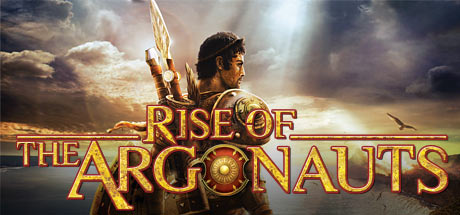


Match Dimensions Explained
❓Frequently Asked Questions
Why is Assassin's Creed listed as similar to Attack on Titan Final Season?
Because both lean hard into political thriller tension and tactical warfare—think Erwin’s brutal, calculus-driven charges or the Survey Corps’ high-stakes infiltration missions. Assassin's Creed mirrors that with its stealth-based assassinations, factional intrigue in Jerusalem and Damascus, and morally gray decisions that echo the Final Season’s weighty betrayals and chain-of-command dilemmas.
Is there a game adaptation of Attack on Titan Final Season?
No official game adaptation exists for the Final Season—only older titles like Attack on Titan (2016) and Attack on Titan 2 (2018), which cover up to Season 3. The games on this list are *spiritual* matches, not adaptations: BioShock shares that oppressive dystopian dread and ideological collapse, while Loki and Rise of the Argonauts channel the mythic scale and tragic heroism of characters like Eren and Zeke.
How does BioShock compare to Rise of the Argonauts for Attack on Titan fans?
BioShock nails the Final Season’s bleak political thriller vibe—its Rapture is basically Marley’s propaganda-fueled, crumbling empire, and Andrew Ryan’s speeches hit like Rod Reiss’s monologues. Rise of the Argonauts, meanwhile, leans into mythic action spectacle like the Rumbling’s apocalyptic grandeur, but it’s more heroic fantasy than grim moral decay—so if you want philosophical dread, go BioShock; if you want god-tier melee combat and tragic quests, try Rise.
What’s the best game like Attack on Titan Final Season for someone who loves intense, morally gray tactical fights?
Assassin's Creed™: Director's Cut Edition—it’s the closest match for that tense, calculated warfare feel. You’ll plan rooftop takedowns like Squad 4’s ambushes, navigate layered faction politics like the Military Police vs. Garrison power struggles, and face consequences for every blade drawn—just like Erwin’s final gambit. Its 80-score and 'Political Thriller + Tactical Warfare' dimensions aren’t fluff—they’re spot-on for Final Season energy.