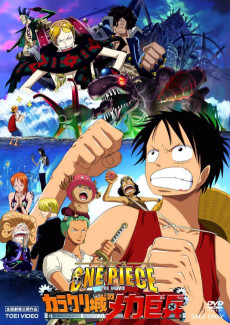
One Piece: Mega Mecha Soldier of Karakuri Castle
📺Anime Details
📝Editorial Analysis
The castle’s gears grind—not with menace, but delight. A colossal mecha stomps across the drawbridge, its chest plate flipping open like a lunchbox to reveal not weapons, but a wad of chewed-up seaweed snacks. Luffy’s grin is wider than the robot’s shoulder cannon, his straw hat tilted just so as he swings from its antenna like it’s a jungle vine. No one pauses to ask how a pirate crew just commandeered a sentient fortress-robot built by a chuunibyou inventor who speaks in dramatic third-person and insists his “dark lord” title is legally binding. They’re already mid-laugh, mid-leap, mid-yes—and the air smells like salt, burnt rice balls, and something faintly metallic, like old clockwork dipped in ocean spray.
That’s the feeling: unburdened awe. Not wonder at cosmic scale or tragic beauty—but the giddy, slightly absurd thrill of seeing the impossible treated as commonplace, even cozy. It’s not about mecha as war machines or symbols of control; here, they’re extensions of personality—clumsy, expressive, deeply human in their quirks. The fantasy isn’t in the shapeshifting or superpowers alone—it’s in how effortlessly the world bends around joy, how every gear turn serves laughter, every explosion clears space for a group hug, every anthropomorphic castle guard winks before tripping over its own hydraulic leg. You don’t watch One Piece: Mega Mecha Soldier of Karakuri Castle to decode lore or brace for trauma—you watch to feel your shoulders drop, your breath catch in a laugh, your heart swell with the sheer warmth of collective, unselfconscious aliveness.
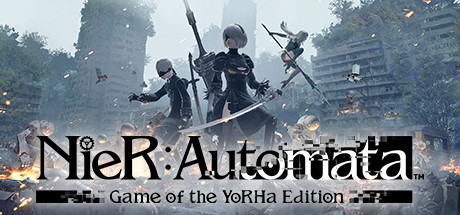
That warmth echoes in NieR:Automata™, where androids 2B, 9S, and A2 fight in a machine-driven dystopia—but the player review nails it: “We’re trapped in a never-ending spiral of life and death… If a being can feel pain, fear, or loneliness, does it matter if it’s artificial?” That question pulses beneath Mega Mecha Soldier’s surface too—not through tragedy, but through insistence. The robots here aren’t tools or threats; they’re friends who blush when complimented, panic when their oil leaks, and argue over whose turn it is to polish the main cannon. Like NieR’s androids, they’re coded with vulnerability, dignity, and quiet longing—even while launching confetti-filled missile barrages. Both works treat mechanical life not as cold logic, but as another vessel for tenderness, another way to ask: what makes something worthy of care?
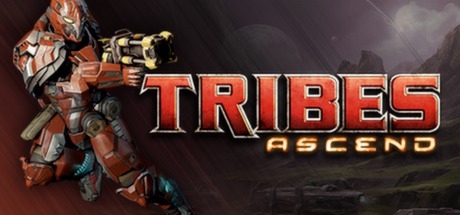
Then there’s Tribes: Ascend, praised by players for its “mindless fun”—a phrase that sounds dismissive until you remember how rare it is to find action that’s purely exhilarating, not punishing or grim. Its description mentions weapon DLC and expansions, but the review’s real heartbeat is nostalgia for unselfconscious play: “Just mindless fun.” That’s the exact frequency Mega Mecha Soldier hums at. No stamina bars, no permadeath, no resource anxiety—just Luffy punching a robot dragon so hard its tail spins like a top, sending everyone tumbling into a pile of giggling, tangled limbs. Same with ARMORED CORE™ VI FIRES OF RUBICON™: mecha as spectacle, yes—but also as expression. Its dim of “Action Spectacle” isn’t just flash; it’s the visceral thrill of piloting something alive, something that responds to your rhythm, your audacity. In Karakuri Castle, the mecha doesn’t obey physics—it obeys mood. When Usopp’s nervous energy makes his mech stutter-step, when Nami’s glare makes its lasers shimmer with indignant pink light—that’s ARMORED CORE’s soul translated into cartoon sweat and sparkles.
You’d love this pairing if you’ve ever cried laughing while watching a robot try—and fail—to bake a cake, then immediately pivot to saving the world with a toaster-based EMP. If your idea of catharsis isn’t silence after devastation, but the shared, breathless “HAH?!” when a ship transforms into a giant crab mid-battle. If you crave worlds where power isn’t hoarded or feared, but shared, tinkered with, danced on, where every gear, every circuit, every shapeshifted limb sings the same stubborn, joyful truth: aliveness is contagious, and it doesn’t need permission to be loud, messy, or ridiculous.
🎮6 Games That Match the Vibe

Match Dimensions Explained
❓Frequently Asked Questions
Why does One Piece: Mega Mecha Soldier of Karakuri Castle feel so similar to ARMORED CORE™ VI FIRES OF RUBICON™?
Because both lean hard into customizable mecha combat with weighty, tactical movement—ARMORED CORE VI’s Rubicon missions echo Karakuri Castle’s castle siege sequences where you swap leg units mid-fight to climb walls or boost-dash through enemy lines. Players love how both games reward precise timing over spammy combos, especially when dodging boss attacks like Karakuri’s giant clockwork Shogun or ACVI’s Goliath-class enemies.
Is there a Cyberpunk SFX anime adaptation?
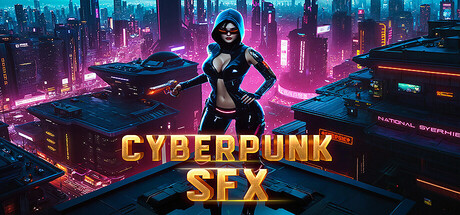
Nope—Cyberpunk SFX is purely a gameplay-driven mecha action title (83 score), not an anime tie-in. Unlike One Piece: Mega Mecha Soldier, which pulls directly from the Karakuri Castle arc with Franky’s giant robot and Brook’s skeleton-melee gags, Cyberpunk SFX builds its own gritty military sci-fi world with original pilots and rogue AI factions—no voice cast or anime cutscenes involved.
How does NieR:Automata compare to One Piece: Mega Mecha Soldier in terms of story and mecha action?
NieR:Automata trades One Piece’s goofy pirate-meets-gearpunk energy for melancholic, philosophical mecha storytelling—think 2B slicing through machine lifeforms in ruined Tokyo while questioning her own sentience, versus Luffy punching a steam-powered samurai mech in the face. Both nail ‘Action Spectacle’ and ‘Mecha & Military Sci-Fi’, but NieR leans into JRPG narrative depth (82 score), while Karakuri Castle keeps it light, fast, and canon-adjacent.
What’s the best game like One Piece: Mega Mecha Soldier if I want pure, chaotic fun without heavy story?
Tribes: Ascend is your go-to—it’s all about high-speed, team-based mecha mayhem with jetpacks, ski-sliding, and explosive flag captures (85 score). No lore dumps or cutscenes; just jumping off cliffs in a hulking armor suit, rocket-jumping over teammates, and blasting opponents like you’re reenacting the Punk Hazard mecha chase—but with zero dialogue and maximum ‘mindless fun’, just like that player review says.