
The Detective Is Already Dead
📺Anime Details
📝Editorial Analysis
The rain slicks the pavement like oil under sodium-vapor light, and Kimihiko’s hand hovers over the revolver—not to fire, but to remember the weight of it in another’s palm. He blinks, and for half a second, he’s not him—he’s her: the sharp intake of breath before a fall, the cold certainty of a choice already made, the quiet hum of a mind splitting itself apart just to survive. That fracture—between memory and present, between self and borrowed identity—is where The Detective Is Already Dead lives. Not in answers, but in the ache of holding two truths at once.
What makes this anime vibrate with such uneasy intimacy isn’t its detective scaffolding or its supernatural mechanics—it’s the dreadful tenderness of watching someone reconstruct themselves from shards of someone else’s tragedy. The achronological order isn’t a gimmick; it’s how trauma folds time, how grief loops back to whisper warnings you can’t yet hear. Every body swap feels less like fantasy and more like psychological archaeology—digging through layers of dissociation until you hit bedrock: love, loss, and the terrifying responsibility of inheriting someone’s unfinished life. It makes you feel unmoored, yes—but also seen, as if your own fragmented memories might hold clues you’ve been too afraid to assemble.
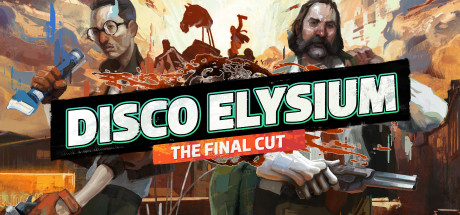
That emotional architecture echoes fiercely in Disco Elysium - The Final Cut, where every skill check is a negotiation with your own splintered psyche. The description calls it “a groundbreaking role playing game” with “a unique skill system”—but what it really offers is the same vertigo Kimihiko feels when his thoughts aren’t fully his: voices arguing in his skull, ideologies clashing like rival ghosts, romance blooming not despite the chaos but through it. A player review nails it: “Capital has the ability to subsume all critiques into itself…”—that’s the show’s core tension too. The world insists on tidy narratives (hero, victim, culprit), while the characters bleed across those lines, refusing resolution. Both demand you sit with contradiction until it stops feeling like noise and starts sounding like truth.
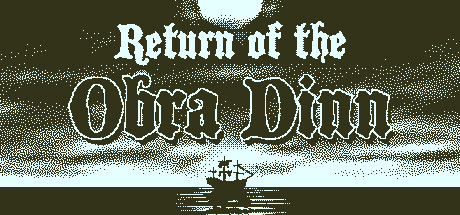
Then there’s Return of the Obra Dinn, where deduction isn’t about logic puzzles—it’s about bearing witness. The description highlights its “Emotional Narrative,” and that’s the key: you don’t solve the ship’s mystery by assembling facts alone. You piece together final moments—screams cut short, hands reaching, silence where breath should be—and each revelation lands like a bruise. Like The Detective Is Already Dead, it treats memory as unstable, subjective, haunted. There’s no omniscient narrator, no safe distance—just you, staring at frozen instants, trying to reconcile what was with what feels true now. The tragedy isn’t just in the deaths; it’s in how easily meaning slips away unless someone chooses to hold it.
Even Batman: Arkham Asylum Game of the Year Edition resonates—not because of capes or gadgets, but because of its suffocating weight. The description tags it “Neon Noir,” but what lingers is the asylum’s oppressive air: corridors that breathe back at you, villains who mirror your fractures, a past that won’t stay buried. Kimihiko’s dissociative identities and Batman’s fractured psyche both live inside architectures designed to contain madness—only to find the containment is the illusion. One doesn’t need to swing from gargoyles to recognize that kind of claustrophobic reckoning.
This pairing isn’t for fans of tidy resolutions or effortless heroes. It’s for the person who rewatches scenes not to catch plot holes, but to trace how a character’s voice cracks just there, right before they lie to themselves. For the player who saves before every dialogue branch—not to optimize, but to honor how fragile a single choice can feel when your sense of self is still under construction. For anyone who’s ever held a photograph of someone they loved and wondered: Which version of me remembers them most truly? That question—raw, unanswerable, necessary—is the pulse beneath all of it.
🎮100 Games That Match the Vibe





















































Match Dimensions Explained
❓Frequently Asked Questions
Why does Disco Elysium keep showing up in 'Games Like The Detective Is Already Dead' lists?
Because both lean hard into noir-tinged detective work where your brain—not brute force—is the main tool. In Disco Elysium, you literally argue with your own skill checks (like 'Logic' or 'Empathy') while piecing together a murder in Revachol’s rain-slicked alleys—just like Kimihiko’s layered deductions and character-driven reveals in Detective Is Already Dead. And yes, that surreal, emotionally charged romance subplot with characters like Joyce or Sylvia? It’s got the same shoujo-adjacent emotional weight fans love.
Is there an anime or visual novel adaptation of Return of the Obra Dinn?
Nope—Return of the Obra Dinn is purely a standalone game, no anime, manga, or VN spin-offs exist. It’s intentionally minimalist: no voice acting, no cutscenes, just you, a logbook, and frozen moments aboard that ghost ship. Fans of The Detective Is Already Dead’s tight mystery pacing often love how Obra Dinn forces you to reconstruct timelines from still frames—like rewatching Kimihiko’s ‘flashback reconstructions’ but in stark monochrome.
How does The Wolf Among Us compare to Batman: Arkham Asylum for fans of The Detective Is Already Dead?
Wolf Among Us nails the serialized, morally grey storytelling and intimate character beats—Bigby’s interrogation of Snow White or the Crooked Man’s slow-burn menace feels like stepping into a grittier, fairy-tale version of Kimihiko’s cases. Arkham Asylum, meanwhile, leans into high-stakes action and environmental deduction (like scanning Joker’s cell for clues), but lacks the romantic tension and narrative intimacy that makes Detective Is Already Dead resonate. Both are neon-noir detective games—but Wolf Among Us shares more DNA with the emotional stakes and relationship-driven reveals.
What’s the best game like The Detective Is Already Dead if I want that ‘chill but clever’ vibe—no combat, just smart talking and quiet moments?
Return of the Obra Dinn is your perfect match: zero combat, zero dialogue trees, just pure observation and deduction as you step through frozen time aboard the Obra Dinn—flipping through your logbook like Kimihiko reviewing case notes. It’s meditative, deeply atmospheric, and rewards patience the same way Detective Is Already Dead rewards paying attention to small character glances or offhand lines. No rushing, no fail states—just you, the fog, and the truth slowly clicking into place.