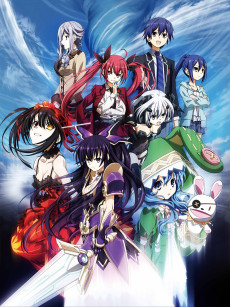
Date A Live
Thirty years before a strange phenomena called a "spacequake" devastated the center of Eurasia, claiming the lives of at least 150 million people. Since then, smaller spacequakes plague the world on an irregular basis. Shidou Itsuka, a seemingly ordinary high schooler comes across a mysterious girl at the ground zero of a spacequake and learns from his sister Kotori she is one of the "Spirits" who are the real cause of the spacequakes that occur when they manifest themselves in the world. He also learns that Kotori is the captain of the airship Ratatoskr and recruits him to make use of his mysterious ability to seal the Spirits' powers and stop them from being a threat to mankind. However, there is a catch: to seal a Spirit, he must make her fall in love with him.
(Source: Anime News Network)
📺Anime Details
📝Editorial Analysis
The air smells like ozone and burnt sugar. Shidou Itsuka stumbles backward on cracked asphalt, heart hammering—not from fear of the collapsing sky above, but from the girl floating inches off the ground, her hair unspooling like liquid starlight, eyes wide with terror she doesn’t yet understand. A spacequake shudders through the city block behind them, windows imploding in silent bursts—but all he hears is her breath catching, fragile and real, as time itself seems to thin around her. That’s the core: not spectacle, not harem logistics, not even the mecha or the ecchi gags—it’s the tremor between cosmic rupture and human tenderness, where saving the world means first learning how to hold someone’s hand without breaking it.

What makes Date A Live vibrate at this frequency isn’t its genre checklist—it’s how it treats scale as intimacy. Every Spirit arrives wreathed in apocalyptic physics—time distortion, spatial collapse, reality fraying at the edges—but their crises are never abstract. They’re about loneliness that warps causality, grief that folds seconds into recursive loops, love that literally rewrites local spacetime. The urban fantasy isn’t backdrop; it’s pressure-cooked emotion made visible. You don’t just watch a battle—you feel the weight of a girl whose very existence destabilizes physics because she’s been told she doesn’t belong anywhere. That duality—world-ending power paired with teenage vulnerability—creates a rare kind of yearning: soft, urgent, terrified, and hopeful, all at once.
That same emotional resonance hums in Prince of Persia: The Sands of Time, where the Prince rewinds time not for tactical advantage alone, but to undo a single misstep—to catch Kaileena’s hand before she falls, to unsay a cruel word, to reclaim a moment of connection before it curdles into tragedy. The player review calls it “tactical platforming… satisfying due to the locked directions”—but what makes it ache is how the rewind mechanic mirrors Shidou’s mission: every reset is an act of devotion, a refusal to let fragility become final. Likewise, Prince of Persia: Warrior Within’s Dahaka chase isn’t just a boss fight—it’s time as consequence, hunting you because you tried to change it. The reviewer says the chase is “still as goated as it was before”—and yes, it’s visceral, but its power lies in how it literalizes guilt, regret, and the exhausting weight of trying to outrun your own choices—exactly the tension Shidou lives inside every time a Spirit’s power surges from sorrow.
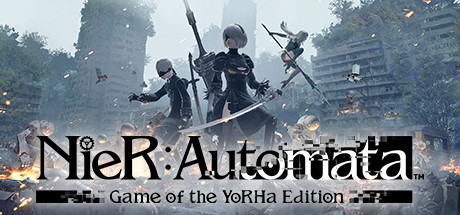
Then there’s NieR:Automata™, where androids 2B, 9S, and A2 fight in ruins of a dead Earth, their mecha combat razor-sharp and devastating—but the player review cuts deeper: “We’re trapped in a never-ending spiral of life and death”. That line isn’t about gameplay loops—it’s about identity, memory, and the quiet horror of realizing your purpose might be built on erased truths. Like the Spirits, these androids are weapons given consciousness, forced to question whether their pain is theirs, or just inherited code. Their battles aren’t just action spectacle—they’re elegies performed mid-air, echoing how Date A Live frames every Spirit’s henshin sequence not as transformation, but as unfolding: armor blooming like petals, wings unfurling like apologies, power flaring not from rage, but from the unbearable relief of being seen.
You’d love this pairing if you’ve ever paused a game mid-combo to stare at a character’s idle animation—just to watch them breathe. If you replay cutscenes not for lore, but to sit again in that one quiet second where two people almost touch. If your favorite anime moment isn’t the explosion, but the silence right after—when the dust settles, and someone whispers, “I’m scared… but I want to stay.” Not because it’s safe, but because staying is the bravest thing a person—or a Spirit, or an android, or a prince running from time itself—can do.
🎮18 Games That Match the Vibe






Match Dimensions Explained
❓Frequently Asked Questions
Why does Date A Live feel similar to NieR:Automata even though one’s anime dating sim and the other’s a mecha action RPG?
It’s all about that bittersweet, emotionally charged sci-fi atmosphere—both pivot on tragic androids or spirits (like 2B and Tohru) grappling with identity, sacrifice, and love amid apocalyptic stakes. NieR:Automata’s haunting themes of loneliness and fleeting connection (especially in the desert ruins or Pascal’s village) mirror Date A Live’s core tension between saving Spirits like Origami or Kotori *and* preserving their humanity—or what passes for it.
Is there a Date A Live anime adaptation of Prince of Persia: The Sands of Time?
Nope—no crossover or official anime adaptation exists. But fans often draw parallels because both lean hard into time-manipulation as emotional scaffolding: the Prince rewinds seconds to fix mistakes (like trying—and failing—to save Kaileena), while Date A Live’s Shido uses his power to ‘reset’ Spirit encounters mid-conflict, turning tense battles into tender, second-chance moments—same desperate hope, different dimensions.
How does Tribes: Ascend compare to Date A Live in terms of action pacing and spectacle?
Tribes: Ascend trades Date A Live’s romantic tension for pure kinetic mayhem—think jetpack-fueled dogfights across snowy canyons instead of rooftop confessions under cherry blossoms. But if you love Date A Live’s high-stakes Specter battles (like Kurumi’s time-skipping raids), Tribes delivers that same adrenaline rush via weapon DLC-driven chaos and team-based objective play—just swap Spirit powers for plasma rifles and gravity-defying strafing.
What’s the best game like Date A Live if I want that ‘melancholy yet hopeful’ vibe after a tough day?
Go straight to Prince of Persia: Warrior Within—the Dahaka chase sequences hit like a gut punch, but the Prince’s slow, hard-won growth (especially reconciling with Kaileena’s memory in the final act) nails that fragile, poetic hope Date A Live fans crave. It’s not about dating—it’s about carrying grief *and* tenderness at once, just like Shido holding Kurumi’s hand while her clock ticks down.