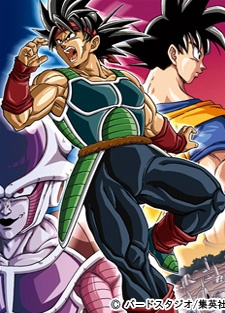
Dragon Ball: Episode of Bardock
Shown at Jump Festa 2012 hold in December, 2011.
Bardock, Goku's father who was suppose to die when Freeza's attack hit him along with the Planet Vegeta, he was sent way back in time, where the planet was inhabited by a strange creatures. There, after a while he met Freeza's ancestor, a space pirate named Chilled and fought him to protect the planet.
📺Anime Details
📝Editorial Analysis
The static crackle of a dying Saiyan’s ki flares—not as a roar, but as a choked breath—while Bardock floats in the silent, violet void above Planet Kanassa, his body torn open, his vision bleeding starlight and memory. He doesn’t scream. He blinks. And in that blink, time fractures: not with fanfare, not with prophecy—but with the quiet, gut-punch weight of a man realizing he’s been unmoored, not just from his world, but from his death.
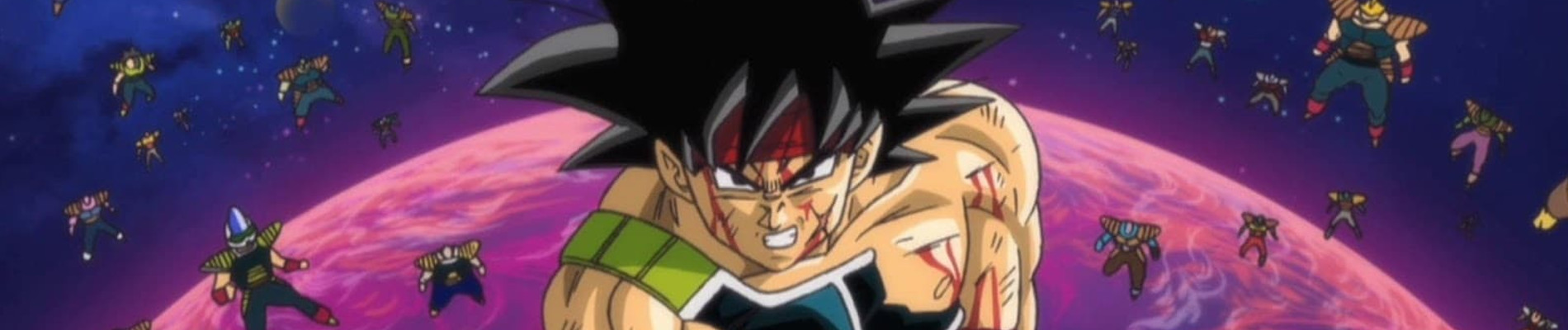
That’s the heart of Dragon Ball: Episode of Bardock: not spectacle for spectacle’s sake, but displacement made visceral. It’s the ache of being the last witness to your own extinction—and then waking up centuries too early, on a planet humming with alien life you can’t name, under skies that don’t know your name. The action isn’t about winning. It’s about bearing witness, then choosing—again and again—to stand, even when every law of physics, biology, and fate says you should already be ash. The comedy is dry, almost nervous; the baseball tag feels like a desperate, human anchor in a cosmos that’s all sharp angles and cold inheritance. You don’t feel powerful watching it—you feel fragile, and fiercely tender toward this warrior who remembers his son’s laugh but can’t hold him.
Which is why Quake III Arena resonates so deeply—not because of its arenas or rocket jumps, but because of its cosmic indifference. The description says it plainly: “The greatest warriors of all time and space have been summoned to battle for the amusement of an ancient alien race.” Bardock didn’t ask to be hurled backward through time. The fighters in Quake III didn’t ask to be plucked from their eras and thrown into bloodsport. Both exist inside a system that treats legacy, sacrifice, and identity as data points—and yet, they fight anyway. A player review calls it “exelent” and notes servers still run “as of typing this”—a quiet echo of Bardock’s persistence across decades of canon silence. That stubborn, unkillable presence, even in a universe designed to erase you? That’s the shared pulse.
Then there’s DOOM + DOOM II, where the player review recalls building a 486 computer with their dad in 1993—“WOO!”—to face hell itself. Not metaphorically. Literally. Like Bardock facing Chilled, the DOOM Marine doesn’t get exposition, doesn’t get mercy, doesn’t get time to grieve before the first demon lunges. Both are men dropped into hostile, incomprehensible spaces—planet-wide cataclysm for Bardock, interdimensional invasion for the Marine—and respond with raw, physical refusal. The description calls them “definitive, newly enhanced versions,” but what matters is how they feel: unvarnished, urgent, built on the conviction that motion is meaning. No cutscenes explain why you’re here. You just are, and you move forward—because stopping means dissolution.
And STAR WARS™ Jedi Knight - Jedi Academy™, where the review notes you “build out a Padawan—who is then thrust into a Galaxy-spanning adventure.” Bardock isn’t trained. He’s thrust. No temple, no master, no kyber crystal—just instinct, rage, and the slow, dawning horror of recognizing Freeza’s face in Chilled’s smirk. The game lets you forge your weapon; Bardock forges his purpose, mid-fall, mid-bleed, mid-time-warp. Both understand that legacy isn’t inherited—it’s reclaimed, often alone, often broken, always against the grain of what history expects.
This pairing isn’t for fans of power fantasies. It’s for the ones who pause at the end of Episode of Bardock, staring at the final shot of Goku’s tiny hand reaching for the sky—not as a promise of strength, but as a fragile, trembling continuity. It’s for players who boot up Unreal Tournament 3, wince at its messy visuals, but keep playing because something in its chaotic, unpolished arena still feels true—like Bardock’s ragged breath before he charges. It’s for anyone who’s ever stood in a room full of people and felt utterly, beautifully out of time—and chosen to raise their fist anyway. Not to win. But to say: I was here. I remembered. I fought.
🎮21 Games That Match the Vibe



Match Dimensions Explained
❓Frequently Asked Questions
Why does Episode of Bardock feel so different from other Dragon Ball games?
Because it’s a tight, cinematic action game focused on Bardock’s final stand—not a free-roaming fighter or RPG like Xenoverse or FighterZ. If you love that raw, desperate, one-man-against-the-universe intensity, Quake III Arena nails the same adrenaline rush: you’re dropped into arena battles with no story padding, just pure skill-based combat using power-ups and movement mechanics that demand precision—just like Bardock dodging Frieza’s Death Ball in real time.
Is there a game adaptation of Bardock’s story besides the anime special?
No official game adaptation exists—but Blade Kitten captures that exact vibe: Kit Ballard’s lone-wolf mech-hunting mission across Hollow Wish mirrors Bardock’s isolation and grit. Her fast-paced aerial combos, environmental traversal, and rogue-mech boss fights (like the Hollow Core sequence) echo Bardock’s solo defiance against overwhelming odds—right down to the sci-fi space setting and high-stakes personal stakes.
How does DOOM + DOOM II compare to Episode of Bardock in terms of pacing and tone?
Both are relentless, no-breather experiences—but where Bardock leans into tragic heroism and cosmic dread, DOOM + DOOM II delivers cathartic, demon-slaying fury with chunky feedback and heavy metal energy. You’ll feel the same visceral punch in both: Bardock’s ki blasts and DOOM’s shotgun blasts each land with weight, and both drop you straight into chaos without cutscene bloat—just pure, unrelenting action spectacle.
What’s the best game like Episode of Bardock if I want that ‘last stand in space’ mood?
Unreal Tournament 3—with its Titan Pack—is your best bet. The zero-gravity arenas, alien warships as backdrops, and high-speed jetpack combat (especially in Assault or Double Domination modes) recreate that ‘final battle among the stars’ tension. When you’re dodging plasma fire while launching off a derelict cruiser hull, it hits the same lonely, epic scale as Bardock facing Frieza’s fleet alone.