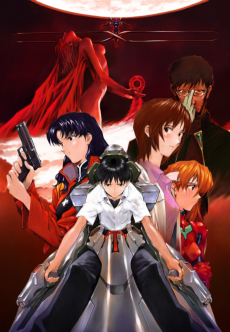
Neon Genesis Evangelion: Death & Rebirth
Compilation recap movie for the series Shin Seiki Evangelion. Due to the struggling production of the movie 'End of Evangelion' delaying the film a month before it was set to release, this film was announced to 'hold fans over'.
During the early 21st century a meteorite crashed into Antarctica. After scientists went to study the crash a gigantic explosion followed, classified as the 'Second Impact'. Shinji Ikari is a fourteen year-old boy who has come to Toyko3, a city that also serves as a fortress, to meet up with his father who left him many years ago. The city also happens to be under siege by monstrous creatures called 'Angels' at the time of his arrival. Somehow Shinji finds himself in Evangelion Unit 01, and manages to synchronize with the giant robot. Shinji is told to become its permanent pilot, and is thrown into combat as the city's last defense for fighting off the angels. However, as Shinji fights, he begins to realize the truth behind the Angels, the Second Impact, man's struggle against God and what he truly is afraid of.
(Source: Anime News Network)
Note: Exists in several versions: (with most appearing on the Japanese 2015 Blu-ray Boxset)
• Evangelion: DEATH & REBIRTH, released theatrically on March 15, 1997 - 2-part feature, the first 2/3rds titled 'Death' consisting of a recap of the TV series with new/re-drawn animation added in, and the later 1/3rd titled 'Rebirth' consisting of the first 28 minute rough cut of End of Evangelion.
• Death(True), aired on TV channel WOWOW on January 2, 1998 - re-edited version of 'Death' by director Masayuki, with most of the new animation cut (as it was moved to the "Directors Cut" of Episodes 21-24), but with some new shots added. Later released on the 'ARCHIVES OF EVANGELION' DVD Boxset.
• Death(True)², released on March 7, 1998 - a further edited down version of Death(True), but with some new animation added. Regarded as this film's 'definitive' release, this is the version opted to be licensed by Netflix.
• Revival of Evangelion, released theatrically on March 8, 1998 - Theatrical double feature consisting of Death(True)² + 4 minute intermission + End of Evangelion.
For simplicity's sake, we are only counting the first theatrical release in this entry.
📺Anime Details
📝Editorial Analysis
The flicker of a single fluorescent light in a sterile, empty hallway—Shinji’s footsteps echoing too loud, too slow, as he walks past rows of identical doors that don’t open. No music. No voiceover. Just the hum of distant ventilation and the faint, metallic scent of ozone clinging to the air like regret. That’s Neon Genesis Evangelion: Death & Rebirth: not a climax, but a pause—a breath held too long in a collapsing lung.

What makes it ache isn’t the mecha battles or the apocalyptic lore—it’s the weight of waiting. This isn’t just a recap film; it’s a deliberate act of suspension. Released because End of Evangelion couldn’t be finished in time, Death & Rebirth forces you into Shinji’s reality: plans derailed, meaning deferred, agency stripped—not by villains, but by bureaucracy, exhaustion, and the sheer inertia of trauma. You don’t watch it to advance the plot. You sit with it—to feel the dread of unfinished business, the quiet horror of being held, emotionally and narratively, mid-fall. It’s dystopian not because of ruined cities, but because time itself feels militarized: scheduled, rationed, weaponized against feeling. The achronological editing doesn’t confuse—it mirrors: memory as unreliable archive, selfhood as fragmented dossier. You leave not with answers, but with the hollow resonance of a question repeated too many times in an empty room: Why am I here? Why am I still breathing?
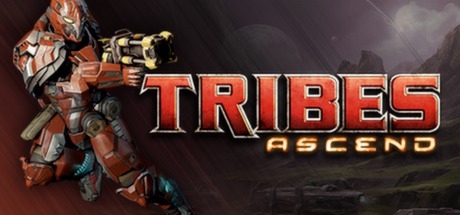
That same suspended tension lives in Tribes: Ascend—not in its flashy combat, but in its player review: “Man, I used to love this game. Just mindless fun. All be it, it could have been expanded or had much added to it, sadly it had so much potential that…” That trailing ellipsis? That’s the Death & Rebirth rhythm. A game built on momentum—jetpacks, gravity-defying speed—stalled by unrealized design, abandoned updates, promises left hanging like NERV’s shifting mission briefings. Its “military sci-fi” isn’t about doctrine—it’s about the frustration of readiness without purpose, soldiers primed, gear polished, waiting for a war that never clarifies its terms. The fun is real—but it’s haunted by what could’ve been, just as Shinji’s piloting is haunted by what he should feel but can’t name.
Then there’s Lost Planet™: Extreme Condition, where humanity fights extinction on ice-covered wastelands against alien Akrid and Snow Pirates. Its description nails the physical stakes—frozen, vast, lethal—but the player review cuts deeper: “Bought this version just to say I'm super disappointed that Capcom still hasn't fixed Colonies Edition or Lost Planet 2.” Here, the dystopia isn’t just environmental—it’s archival. A world literally frozen, yes—but also preserved in broken form, like a corrupted backup of something vital. The Akrid aren’t metaphors; they’re raw, overwhelming presence, like Instrumentality’s psychic tide—inescapable, non-negotiable, demanding surrender or annihilation. And the disappointment in that review? It echoes Death & Rebirth’s own limbo: a story interrupted, a continuity fractured, players stranded between versions, unable to access the full emotional resolution they were promised—just as fans were stranded between Death & Rebirth and the delayed End of Evangelion. Both are artifacts of unfinishedness, not flaws—but conditions.
Who lives in this overlap? Not the casual viewer who wants clean catharsis or the player chasing flawless mechanics. It’s the one who leans into the gap: the teen staring at their ceiling at 3 a.m., replaying a conversation in their head like a corrupted VHS tape; the veteran modder who spends weekends rebuilding broken servers just to hear a familiar voice line again; the person who finds solace not in answers, but in the shared, unspoken recognition that some things break—and stay broken—and that’s where the real feeling begins. They don’t want the Eva units to win. They want to understand why Shinji’s hand trembles before he reaches for the entry plug. They don’t need Tribes’ maps perfected—they need the echo of that first jetpack launch, pure and reckless, now layered with ten years of silence. They don’t require Lost Planet’s bugs fixed—they need the cold, the weight of the snow underfoot, the way survival feels less like victory and more like breathing through a wound. That’s the resonance: not in the spectacle, but in the aftermath of intention, the quiet, stubborn pulse of consciousness refusing to go dark—even when the lights keep flickering.
🎮4 Games That Match the Vibe
Match Dimensions Explained
❓Frequently Asked Questions
Why does Lost Planet: Extreme Condition feel like a spiritual successor to Evangelion's battle scenes?
Because its desperate, close-quarters mecha combat against colossal Akrid—like the towering, biomechanical Geyser-class enemies—mirrors Eva Unit-01’s raw, visceral fights against Angels in 'Death & Rebirth'. The frozen wastelands and claustrophobic trench warfare (e.g., defending the Snow Pirate base in Mission 4) echo the oppressive scale and isolation of Terminal Dogma sequences.
Is there a Neon Genesis Evangelion game adaptation with actual Death & Rebirth cutscenes or voice acting?
No—none of the official Evangelion games include licensed Death & Rebirth footage or original Japanese voice acting from that film. Even matches like Tribes: Ascend and Lost Planet: Extreme Condition are *inspired by* the vibe (mecha, dystopia, military sci-fi), not adaptations—they’re standalone titles with their own lore, characters, and no Shinji, Rei, or SEELE cameos.
Tribes: Ascend vs. Lost Planet: Extreme Condition—which one captures Evangelion’s mix of tactical dread and explosive action better?
Lost Planet wins for dread: its slow-motion thermal suit overheating during an Akrid ambush (like the Leviathan fight in Chapter 7) nails Evangelion’s tension before the blowout. Tribes: Ascend leans into Evangelion’s kinetic energy—think strafing across icy canyons in a jetpack-equipped Javelin armor, echoing Unit-01’s aerial dashes—but trades psychological weight for pure, mindless fun, per that player review calling it 'just mindless fun'.
What’s the best game like Evangelion: Death & Rebirth if I want that bleak, snow-covered, last-stand-in-the-ruins vibe?
Lost Planet: Extreme Condition is your pick—it drops you onto E.D.N. III’s ice-choked hellscape where every mission feels like humanity’s final gasp, just like Evangelion’s post-Third Impact desolation. You’ll pilot the VS (Vital Suit) through blizzards while fending off Akrid swarms near crumbling colonies, hitting that exact blend of mechanical fragility, environmental despair, and tactical desperation reviewers praised in its 73-score Tactical Warfare dimension.