
Dorohedoro Season 2
The second season of Dorohedoro.
The anarchy continues as Caiman inches closer to the truth behind his cursed appearance and the mystery around the Cross-Eyes' boss begins to unravel.
(Source: Netflix Anime)
📺Anime Details
📝Editorial Analysis
The smell of burnt sugar and wet concrete hits before the first punch lands—Caiman’s fist cracking into a Hollow’s jaw while rain slicks the cracked asphalt of the Hole, his lizard face half-obscured by steam rising from a ruptured pipe. His eyes don’t flinch. Not from pain, not from fear—just recognition, slow and grinding, like rusted gears finally catching. That’s Dorohedoro Season 2 in one breath: not chaos for spectacle, but chaos as memory’s residue, thick and unignorable.

This isn’t dystopia as backdrop—it’s dystopia as texture. You feel it in the grime under your nails, the way magic doesn’t sparkle but leaks: from split skin, from frayed sutures holding demon limbs to human torsos, from the Cross-Eyes’ boss whose very presence warps light like heat off tar. It makes you think about how identity isn’t built—it’s recovered, piece by jagged piece, often from someone else’s corpse. Amnesia here isn’t a plot device; it’s a physical condition, a wound that breathes. Revenge isn’t cathartic—it’s recursive, messy, tangled in bureaucracy and bad takeout. The horror isn’t jump-scares—it’s the quiet dread of realizing your own body might betray you again, mid-conversation, mid-bite of fried dough.
That emotional DNA pulses strongest in BioShock Infinite. Its description names “Time & Memory” and “Body Horror & Occult”—exactly the axis Dorohedoro Season 2 orbits: Caiman’s cursed face is both prison and archive, just as Booker’s past isn’t buried—it’s layered, folded into realities where choices curdle into flesh. A player review admits, “I know that some people are still bitter about the Bioshock Infinite we could have gotten.” That bitterness? It mirrors how Dorohedoro refuses tidy revelations—the truth behind the Cross-Eyes’ boss isn’t a monologue in a white room, but a half-remembered chant over boiling noodles, a scar that moves when you’re not looking. Both demand you sit with the discomfort of unstable memory, where every answer spawns three new contradictions.
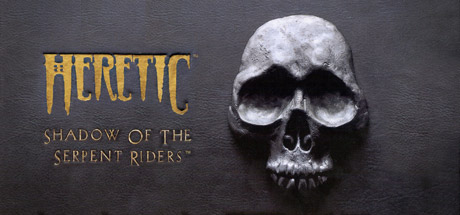
Then there’s Prince of Persia: Warrior Within, with its “Time & Memory” and “Body Horror & Occult” dimensions—and that Dahaka chase, relentless, goated, as one reviewer puts it. Caiman’s pursuit of his own origin has the same visceral rhythm: not sprinting toward clarity, but away from something that keeps reshaping itself behind him—like Dahaka, like the Hole’s shifting alleys, like the way a spell can rewrite your spine mid-fight. The review says “this is my childhood completing it was a journey”—and yes, Dorohedoro Season 2 feels like that too: less a race to an endpoint, more a slow, bruised reassembly of self, where every fight leaves you wondering if the hand you raised was yours.
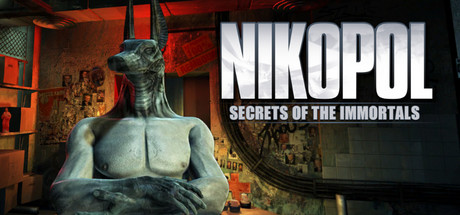
And Nikopol: Secrets of the Immortals, with its “Cyberpunk & Dystopia” and “Body Horror & Occult” tags, lands with eerie precision. Its description drops us into 2023 Paris ruled by a religious dictatorship, a pyramid ship hovering overhead—absurd, oppressive, ritualistic. Dorohedoro’s Hole operates the same way: dogma disguised as plumbing codes, magic codified as union bylaws, demons filing paperwork. A player notes “the whole cyberpunk atmosphere gives it a nice vibe”—but it’s not the neon or chrome that resonates. It’s the weight of systems pretending to be rational while rotting from within, where salvation looks like stealing a severed head from a lab fridge and hoping it remembers your name.
These aren’t for fans of clean arcs or heroic certainty. They’re for the ones who lean in when a character’s voice cracks mid-threat—not from weakness, but because their vocal cords just changed. For players who replay Warrior Within not for mastery, but to feel that gut-punch again when Dahaka’s claws scrape stone just out of frame. For viewers who watch Caiman stare at his reflection in a puddle of blood and recognize the exhaustion—not of fighting, but of remembering how many times he’s forgotten. This is for people who find comfort in grit, who trust stories that refuse to sanitize trauma, who know that sometimes the most honest truth wears scales, smells like soy sauce, and won’t stop until the last lie is peeled off like old bandages—raw, aching, alive.
🎮90 Games That Match the Vibe
















Match Dimensions Explained
❓Frequently Asked Questions
Why is BioShock Infinite listed as similar to Dorohedoro Season 2 when it’s not about magic worms or grungy Tokyo?
Great question — it’s not the surface aesthetics, but the layered, reality-bending dread that matches. Like Dorohedoro’s twisted logic (e.g., En’s cursed body, the Hole’s time-looping chaos), BioShock Infinite leans hard into Time & Memory + Body Horror & Occult dimensions — think Elizabeth’s multiverse tears revealing grotesque alternate versions of herself, or Songbird’s monstrous transformations. The player review even nods to how its ‘what could have been’ structure mirrors Dorohedoro’s slippery causality.
Is there a Dorohedoro video game adaptation in development?
No — and none of the games on this list are official Dorohedoro adaptations. All are standalone titles that share *tonal and dimensional DNA*: Nikopol nails the oppressive cyberpunk dictatorship vibe (like the Sorcerers’ Council ruling over the Hole), while Prince of Persia: Warrior Within delivers that same relentless, body-horror-chased energy — especially during the Dahaka sequences, where your own limbs twist and time fractures just like Kaima’s mutations or Nozawa’s disintegrating flesh.
BioShock Infinite vs. Nikopol: which one captures Dorohedoro’s mix of absurdity and grim world-building better?
Nikopol edges it for raw, surreal absurdity — picture the floating pyramid ship hovering over a fascist Paris, cultists chanting in broken Latin while you solve puzzles involving immortality serum and decaying saints. That off-kilter, darkly comic dystopia feels closer to Dorohedoro’s tone than BioShock Infinite’s more polished, tragic grandeur. Plus, Nikopol’s point-and-click pacing lets weirdness breathe, like watching En try (and fail) to cook ramen mid-apocalypse.
What’s the best game like Dorohedoro Season 2 if I want that anxious, hunted-by-something-ancient vibe?
Prince of Persia: Warrior Within — hands down. You’re constantly running from Dahaka, an unstoppable force that warps time and space to erase you, just like Dorohedoro’s characters fleeing consequences they don’t fully understand (e.g., Caiman’s identity unraveling or the Sorcerers’ temporal gambits). The player review even calls the Dahaka chase ‘goated’ — that same breathless, visceral panic when the screen glitches and your reflection starts moving on its own? Pure Season 2 energy.