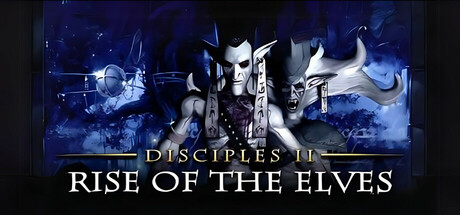
Disciples II: Rise of the Elves
The award-winning series Disciples introduced a milestone in the game's very successful history; the introduction of a new race: The Elves. The Elven Race added a new dimension to the game and added countless hours of gameplay. Now that series has expanded further with Disciples II: Rise Of The Elves.
🎮Game Details
💬What Players Say
"incredible art and fantasy."
"Old but gold"
"Timeless classic"
📝Editorial Analysis
The first time you watch an Elven unit level up—not just grow stronger, but transform, shedding its old form for something sharper, older, and crowned with antlers or starlight—you feel it in your ribs. Not a flash of light, not a chime, but a slow, resonant unfolding, like a scroll unrolling across centuries. That’s Disciples II: Rise of the Elves, right there: not spectacle for spectacle’s sake, but weight—the quiet awe of witnessing something ancient choosing to rise again. The official description calls it “a new dimension”; players call it “incredible art and fantasy” and “timeless classic”—not because it’s polished like glass, but because it endures, like weathered stone under moonlight.
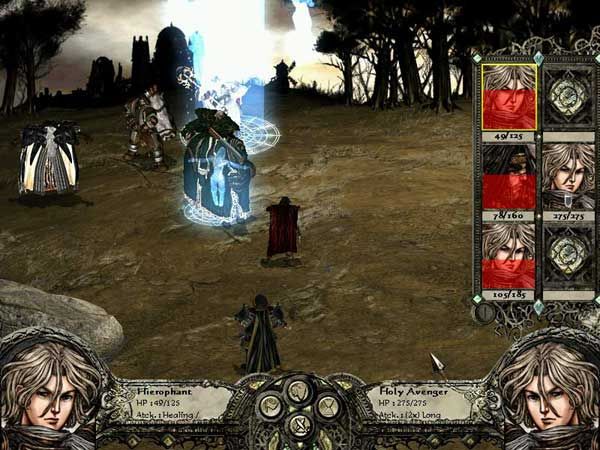
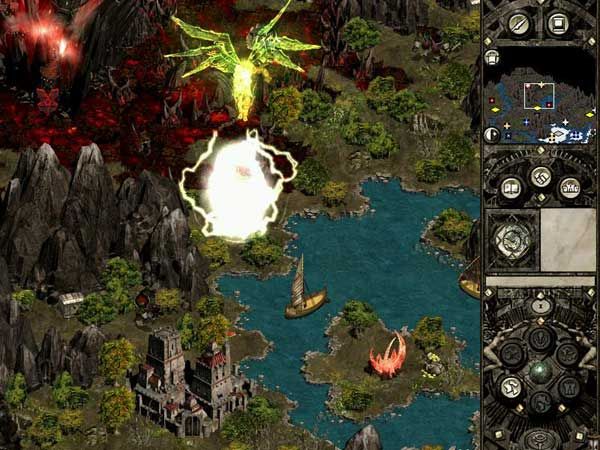
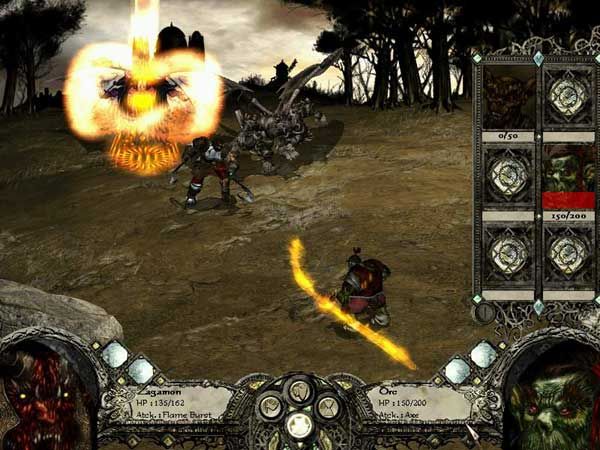
This isn’t the frantic pulse of high-stakes combat or the giddy rush of power spikes. It’s the gravity of legacy. Every unit upgrade feels like stepping into a deeper layer of myth—not just gaining stats, but inheriting a name, a lineage, a silence that hums with older magic. You don’t command armies; you steward echoes. The world doesn’t shout—it breathes: low, slow, thick with moss and memory. It makes you think about time not as progress, but as sediment—layer upon layer of fallen empires, forgotten oaths, and elven songs sung beneath dying stars. There’s no tutorial voice explaining destiny. You feel it in the hush before battle, in the way light catches on a silver leaf in the unit portrait, in the reverence baked into every “old but gold” review. It’s reverent, not reverential—awestruck, but never subservient.
That same hush lives in The Seven Deadly Sins the Movie: Prisoners of the Sky, where the sky itself is a shattered temple and even flight feels like trespassing on sacred ruin. Its dark fantasy isn’t about gore or grit—it’s about scale, silence, and the crushing beauty of things too old to be understood. Like Disciples II, it treats power as inherited, not earned: Meliodas’ rage isn’t just fury—it’s the tremor of a curse echoing across lifetimes. And the JRPG narrative? Not quest logs or XP bars, but the slow, inevitable turn of fate’s wheel—where every choice lands with the soft, final thud of a tomb sealing.
Garo: The Animation shares that same ceremonial weight. Its flame-wreathed armor isn’t flashy—it’s liturgical. Every duel is a ritual, every mask a covenant. When the Golden Knight stands alone at dusk, his cape catching the last amber light, it’s not heroism—it’s stewardship. Just like watching an Elven Archmage ascend from Sorcerer to Starweaver in Disciples II, Garo’s transformations aren’t upgrades—they’re vows made visible. The dark fantasy here isn’t horror, but solemnity; the JRPG narrative unfolds like incantation, not exposition.
Then there’s Record of Lodoss War, where every sword draw carries the echo of ballads sung in taverns fifty years prior. Its fantasy is textured: rust on iron, candle-smoke in tapestries, the slight tremor in a king’s hand as he signs a peace treaty he knows won’t hold. No unit in Disciples II levels up without history clinging to it—the same way Parn’s sword isn’t just steel, but the weight of a father’s shame and a mentor’s last breath. The JRPG narrative isn’t about saving the world—it’s about whether honor survives the world’s decay. And the dark fantasy? It’s the shadow cast by candlelight—not the absence of light, but the proof that light matters.
These pairings aren’t for people who want lore dumps or power fantasies. They’re for the ones who pause mid-battle to stare at the texture of an elf’s cloak in the rain, who rewatch a scene not for plot, but for the way dust motes hang in a sunbeam through a ruined cathedral window. They’re for players who savor the silence between turns, and viewers who hold their breath when a character doesn’t speak for twelve seconds—not because nothing’s happening, but because everything is. They love the heaviness of meaning, the warmth of aged parchment, the stillness before revelation. They don’t chase endings—they linger in thresholds. And when they find that rare thing—a game whose art feels like stained glass, an anime whose silence sings louder than its score—they don’t just play or watch. They bow.
→21 Anime That Match the Vibe
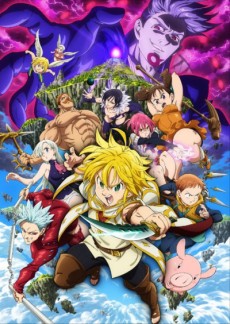
Sky Palace’s floating ruins shimmer with the same melancholic grandeur as Disciples II’s elven citadels—crumbling, ancient, and steeped in lost sovereignty. Where Meliodas battles sky-dwelling tyrants amid cloud-shrouded spires, the Elven faction wages war to reclaim their sacred groves from decay and betrayal: both pivot on dark fantasy’s core tension—beauty entwined with irreversible loss. This resonance isn’t coincidence; it’s the shared weight of JRPG narrative, where legacy isn’t inherited—it’s fought for, mourned, and remade.
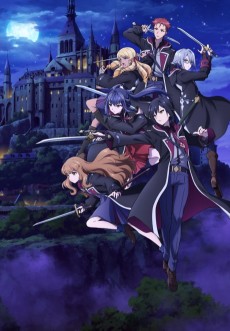
Dark worlds where beauty and brutality coexist — every victory comes at a cost.
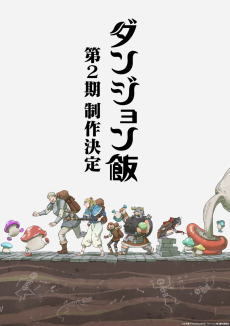
Dark worlds where beauty and brutality coexist — every victory comes at a cost.
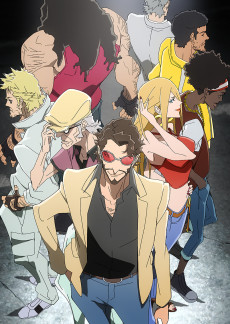
Dark worlds where beauty and brutality coexist — every victory comes at a cost.
Dark worlds where beauty and brutality coexist — every victory comes at a cost.

Dark worlds where beauty and brutality coexist — every victory comes at a cost.
Dark worlds where beauty and brutality coexist — every victory comes at a cost.
Dark worlds where beauty and brutality coexist — every victory comes at a cost.
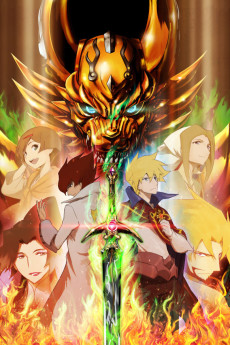
A brooding Elven archmage in *Disciples II*—haunted by ancient pacts and wielding light that scars as it heals—echoes Garo’s Kouga, whose golden armor glows with sacred fury amid political betrayal. Unlike most dark fantasy pairings, their resonance isn’t just tonal but structural: both weaponize JRPG Narrative to frame moral decay as systemic, not personal—Kouga’s ostracism mirrors the Elves’ exile from their own lore. That shared tension between luminous power and shadowed consequence makes their convergence unexpectedly potent.

Dark worlds where beauty and brutality coexist — every victory comes at a cost.

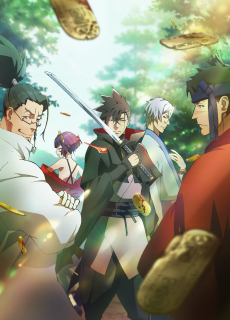

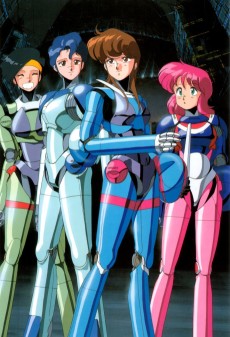
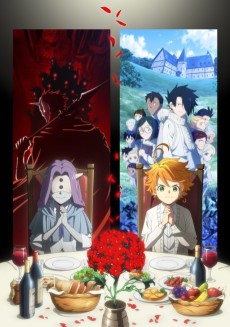


Match Dimensions Explained
❓Frequently Asked Questions
Why is Garo: The Animation listed as similar to Disciples II: Rise of the Elves?
Because both lean hard into dark fantasy with morally grey knights, cursed artifacts, and visceral combat—like when León in Garo faces off against the Makai Knights using flame-imbued armor and shadow magic, mirroring how Disciples II’s Elven units evolve through grim, tactical level-ups into elite forms (e.g., the Archmage gaining spectral bow mastery after three tiered promotions). It’s that same weighty JRPG narrative rhythm: slow-burn lore, fallen kingdoms, and battles where every spell feels earned.
Is there an anime adaptation of Disciples II: Rise of the Elves?
No—there’s never been an official anime adaptation. The Disciples series remains a PC/strategy game franchise only. But if you’re craving that vibe, Ranking of Kings nails the emotional heft and elven-adjacent worldbuilding: think Bojji’s quiet strength echoing Disciples II’s understated yet powerful Elven leaders, or the way the Kingdom of Bosse mirrors the game’s layered political tensions between races—plus those gorgeous, painterly battle scenes feel like they jumped straight out of a Disciples II cutscene.
How does Record of Lodoss War compare to Disciples II: Rise of the Elves?
They’re spiritual siblings—both built on classic JRPG narrative DNA and grounded dark fantasy. Like Disciples II’s Elven faction rising amid crumbling human empires, Lodoss War follows Parn and his allies navigating war-torn realms where elves (like Deedlit) wield ancient magic, lead mixed-race parties, and face betrayals that reshape entire continents. Even the pacing matches: deliberate worldbuilding, tactical skirmishes (think the Battle of Marmo), and unit progression that feels earned—not flashy, but deeply consequential.
What’s the best anime like Disciples II for someone who loves the ‘old but gold’ nostalgic vibe and tactical depth?
The Slayers is your perfect match—it’s got that timeless, warm-but-sharp 90s charm (‘old but gold’ energy, just like player reviews say), plus real tactical flavor: Lina’s spells escalate in complexity like Disciples II’s skill trees (Burst Flare → Dragon Slave → Ragna Blade), and her party’s banter-heavy, class-based synergy (mage + swordsman + priest) mirrors how you’d build a balanced Elven warband. Plus, that ‘incredible art and fantasy’? Just watch the Sorcerer’s Castle arc—the lighting, the scale, the *weight* of each spell cast.