
Akira
It's the year 2019, thirty-one years have passed since the start of World War III. A top-secret child with amazing powers of the mind breaks free from custody and accidentally gets a motorcycle gang involved in the project. This incident triggers psychic powers within one of the gang members, Tetsuo, and he is taken by the army to be experimented on. His mind has been altered and is now on the path of war, seeking revenge on the society that once called him weak.
(Source: FUNimation)
📺Anime Details
📝Editorial Analysis
The air shudders—not with sound, but with pressure. Tetsuo’s fingers twitch, then snap—and the concrete floor of the military lab doesn’t crack. It unfurls, like wet paper torn by a god’s fingernail. Light bleeds from the rupture, not warm or golden, but sickly, violet-white, humming at a frequency that makes your molars ache. A soldier screams—but the sound is cut mid-breath as his body stretches, limbs elongating, jaw unhinging, ribs bursting outward in slow, wet geometry. This isn’t gore for shock. It’s violation: physics unspooling, identity dissolving, the self no longer a boundary but a wound.

That’s Akira’s atmosphere—not dystopia as backdrop, but as physiology. It doesn’t ask you to imagine a broken world; it makes your nervous system register decay. The neon-drenched ruins of Neo-Tokyo aren’t just set dressing—they breathe stale ozone and burnt rubber, their surfaces slick with rain that never cleans anything. Every motorcycle rev, every shouted insult between delinquents, every flicker of a government monitor feels like a tremor before the next rupture. You don’t watch the collapse—you feel its gravity in your sternum. It’s dread, yes—but more precisely, dread of emergence: the horror isn’t that power exists, but that it erupts from within, unbidden, uncontrolled, turning the fragile scaffolding of self and society into kindling. There’s no catharsis in Tetsuo’s rage—only escalation, recursion, the terrifying intimacy of destruction that begins with a child’s tantrum and ends with light swallowing cities.
That same visceral unraveling lives in BioShock™, where Rapture’s Art Deco grandeur curdles into flooded corridors choked with splicers who’ve traded humanity for grotesque biological upgrades—body horror made literal, occult logic disguised as science, all underpinned by a political thriller that reveals ideology itself as a psychic contagion. A player review calls it “revolutionary”—not for its guns, but because it forces you to inhabit a failed utopia where every corpse whispers a warning: this wasn’t inevitable. It was chosen. Like Akira, it weaponizes architecture—Rapture’s decaying opulence mirrors Neo-Tokyo’s hollowed-out skyscrapers—and makes ideology tactile, something you slip on like blood-slick tile.
Then there’s S.T.A.L.K.E.R.: Shadow of Chernobyl, where the Zone isn’t just dangerous—it’s alive in the wrong way. Radiation doesn’t just kill; it warps time, bends light, spawns anomalies that invert physics: floating debris, invisible funnels of force, flesh-melting gravitic wells. The description says you fear “radiation, anomalies and deadly creatures”—but the player review nails the emotional core: “I’m intrigued in the whole thing.” Not because it’s explorable, but because the Zone refuses explanation. Like Akira’s psychic surges, its horrors emerge without motive, without narrative permission—pure, ambient wrongness. You don’t conquer the Zone; you endure its attention, just as Neo-Tokyo endures Tetsuo’s gaze.
And Deus Ex: Game of the Year Edition—2052, economies collapsing, conspiracies older than nations—doesn’t just echo Akira’s cyberpunk & dystopia tag. Its player review highlights immediacy: “gives you all options with one hit of the esc key.” That’s the same urgency: no tutorial, no hand-holding—just systems collapsing in real time, and you, suddenly holding a gun, a neural implant, a choice that might save or erase everything. It’s adult & dark seinen not in tone alone, but in consequence: every decision frays the social contract, just as Tetsuo’s first telekinetic twitch frays reality itself.
These aren’t fans of “cool powers” or “gritty futures.” They’re the ones who pause mid-scene—not to admire animation, but to feel the weight of the pavement cracking beneath Tetsuo’s feet, to smell the damp metal of Rapture’s vents, to hold their breath when the Zone’s wind carries static that sounds like whispering. They love stories where the apocalypse isn’t an event—it’s a sensation, humming just below the skin, waiting for the right mind, the right moment, the right fracture to let it through.
🎮65 Games That Match the Vibe


















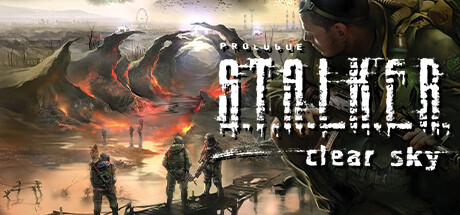

















Match Dimensions Explained
❓Frequently Asked Questions
Why is BioShock always the top match for Akira when they're not both anime?
Great question — it's not about the anime format, but how deeply both dive into dystopian ideology gone mad. Like Akira's Neo-Tokyo collapsing under militarized paranoia and psychic mutation, BioShock's Rapture crumbles from Objectivist extremism and ADAM-fueled body horror (think Kagami's grotesque transformation mirrored in Splicers' mutations). The 'Would you kindly?' mind-control twist even echoes Tetsuo's loss of agency amid government experiments.
Is there a video game adaptation of Akira?
No official Akira game adaptation exists — just fan projects and a few licensed tie-ins like the 1988 NES game (which barely resembles the film). That’s why fans lean hard on games that *feel* like Akira: S.T.A.L.K.E.R.’s Zone mirrors Neo-Tokyo’s decaying, anomaly-riddled streets, and its mutated creatures (like the Bloodsucker) channel the same visceral body horror as Tetsuo’s escalating, uncontrolled metamorphosis.
BioShock vs. Deus Ex: which one captures Akira’s paranoid political thriller vibe better?
Deus Ex nails the shadowy conspiracy angle — think of Akira’s secret military project 'Operation: Nuke' and the Colonel’s covert ops, mirrored in JC Denton uncovering Majestic 12 while navigating a fractured 2052 world. BioShock leans harder into the tragic, inevitable collapse (Rapture’s audio logs = Akira’s fragmented news reports), but Deus Ex gives you more agency to *uncover* lies like Kaneda digging through government cover-ups.
What’s the best game like Akira if I want that oppressive, rain-soaked Neo-Tokyo dread with slow-burn tension?
S.T.A.L.K.E.R.: Shadow of Chernobyl — hands down. The Zone’s fog-choked, irradiated ruins, unpredictable anomalies (like gravity distortions or flesh-melting fields), and constant dread of unseen threats echo Akira’s atmosphere perfectly. You’ll feel that same isolation walking abandoned buildings at night, hearing distant mutant shrieks — just like Kaneda riding through silent, flooded cityscapes before the chaos erupts.