
PSYCHO-PASS 3
"Justice" opens up a new world. In the near future, the Sybil System, a surveillance network that quantifies human souls, maintains public order. In a changing world, detectives with Dominators, guns that measure "Crime Coefficients," pursue "latent criminals" before they commit crimes. The third series of PSYCHO-PASS follows two inspectors seeking the truth: Arata Shindou and Kei Mikhail Ignatov.
(Source: Amazon)
📺Anime Details
📝Editorial Analysis
The hum of the Sybil System’s servers—low, omnipresent, vibrating up through the soles of Arata Shindou’s boots as he stands in the sterile silence of Division 1’s observation deck. No sirens. No shouting. Just the soft, rhythmic pulse of biometric feeds scrolling across glass walls—heart rates, cortisol spikes, synaptic latency—all rendered in cold, unblinking glyphs. He doesn’t draw his Dominator. He watches. And in that watching, something tightens behind his ribs: not fear, not anger—but the quiet, suffocating weight of knowing your own Crime Coefficient is being calculated even as you calculate others.

That’s the feeling PSYCHO-PASS 3 lives inside: not paranoia as adrenaline, but resignation as atmosphere. It’s the dread of consent you never signed, the exhaustion of arguing ethics with an algorithm that has already archived your dissent as a statistical anomaly. This isn’t cyberpunk as neon spectacle—it’s cyberpunk as bureaucracy, as HR policy, as the fluorescent-lit hush of a meeting where “public safety” is recited like scripture and no one dares ask who wrote the liturgy. You don’t feel hunted by the system—you feel processed by it. Every corridor feels surveilled not because cameras swivel, but because the air itself carries the residue of judgment. You think about labor, yes—but also about how easily “stability” becomes synonymous with stillness, how “order” begins to smell like antiseptic and stale coffee in a room where no one raises their voice.
That emotional DNA—the slow-burn erosion of agency beneath layers of rationalized control—pulses in Culpa Innata, where the World Union is labeled the perfect society, and prosperity is treated like a measurable output, not a human condition. Its player review nails the dissonance: “Do not have the patience for this in 2026 — every location, run, run, run — not enjoyable.” That frustration isn’t about clunky controls—it’s the same fatigue Shindou shows when reviewing yet another predictive arrest warrant: the soul-deep weariness of moving through a world optimized for compliance, where even rebellion must be scheduled into approved protest zones. Both demand you inhabit a space where freedom isn’t suppressed—it’s deprecated, like outdated firmware.
Then there’s Nikopol: Secrets of the Immortals, where 2023 France is ruled by an iron-fist religious dictatorship—and a pyramid ship appears above Paris. The player review praises its “cyberpunk atmosphere” and how “the animations and cutscenes enhance” the vibe. That’s key: it’s not the politics alone, but the textural unease—a city under dogma, skies dominated by alien geometry, faith weaponized as infrastructure. Like PSYCHO-PASS 3, it treats ideology as architecture. You don’t just fight villains; you navigate corridors built from doctrine, where every stained-glass window doubles as surveillance aperture. The dread isn’t in explosions—it’s in the way light falls through a cathedral vault while a voiceover calmly explains why dissent is metabolically inefficient.
And Deus Ex: Game of the Year Edition, set in 2052, where economies teeter and “an ages-old conspiracy bent on world dom[ination]” operates in plain sight. Its review notes how the game “starts up (immediately), and gives you all options with one hit of the esc key”—a line that echoes PSYCHO-PASS 3’s central irony: total transparency of interface, total opacity of intent. You can see every stat, every node, every corporate ledger—but the motive behind the merger between Helix and Sybil? That stays buried, like the source code of the System itself. Both make you feel like a technician handed admin access to a god-machine you’re not allowed to question—only optimize.
Who loves these pairings? Not just fans of “dystopia” as backdrop—but people who flinch at the phrase “for your own safety,” who notice how often “efficiency” replaces “empathy” in official memos, who’ve ever stared at a Terms of Service scroll and felt their pulse drop—not from boredom, but from recognition. They’re the ones who watch PSYCHO-PASS 3 and don’t root for the heroes to win—they hold their breath waiting to see if the heroes will remember how to grieve. They play Deus Ex not to hack the mainframe, but to hear the hum of the server room and wonder: Is that my heartbeat—or the System calibrating mine? They don’t want catharsis. They want confirmation: that the quietest horror isn’t chaos—it’s the moment you stop checking whether the door is locked… because the lock has learned to open for you.
🎮58 Games That Match the Vibe










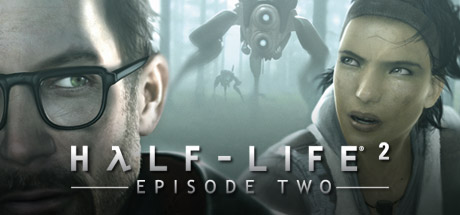

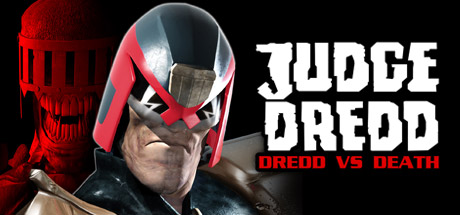


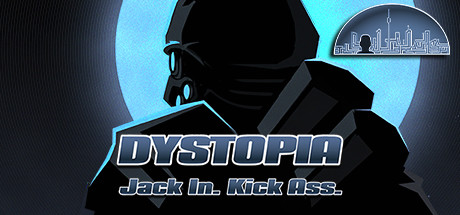




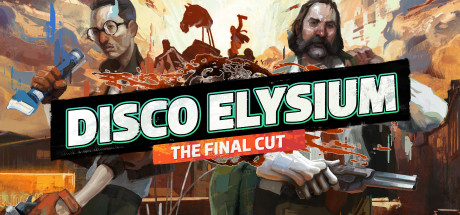























Match Dimensions Explained
❓Frequently Asked Questions
Why does Culpa Innata keep coming up in PSYCHO-PASS 3 game recommendations?
Because it nails the same oppressive 'perfect society' facade — like the Sibyl System, the World Union markets itself as flawless while hiding systemic rot and moral decay. You play as a detective navigating surveillance-heavy cityscapes and interrogating citizens whose 'happiness scores' mask deep trauma, just like Shinya Kogami or Arata Shindo probing beneath surface compliance.
Is there a PSYCHO-PASS 3 video game adaptation?
No — there’s never been an official PSYCHO-PASS 3 game. The closest licensed titles are mobile spin-offs (like PSYCHO-PASS: Mandatory Happiness), but they’re narrative-driven visual novels, not open-world or investigative experiences. That’s why fans turn to spiritually aligned games like Nikopol: Secrets of the Immortals, where you investigate a pyramid ship over Paris under a theocratic regime — echoing the show’s blend of political dread and forensic tension.
How does Deus Ex: Invisible War compare to Nikopol: Secrets of the Immortals for PSYCHO-PASS 3 vibes?
Nikopol leans harder into noir mystery and atmospheric dread — think Akane Tsunemori walking through rain-slicked, propaganda-drenched Paris with eerie cutscenes and slow-burn revelations. Deus Ex: Invisible War is more action-forward and faction-driven, with bio-augmented choices echoing the show’s 'latent criminal' debates, but its pacing and tone feel less like PSYCHO-PASS’s procedural tension and more like a gritty, morally slippery conspiracy thriller.
What’s the best PSYCHO-PASS 3-like game if I want that slow-burn, cerebral detective mood — not shootouts or hacking minigames?
Go straight to The Longest Journey — yes, it’s not cyberpunk on the surface, but its core DNA matches: April Ryan’s quiet, observant investigation across fractured realities mirrors Tsunemori’s psychological unraveling and ethical triangulation. Player reviews even call it 'a long conversation' — exactly the kind of deliberate, dialogue-rich, morally layered pacing that makes PSYCHO-PASS 3’s interrogation scenes so gripping.