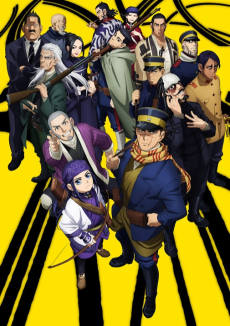
Golden Kamuy Season 2
The high-stakes search for gold continues in the harsh wilderness of Hokkaido! More and more people seek the treasure map, and the race to find its living pieces is brutal as all get-out. War veteran Sugimoto and his guide to the wilds, Asirpa, are hot on the trail, and as long as they stick together through thick and thin—chitatap and miso—they’ve got a shot at finding that gold.
📺Anime Details
📝Editorial Analysis
The smell of burnt miso paste clinging to frozen fur. That’s the first thing that hits—not the gunfire, not the snow, but the warmth of chitatap simmering over a low fire while Sugimoto’s knuckles whiten around his rifle and Asirpa watches the treeline, breath pluming like smoke from a sleeping dragon. No fanfare, no score swell—just wind, hunger, and the quiet, grinding tension of two people who’ve learned trust isn’t declared; it’s shared, spoon by spoon, in the middle of a killing winter.
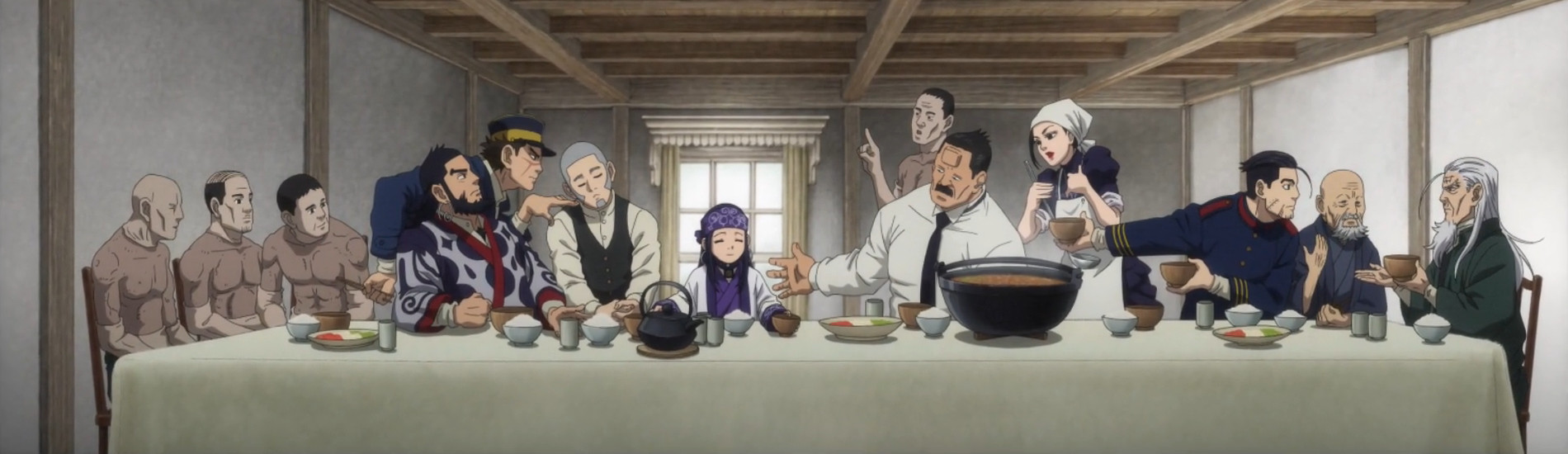
Golden Kamuy Season 2 doesn’t trade in grand speeches or heroic poses. It trades in weight: the weight of a rifle sling cutting into a shoulder after three days without sleep, the weight of silence between men who’ve seen too much war to pretend they’re whole, the weight of history pressing down—not as myth, but as scar tissue on Hokkaido’s soil. This isn’t survival as spectacle. It’s survival as ritual: skinning a fox with practiced fingers, chewing dried salmon until your jaw aches, reading wind patterns off pine boughs like scripture. You don’t feel excited watching it—you feel grounded, then unsettled, then strangely tender. Because beneath the guns and the gold fever, there’s something fiercely, quietly human: the way Asirpa corrects Sugimoto’s Ainu phrases not to shame him, but to hold space for what was nearly erased; the way even the villains pause to light a cigarette, exhale, and stare at the same indifferent stars.
That emotional DNA—the gritty intimacy of morally frayed adults navigating systems built on betrayal, where every tactical choice carries cultural and physical consequence—echoes in games that treat violence not as power fantasy, but as consequence. Assassin's Creed™: Director's Cut Edition, for all its dated textures, shares that same bone-deep sense of political thrum: you’re not just climbing towers—you’re moving through a world where loyalty is currency, maps are lies, and every rooftop drop lands with the thud of historical inevitability. A player admits the models are “quite dated,” yet shrugs—“no issues with me”—because the feeling of being a small, sweating man in a vast, corrupt machine overrides polish. Like Sugimoto parsing colonial documents under lamplight, you’re sifting truth from propaganda, one stolen scroll at a time.
Then there’s Second Sight, where psychic ability isn’t superpower—it’s exhaustion made visible. The description calls it “atmospheric, psychological thriller narrative with paranormal psychic abilities, stealthy exploration and intense shooter action,” and a player calls it “one of my favourite games of all time… despite its age and wonky mechanics.” That’s the key: wonky mechanics, yes—but story that sticks like frostbite. Just as Golden Kamuy Season 2 makes you feel the strain in Asirpa’s wrists as she reloads a rifle too big for her frame, Second Sight forces you to feel the disorientation of fractured perception—memory bleeding into present, control slipping, the line between hunter and hunted dissolving in real time. Both refuse easy competence. They make competence earned, fragile, and deeply physical.
And Hitman: Codename 47, with its “stealth and tactical problem solving to enter, execute and exit… with minimum attention and maximum effectiveness,” mirrors the show’s cold calculus. Sugimoto doesn’t charge—he observes, waits, uses terrain like a second language. So does Hitman. A player calls it “jank… old… [but] undeniably playable” once you learn its rhythms—just like Sugimoto’s limp isn’t a flaw in his design, it’s the texture of his realism. Both operate in worlds where violence is transactional, identity is costume, and the most dangerous moment isn’t the shot—it’s the walk away, unseen, unheard, carrying the weight of what you just did.
This isn’t for the viewer who wants clean arcs or cathartic victories. It’s for the one who lingers on the steam rising from a bowl of miso long after the scene cuts away—who feels the ache in a character’s silence more than their scream—who plays a game not to win, but to endure, to understand how a person bends without breaking in a world that offers no quarter. It’s for the reader who annotates historical footnotes, the player who reloads a failed stealth takedown not out of frustration, but respect—for the craft, the cost, the quiet, unrelenting humanity buried under snow, smoke, and gunpowder.
🎮27 Games That Match the Vibe





Match Dimensions Explained
❓Frequently Asked Questions
Why does Golden Kamuy Season 2’s Hokkaido wilderness and political tension match so well with Assassin's Creed™: Director's Cut Edition?
Because both lean hard into grounded political intrigue amid harsh, atmospheric landscapes—like Golden Kamuy’s Ainu-led resistance against Meiji-era colonization, Assassin’s Creed mirrors that with its Levantine rebels fighting Templar-controlled occupation. You’ll feel that same weighty moral ambiguity during sequences like Altaïr navigating Damascus’ crowded souks while decoding conspiracies—just like Sugimoto and Asirpa piecing together hidden maps and wartime betrayals.
Is there a Golden Kamuy anime-to-game adaptation in development?
No—not officially. There’s no licensed Golden Kamuy game, and none of the titles on this list (Assassin’s Creed™: Director’s Cut, Second Sight, Hitman 2, Hitman: Codename 47, or Max Payne) are adaptations of the anime. They’re standalone games that *resonate* with Golden Kamuy Season 2’s vibe—like Second Sight’s psychic espionage echoing Asirpa’s ancestral intuition or Hitman’s methodical infiltration mirroring Sugimoto’s sniper-calculated ambushes.
Second Sight vs. Hitman 2: Silent Assassin—which better captures Golden Kamuy Season 2’s blend of stealth, trauma, and cultural secrecy?
Second Sight edges it out for emotional texture: its protagonist John Vattic suffers memory fragmentation and psychic flashes—very much like Sugimoto’s PTSD-driven flashbacks to the Russo-Japanese War—and the game’s layered narrative hides truths beneath surface missions, just as Golden Kamuy buries Ainu oral history and imperial cover-ups in plain sight. Hitman 2 delivers tighter tactical stealth, but Second Sight’s ‘Adult & Dark Seinen’ dimension (per its listed tags) hits closer to the show’s psychological weight and moral gray zones.
What’s the best game like Golden Kamuy Season 2 if I want that gritty, rain-slicked, morally exhausted noir vibe?
Max Payne is your go-to—it’s dripping with that same neon-noir exhaustion: think Sugimoto stumbling through foggy Hokkaido camps at 3 a.m., mirrored by Max trudging through snow-and-rain-soaked NYC alleys, narrating his own unraveling. Its ‘Adult & Dark Seinen’ tag fits perfectly, and players still pass the controller after dying—just like how Golden Kamuy’s characters keep pushing forward despite betrayal, loss, and bullet wounds, one grim step at a time.