
Bakemonogatari
First season of the Monogatari Series, part 1/6. Contains the arcs Hitagi Crab, Mayoi Snail, Suruga Monkey, Nadeko Snake, and Tsubasa Cat from the Bakemonogatari light novels.
Thanks to Meme Oshino, Koyomi Araragi, a high school student, is able to remain a human after coming across a female vampire... However, since the incident, Koyomi seems to meet girls who have an apparition-related issue. Hitagi Senjougahara doesn’t weigh anything, Suruga Kanbaru’s right arm becomes like that of a monkey’s, and a young girl, Mayoi, cannot find her way home no matter how many times she tries. Koyomi, a Mr. Nice Guy, ends up helping each and every girl solve her problem with the help of Meme Oshino.
(Source: Aniplex)
Note: Only the first 12 episodes were broadcast on television; the remaining three episodes were distributed on the anime's website between November 3, 2009, and June 25, 2010.
📺Anime Details
📝Editorial Analysis
The fluorescent hum of a convenience store at 3 a.m., the plastic crinkle of a melon soda can, and Koyomi Araragi’s voice—dry, self-aware, aching—as he watches Hitagi Senjougahara balance on one foot like gravity forgot her name. Not because she’s floating, but because she doesn’t weigh anything. Her backpack hangs empty in midair when she sets it down. Her hair falls without momentum. She exists in the uncanny valley between physics and pathos—and Araragi doesn’t reach for an explanation first. He reaches for her hand. That moment isn’t about solving the mystery of the Crab apparition. It’s about how heavy silence feels when someone has spent years making themselves disappear.
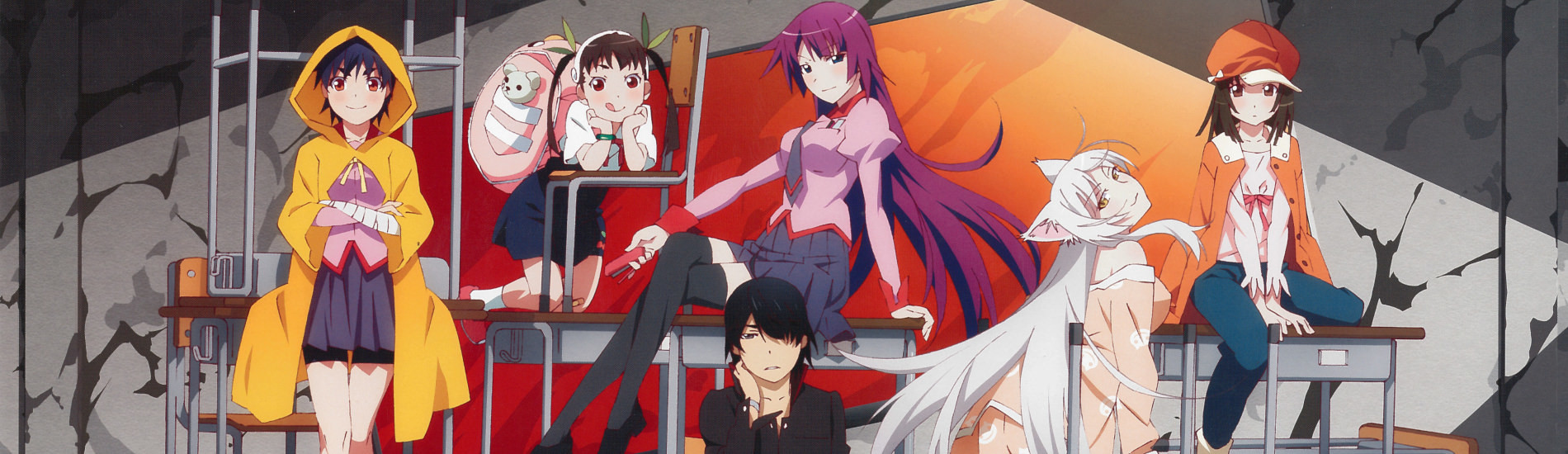
Bakemonogatari doesn’t trade in spectacle—it trades in resonance. Its urban fantasy isn’t built on glowing sigils or epic battles, but on the way a girl’s voice cracks when she admits she’s been holding her breath for months, or how a vampire’s ancient hunger flickers not in fangs, but in the way she stares too long at the pulse in Araragi’s throat while handing him a juice box. The surreal comedy isn’t slapstick—it’s linguistic: rapid-fire dialogue that doubles back on itself, metaphors made flesh (a snail’s shell as emotional withdrawal, a monkey’s paw as repressed rage), and visual motifs—endless stairwells, static-laced TV screens, blood-red text overlays—that don’t illustrate the story so much as inhabit its nervous system. You don’t watch it to escape reality. You watch it because it presses your thumb into the bruise of being a teenager who knows too much philosophy and too little how to hold space for another person’s pain. It’s intimate, exhausting, tender—and never, ever safe.
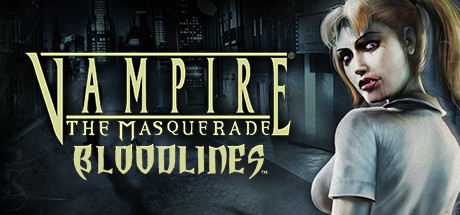
That emotional DNA—the collision of intellectual rigor with visceral vulnerability, the way horror lives not in monsters but in the slow erosion of self—is why Vampire: The Masquerade - Bloodlines lands with such startling fidelity. Its description calls it “a new type of RPG experience—one that blends all the core elements of a traditional RPG with the graphical richness, immediacy and brutal combat of a first-person shooter.” But the player review nails the soul of it: “BUY IT ON GOG; if you want to use the steam version you need to download the unofficial patch…”—a line that echoes Bakemonogatari’s own fragmented, patched-together humanity. Like Araragi surviving vampirism only by clinging to fragile human routines (school, soda, sarcasm), the game forces you to navigate vampiric degeneration while negotiating rent, betrayal, and the quiet horror of watching your reflection fade—not from a mirror, but from your own moral center.
Then there’s Stubbs the Zombie in Rebel Without a Pulse, whose description declares: “Be the Zombie. Kick A and Take Brains.” On paper, absurd. In practice? Its player review says: “I have always loved this game… This game is worth every penny.” That devotion mirrors how Bakemonogatari* weaponizes tonal whiplash—not for cheap laughs, but to make the sorrow land harder. Stubbs’ cartoonish gore and deadpan narration (“I’m not evil. I’m just hungry*.”) refract the same emotional logic as Suruga Kanbaru’s arm transforming—not as body horror spectacle, but as the physical manifestation of shame so deep it reshapes bone and sinew. Both treat the grotesque as grammar, not genre.
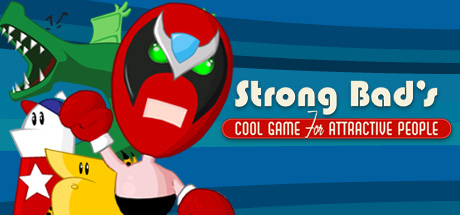
And Strong Bad's Cool Game for Attractive People, described as “Strong Bad's wacky comedic adventures over 5 full episodes!”—with a player review pleading, “With the recent remake of Poker Night, I hope Skunkape considers bringing this game back next…”—shares Bakemonogatari’s structural daring: breaking the fourth wall not as gimmick, but as confession. Strong Bad’s hyper-stylized, self-referential chaos—his janky animations, his refusal to let narrative coherence override emotional truth—is kin to Araragi’s monologues spiraling into existential tangents mid-conversation. Both are adult in their exhaustion, dark in their understanding of how easily love curdles into manipulation, and seinen not because of content warnings—but because they assume you’ve already lost something, and now you’re trying to name it.
This pairing isn’t for fans of “supernatural romance” or “vampire action.” It’s for the person who rewatches the Tsubasa Cat arc not for the catgirl antics, but for the way Nadeko’s trembling fingers trace the edge of a notebook page as she whispers, “I don’t want to be me anymore”—and recognizes that tremor. It’s for the player who boots up Bloodlines not for the clan politics, but to sit in a rain-slicked alley, listening to their own character’s heartbeat stutter as the Beast whispers just one more sip. It’s for those who crave stories where the monster isn’t under the bed—it’s in the mirror, in the pause before you answer a text, in the way you learn to love someone despite knowing exactly how broken they are—and how broken you are for loving them. That’s the real apparition. And it never leaves.
🎮46 Games That Match the Vibe










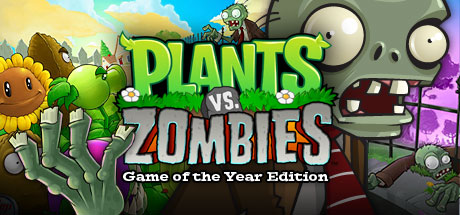
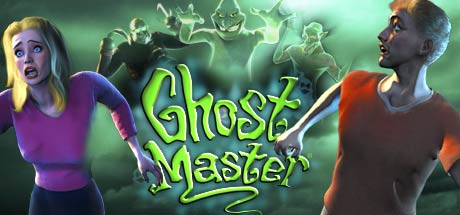
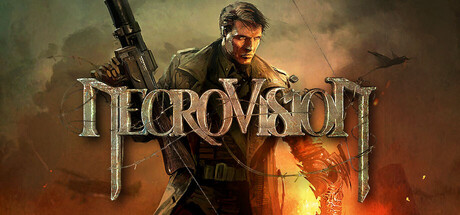
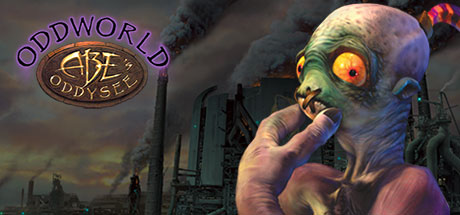






Match Dimensions Explained
❓Frequently Asked Questions
Why does Vampire: The Masquerade - Bloodlines keep coming up in Bakemonogatari game lists?
Because both dive deep into occult academia, morally grey dialogue choices, and that deliciously awkward tension between human identity and supernatural transformation—like when Koyomi confronts his own vampiric-like 'monstrous' impulses, Bloodlines lets you negotiate blood debts with elders like the Nosferatu while wrestling with your own degeneration. It’s not about flashy fights; it’s about late-night conversations in rain-slicked alleys where every choice frays your humanity just a little more.
Is there a visual novel adaptation of Bakemonogatari with gameplay similar to Strong Bad's Cool Game for Attractive People?
No—Bakemonogatari has never been adapted as a playable visual novel with Strong Bad’s style of point-and-click comedy and fourth-wall-breaking interactivity. But Strong Bad’s Season 1 *does* share that same hyper-verbal, self-aware, meta-textual energy: think Maron’s sarcastic narration layered over absurd occult setpieces (like the 'Serpent Riders' cameo in Episode 3), or how both use text-heavy scenes to build character through voice, timing, and tonal whiplash.
How does Stubbs the Zombie compare to Postal III for Bakemonogatari fans who love dark comedy + body horror?
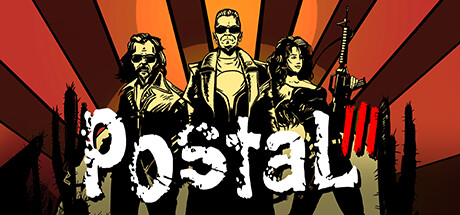
Stubbs leans hard into cartoonish, slapstick absurdity—ripping off limbs, juggling brains, and delivering deadpan one-liners while shuffling through retro-futuristic cities—whereas Postal III is more chaotic, nihilistic satire with moments like the Dude vomiting up cultist organs after a ritual gone wrong. If you loved Bakemonogatari’s blend of grotesque imagery (e.g., Nadeko’s snake motif) and sudden tonal pivots from poetic to profane, Stubbs gives you the vibe with less edge, Postal III doubles down on the adult, dark-seinen chaos.
What’s the best Bakemonogatari-like game if I want that ‘late-night monologue with existential dread’ mood but with actual gameplay?
Vampire: The Masquerade – Bloodlines is your pick—it nails that lonely, introspective, dialogue-driven weight. Imagine playing as a fledgling vampire in Santa Monica, choosing whether to confess your blood addiction to a mentor while standing under flickering neon, just like Koyomi’s rooftop confessions—only here, your stats, clan disciplines (like Obfuscate or Dominate), and faction reputation shape how those heavy conversations land. The GOG version even includes the essential unofficial patch so it *actually runs*, no crashes mid-monologue.