No Guns Life Season 2
📺Anime Details
📝Editorial Analysis
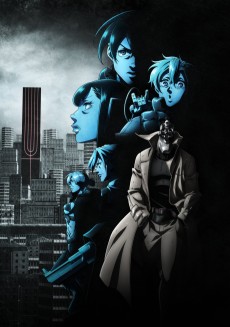
Rain slicks the neon-drenched alley like oil on a blade. Juzo Kabane stands motionless, head tilted—not because he’s listening, but because his spine is a weaponized conduit humming with residual voltage, and every tremor in the pavement travels up through his reinforced vertebrae before his brain even registers it. A flicker of light catches the cracked lens of his left optical implant—just long enough to reflect the silhouette of a fleeing informant, then the muzzle flash that drops him mid-stride. No music swells. No dramatic pause. Just the wet thud, the distant wail of a siren swallowed by concrete canyons, and Kabane exhaling slowly through his nose as if tasting the copper tang of blood in the air.
This isn’t cyberpunk as spectacle—it’s cyberpunk as weight. Not the gleam of chrome or the thrill of rebellion, but the sheer, grinding pressure of living inside a system that has already decided your body isn’t yours anymore. No Guns Life Season 2 doesn’t ask you to imagine a dystopia; it makes you inhabit one where augmentation isn’t liberation—it’s bureaucracy with teeth. Every fight is exhausting, every negotiation feels like negotiating with gravity. You don’t feel powerful watching Kabane dismantle enemies—you feel the cost: the way his neck joints grind when he turns too fast, how his voice flattens after a neural spike, how silence between dialogue beats isn’t tension—it’s exhaustion. It makes you think about consent not as a line crossed, but as infrastructure eroded, layer by layer, until your own nervous system feels like leased property.
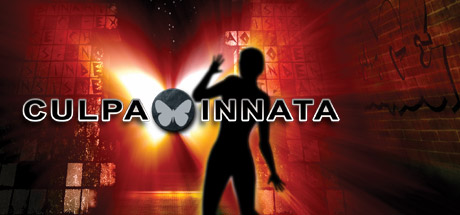
That same suffocating, inescapable atmosphere lives in Culpa Innata, where the World Union markets itself as “the perfect society”—and the horror isn’t oppression, but compliance. Its player review nails it: “Do not have the patience for this in 2026 — every location, run, run, run — not enjoyable.” That fatigue? That sense of being trapped in a loop of procedural obedience, of moving through sterile corridors while the world hums with curated perfection just out of reach—that’s Kabane walking past holographic ads selling ‘harmonized cognition’ while his own cortex rebels with phantom pain. Both reject catharsis. They offer only the slow, unblinking weight of systems that function too well.
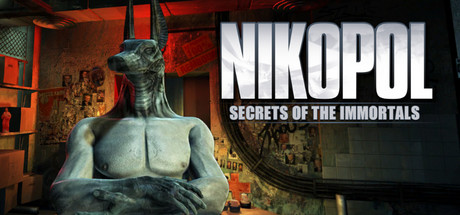
Then there’s Nikopol: Secrets of the Immortals, where 2023 France is ruled by an iron-fist religious dictatorship—and a mysterious pyramid ship appears above Paris. The player review calls it “a pretty good adventure game… the whole cyberpunk atmosphere gives it a nice vibe.” But look closer: it’s not the style that matches—it’s the texture. Like Kabane navigating Tokyo’s layered underworld, Nikopol forces you into tight, oppressive spaces—narrow stairwells, surveillance-choked plazas, rooms where every object feels surveilled, every conversation parsed for ideological deviation. The noir isn’t visual shorthand—it’s structural. You’re not solving a mystery so much as surviving its architecture. And when Kabane interrogates a corrupt clinic administrator in Episode 11, his questions aren’t clever—they’re blunt, surgical, stripped of flourish because charm has no currency where power is measured in millivolts and medical licenses.
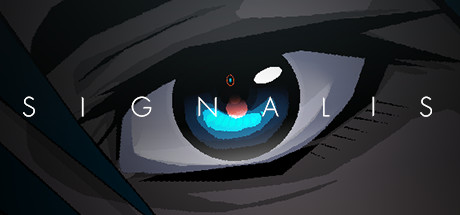
SIGNALIS, too, shares that DNA—not through action, but through dread as rhythm. Its description cites “Tactical Warfare” alongside “Mystery & Detective,” but what binds it to No Guns Life Season 2 is how both treat combat as ritualized depletion. Kabane reloads not with flair, but with mechanical precision—each cartridge seated like a vow. SIGNALIS players move in deliberate, breath-held intervals, conserving ammo not for strategy’s sake, but because scarcity is moral fact. The gore isn’t shock—it’s consequence made visible. When Kabane’s arm splits open mid-fight to reveal hydraulic tendons, it’s not cool. It’s unavoidable. Same as SIGNALIS’ distorted radio transmissions—not plot devices, but symptoms of a world where reality frays at the edges and you keep walking anyway.
Who loves this pairing? The person who watches Kabane stare at his own reflection in a rain-pooled puddle—not to admire the gun grafted into his skull, but to check whether his pupils still dilate naturally. The one who pauses Nikopol not to solve the puzzle, but to reread a propaganda bulletin twice, parsing syntax for subtext. The one who finishes SIGNALIS not triumphant, but quietly hollow, fingers still hovering over the controller like they’re waiting for the next tremor to travel up from the floorboards. They don’t want escape. They want recognition—that rare, gut-level click when fiction doesn’t flatter your fantasies, but mirrors the quiet, grinding friction of existing inside something vast, indifferent, and alive with wires.
🎮35 Games That Match the Vibe










Match Dimensions Explained
❓Frequently Asked Questions
Why does Nikopol: Secrets of the Immortals feel so much like No Guns Life Season 2’s Paris arc?
Because both drop you into a grim, theocratic dystopia where a mysterious pyramid ship looms over Paris—just like Juzo's fight against the Church-backed enforcers in Season 2’s underground tunnels. Nikopol nails that same oppressive cyberpunk vibe with its point-and-click sleuthing, morally gray dialogue choices, and cutscenes dripping with dark seinen tension—exactly what fans loved in episodes 7–9.
Is there a No Guns Life anime or game adaptation?
No official anime or game adaptation exists—but if you're craving that same blend of cyberpunk grit, tactical gunplay, and existential detective work, SIGNALIS hits closest: its biomechanical horror, cryptic logs, and slow-burn mystery around the E.R.A. facility mirror Juzo’s amnesiac unraveling and the show’s layered conspiracy. Plus, both lean hard into 'tactical warfare' and 'mystery & detective' dimensions.
How does Culpa Innata compare to No Guns Life Season 2 tonally?
Culpa Innata shares Season 2’s 'perfect society' facade cracking open—like when Koyomi exposes the World Union’s hedonistic control—but it leans heavier into exhausting, location-hopping exposition (hence that player review begging for a refund). Where No Guns Life balances action and dry wit, Culpa Innata’s pacing feels more like reading dense legal documents in a neon-lit elevator.
What’s the best No Guns Life Season 2–like game if I want something cerebral but not stressful?
The Longest Journey—it swaps bullet-riddled alleyways for April Ryan’s calm, dialogue-driven traversal between parallel worlds, but keeps that same sharp, adult-toned mystery and 'cyberpunk & dystopia' texture (think Season 2’s philosophical debates in the Chronos Tower). It’s got the emotional weight and layered storytelling without the twitch-reflex pressure of REMNANT II® or SIGNALIS.