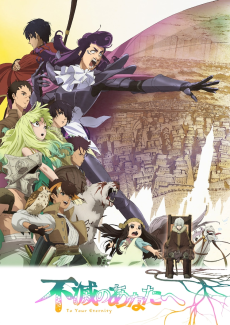
To Your Eternity Season 2
After seeing enough death and tragedy, the immortal Fushi secludes himself on an island, defending himself from enemy Nokkers. However, instead of attacking Fushi in isolation, Nokkers begin targeting the settlements outside of his reach in hopes of luring him out. Soon, a group known as the Guardians—led by Hisame, the descendant of the deceased warrior Hayase—finds Fushi.
Inspired by how Fushi protected Janada Island from the Nokkers years ago, the Guardians have grown a considerable following and are recognized throughout the world. Initially reluctant, Fushi allows the Guardians to accompany him to the site of the Nokkers' recent attack. In their village, Fushi meets a few valuable allies, both new and old. But as the conflict with the Nokkers only leads to more loss, Fushi must find the inner strength to face his inevitable sorrow.
(Source: MAL Rewrite)
📺Anime Details
📝Editorial Analysis
The salt wind howls across the island’s black cliffs, and Fushi stands motionless—not as stone, not as flesh, but as something in between, watching smoke rise from a distant settlement he cannot reach. His fingers twitch, not toward battle, but toward memory: Janada’s children laughing in the sun, then the silence after the Nokkers came. He doesn’t move. He can’t. Not yet. That stillness isn’t peace—it’s the weight of centuries pressing down on a being who has learned, over and over, that love is the first wound before the second.

This is what To Your Eternity Season 2 does with unbearable precision: it makes time hurt. Not through spectacle or speed, but through the slow erosion of hope—how a guardian becomes a ghost of his own promise, how faith curdles into cult, how war doesn’t roar—it leaks, seeping into homes, names, prayers. The atmosphere isn’t dark fantasy for its monsters; it’s dark because it refuses to let tragedy be cathartic. There’s no triumphant return, no clean vengeance—only the quiet horror of realizing you’ve outlived every reason you once had to act. You don’t just watch Fushi’s isolation—you feel the hollow echo inside your ribs when Hisame kneels, not as a warrior, but as a supplicant to immortality itself. It makes you question whether endurance is virtue—or just another kind of surrender.
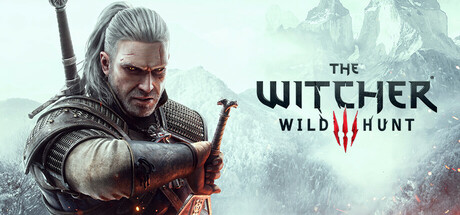
That same suffocating gravity lives in The Witcher 3: Wild Hunt, where Geralt walks a continent “war-torn, monster-infested” not as a savior, but as a man tracking a child through ruins he helped build—literally and morally. The player review nails it: “DLC announced 11 years after release, my favourite game keeps getting better…” That longevity isn’t about content volume—it’s about emotional accrual. Like Fushi, Geralt carries consequence like scar tissue. Every choice festers. Every reunion is shadowed by what was lost before the cutscene began. Both refuse easy redemption—just as Fushi doesn’t “save” the Guardians so much as witness their devotion until it breaks him open again.
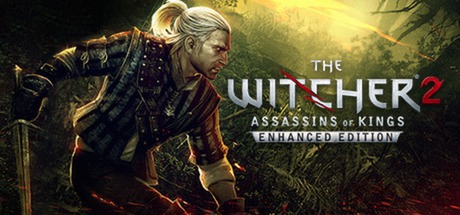
Then there’s The Witcher 2: Assassins of Kings Enhanced Edition, where “armies on the march are not enough to stop a b…”—the sentence cuts off, mirroring how To Your Eternity Season 2 truncates resolution. The player review calls it “more thoughtfully designed than the next entry,” and that’s key: both works trust silence over exposition, implication over explanation. Hayase’s legacy isn’t handed down in speeches—it’s in the way Hisame’s hands shake holding the same sword, in how the Guardians’ rituals echo Janada’s old chants without understanding them. Like Witcher 2’s political labyrinth, meaning here isn’t declared—it’s buried in gesture, in what characters don’t say while staring at a fire they’re too tired to tend.
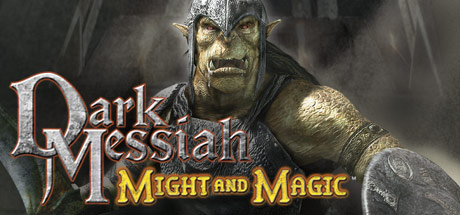
And beneath it all pulses something rawer: the body as battleground. Dark Messiah of Might & Magic trades in “Body Horror & Occult,” its Source Engine rendering flesh as malleable, violable, temporary—exactly how Fushi experiences form: not as identity, but as wound, vessel, disguise. When Nokkers twist human shapes into screaming knots of bone and static, it’s not spectacle—it’s theology made visceral. Same with Vampire: The Masquerade - Bloodlines, where the Masquerade isn’t just secrecy—it’s the agony of remembering your own humanity while your fangs sink deeper. The GOG patch note—“comes with it built-in”—feels like a quiet nod to how both anime and game demand careful restoration: you don’t just play or watch; you rebuild the context to feel the horror of transformation as loss.
This pairing isn’t for fans of epic battles or tidy arcs. It’s for the ones who linger on the last frame of a funeral scene, who replay dialogue trees not to optimize outcomes but to hear grief again, slower this time. It’s for people who understand that the most devastating moment in To Your Eternity Season 2 isn’t a death—it’s Fushi finally letting someone touch his hand, and flinching—not from fear, but from the shock of warmth returning to something long since numb. If you’ve ever paused a game mid-quest to stare at rain falling on a ruined chapel, or rewatched a single five-second glance between characters just to feel the weight of everything unsaid—that’s who this is for. Not seekers of escape. Seekers of resonance.
🎮72 Games That Match the Vibe















Match Dimensions Explained
❓Frequently Asked Questions
Why does The Witcher 3 keep coming up in 'Games Like To Your Eternity Season 2' lists?
Because both lean hard into emotional, character-driven tragedy with morally gray stakes — like Geralt’s desperate, years-long search for Ciri mirroring Fushi’s quiet, persistent quest for meaning and connection across lifetimes. The game’s ‘Adult & Dark Seinen’ dimension and gut-punch narrative moments (e.g., the Bloody Baron’s questline) hit the same melancholic, introspective tone as Season 2’s quieter, more somber arcs.
Is there a Vampire: The Masquerade - Bloodlines adaptation of To Your Eternity?
No — it’s not an adaptation, but fans often pair them because of shared vibes: both dive deep into identity, loss, and transformation through a dark fantasy lens. In Bloodlines, your vampire protagonist grapples with bodily decay, forbidden desires, and fractured humanity — much like Fushi’s evolving forms and existential loneliness — and the game’s ‘Body Horror & Occult’ dimension resonates with Season 2’s eerie, unsettling moments (e.g., the Hollows’ distortions).
How does Dark Messiah of Might & Magic compare to The Witcher 2 for To Your Eternity fans?
If you loved Season 2’s visceral, grounded tension and body-horror undertones (like the visceral weight of Fushi’s transformations), Dark Messiah delivers that through ferocious, physics-driven melee combat — think snapping bones or impaling enemies in tight corridors — while The Witcher 2 leans into political intrigue and consequential choices (e.g., siding with Roche or Iorveth shapes entire story branches). Both share ‘Dark Fantasy’ and ‘Emotional Narrative’, but Dark Messiah leans harder into raw, physical unease.
What’s the best game like To Your Eternity Season 2 if I want that quiet, melancholic, ‘wandering with purpose’ vibe?
The Witcher: Enhanced Edition Director's Cut — especially early on, when Geralt walks alone through misty forests and crumbling villages, making tough calls with no clear heroes or villains. That lonely, reflective pacing (and the player review’s nod to Yennefer vs. Triss dynamics) mirrors Fushi’s silent observation and slow-burn emotional growth. It’s less about spectacle, more about presence — just like watching Fushi sit beside a dying friend under falling snow.