
Monster
Dr. Kenzo Tenma is a renowned Japanese brain surgeon working at a leading hospital in Germany. One night, Dr. Tenma risks his reputation and career to save the life of a critically wounded young boy over that of the town mayor who had been planning to support the hospital financially. A string of mysterious murders begin to occur soon after the operation, and Dr. Tenma emerges as the primary suspect despite no incriminating evidence.
A doctor is taught to believe that all life is equal; however, when another series of murders occur in the surgeon's vicinity, Dr. Tenma's beliefs are shaken as his actions that night are shown to have much broader consequences than he could have imagined. Leaving behind his life as a surgeon he embarks on a journey across the country to unravel the mystery of the boy he saved.
📺Anime Details
📝Editorial Analysis
The rain in Düsseldorf never stops falling—it just changes texture. One moment it’s a cold drizzle slicking the cobblestones outside City Hospital; the next, it’s a slow, viscous haze clinging to streetlamps as Dr. Kenzo Tenma walks away from the operating room, his scrubs stained not with blood but with the weight of a choice no textbook prepared him for: saving a nameless boy over the mayor who held the hospital’s future in his palm. That silence after the suture—no applause, no relief—just the hum of fluorescent lights and the dawning realization that mercy has consequences you can’t suture shut.

What makes Monster’s atmosphere so singular isn’t its thriller pacing or its crime scaffolding—it’s the moral gravity that settles like dust in every frame. It doesn’t ask who did it? so much as what does it cost to remain human when the world insists on reducing people to utility, memory, or threat? You feel it in the way characters pause before speaking—not for dramatic effect, but because language itself feels fragile, easily weaponized or erased. The twins aren’t just plot devices; they’re mirrors cracked by ideology, trauma, and the terrifying ease with which identity can be unspooled. This is philosophy made palpable, tragedy without catharsis, horror that lives in the quiet aftermath of decisions—not the screams before them.
Disco Elysium - The Final Cut resonates with this same bone-deep exhaustion of meaning-making. Its description calls it a “groundbreaking role playing game” where you interrogate unforgettable characters across a city carved by decay and dogma—and the player review nails it: “Capital has the ability to subsume all critiques into itself.” That line could be spoken by Anna Liebert staring at a surveillance photo, or by Tenma reading a newspaper headline that twists his truth into evidence. Both Monster and Disco Elysium force you to hold contradictory truths: that justice is real, yet systemically broken; that empathy is necessary, yet dangerously inconvenient. There’s no clean win—only choices that deepen the wound or widen the scar.
Then there’s BioShock, tagged explicitly as Adult & Dark Seinen, and described as a shooter loaded with weapons and tactics “never seen”—but what lingers isn’t the plasmids or the Big Daddies. It’s the slow collapse of Rapture’s founding myth, the way ideology curdles into violence when stripped of accountability. The player review calls it “revolutionary,” and it is—but not for its mechanics. It’s revolutionary because it makes you feel the seduction of absolutes before showing you their rot. Like Monster, BioShock treats philosophy as architecture: every corridor, every audio log, every corpse tells you how ideals become prisons. Both refuse redemption arcs built on vengeance—they build theirs on witnessing, on remembering what was lost, not just who caused it.
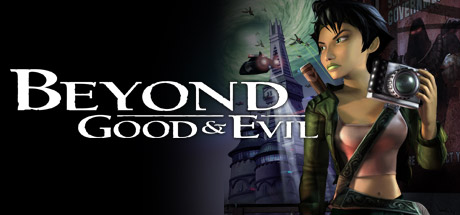
Even Beyond Good and Evil™, tagged Emotional Narrative and Political Thriller, shares this DNA—not in action, but in posture. You play Jade, an investigative reporter exposing a government conspiracy, armed not with guns but with curiosity, loyalty, and a pig named Pey’j. The player review says it’s “crazyyy,” but what’s truly wild is how tender it is amid its dread: the warmth of shared meals, the exhaustion in Jade’s voice after another cover-up, the way resistance isn’t loud—it’s persistent, small, stubborn. Like Tenma moving from clinic to clinic, stitching wounds while hunted, Jade documents truth in fragments, trusting no institution but her own moral compass. Both understand that hope isn’t optimism—it’s continuity. It’s choosing to record, to treat, to remember—even when the archive is burning.
This pairing isn’t for fans of “dark stories.” It’s for people who’ve ever stared at a hospital receipt, a police report, or a news alert and felt the floor tilt—not from shock, but from recognition. It’s for those who flinch at easy answers, who keep notebooks full of half-formed questions, who find solace not in victory, but in the integrity of a single honest gesture. You’ll love these if your favorite scene isn’t the climax—it’s the pause after: Tenma washing his hands, Jade lowering her camera, the detective lighting a cigarette in a rain-slicked alley, knowing the file won’t close—but he’ll open the next one anyway.
🎮60 Games That Match the Vibe













Match Dimensions Explained
❓Frequently Asked Questions
Why does Monster feel so much like Disco Elysium but with car chases?
Because both lean hard into Neon Noir and Political Thriller vibes—think rain-slicked streets, morally grey investigations, and systems where your choices reshape the world. Disco Elysium nails the detective’s internal chaos (like rolling 'Logic' to deduce a suspect’s alibi in Martinaise), while Crash Time 2 swaps monologues for high-speed Autobahn pursuits—but still drops you into a corrupt, neon-drenched bureaucracy where every arrest feels politically charged.
Is there a Monster anime or movie adaptation?
No official adaptation exists—but if one *were* made, it’d likely borrow tone and pacing from BioShock’s underwater dystopia (Rapture’s propaganda reels, Andrew Ryan’s speeches) and Beyond Good and Evil’s visual language (Jade’s stealthy rooftop takedowns in Hillys’ glowing cityscapes). Neither game has been adapted either, but their shared Political Thriller + Neon Noir DNA makes them natural spiritual cousins.
How does Assassin’s Creed compare to Monster in terms of melancholic exploration?
Both hit that quiet, weighty mood—especially Assassin’s Creed’s Director’s Cut Edition, where wandering Jerusalem’s sun-baked alleys as Altaïr evokes Monster’s slow-burn dread. You’re not just climbing minarets; you’re absorbing political tension in every guard patrol and whispered dialogue, just like Monster’s lingering shots on abandoned subway tunnels or flickering street signs in its decaying metropolis.
What’s the best Monster-like game if I want something emotionally heavy but not relentlessly bleak?
Go for Beyond Good and Evil—its Emotional Narrative dimension balances sorrow with warmth, like Jade’s bond with Pey’j or the hopeful resistance against the DomZ occupation. Unlike BioShock’s nihilistic turns or Disco Elysium’s existential spiral, it wraps its Political Thriller stakes in genuine heart, making the stakes feel urgent *and* human—not just philosophical or oppressive.