
JoJo's Bizarre Adventure: STONE OCEAN
In Florida, 2011, Jolyne Kuujou sits in a jail cell like her father Joutarou once did; yet this situation is not of her own choice. Framed for a crime she didn’t commit, and manipulated into serving a longer sentence, Jolyne is ready to resign to a dire fate as a prisoner of Green Dolphin Street Jail. Though all hope seems lost, a gift from Joutarou ends up awakening her latent abilities, manifesting into her Stand, Stone Free. Now armed with the power to change her fate, Jolyne sets out to find an escape from the stone ocean that holds her.
However, she soon discovers that her incarceration is merely a small part of a grand plot: one that not only takes aim at her family, but has additional far-reaching consequences. What's more, the mastermind is lurking within the very same prison, and is under the protection of a lineup of menacing Stand users. Finding unlikely allies to help her cause, Jolyne sets course to stop their plot, clear her name, and take back her life.
(Source: MAL Rewrite)
📺Anime Details
📝Editorial Analysis
The fluorescent hum of Green Dolphin Street Jail—low, insistent, like a dying transformer—presses into Jolyne’s ears as she presses her forehead against the cold steel of her cell door. Her fingers tremble—not from fear, but from the heat rising under her skin, the first jagged pull of Stone Free unraveling, thread by thread, into something that moves, something that refuses. She doesn’t scream. She exhales, slow and sharp, and watches the concrete floor ripple—not with magic, but with tension, like reality itself is a fabric stretched too tight.
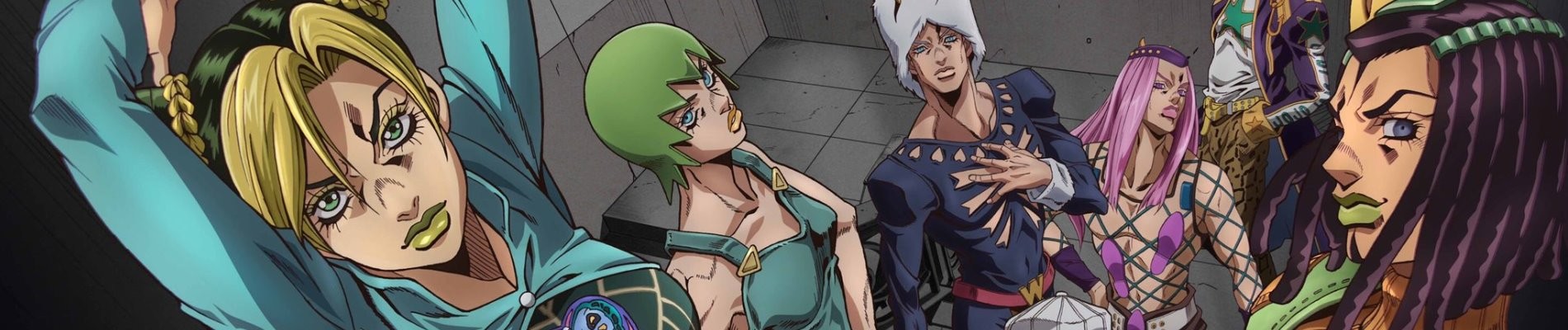
That’s the feeling STONE OCEAN lives inside: claustrophobic revelation. Not just confinement, but the suffocating weight of systems—legal, familial, metaphysical—that have already decided your worth before you speak. It’s not despair that defines it; it’s the ferocity of waking up inside a trap and realizing your body, your voice, your very atoms are now weapons of dissent. The urban fantasy isn’t glittering or whimsical—it’s humid, salt-corroded, baked in Florida sun and institutional rot. Every hallway feels surveilled, every ally potentially compromised, every Stand ability a double-edged scalpel cutting deeper into truth and consequence. You don’t just watch Jolyne fight—you feel the grit of her knuckles on concrete, the metallic taste of adrenaline when Enrico Pucci’s calm voice slices through a scene like a razor drawn across glass.
That same claustrophobic revelation echoes in BioShock™, where Rapture’s Art Deco decay isn’t backdrop—it’s ideology made architecture, its political thriller pulse beating beneath every leaky pipe and distorted radio broadcast. The player review calls it “revolutionary,” and it is—not for its guns, but because its horror lives in the moment you realize you’ve been conditioned, that your choices were scripted long before you picked up the wrench. Like Jolyne discovering her father’s letter wasn’t salvation but initiation, BioShock forces you to confront how deeply belief can be weaponized—and how violently you must unlearn it.
Then there’s Prince of Persia: Warrior Within™, where Dahaka isn’t chasing the Prince—he’s unfolding behind him, a physical manifestation of consequence given teeth and speed. The player review nails it: “Dahaka chase is still as goated as it was before.” That relentless pursuit mirrors Jolyne’s arc—not just escaping prison, but outrunning the inevitability Pucci has engineered, where time isn’t linear but recursive, tightening like a noose woven from fate itself. Both demand split-second adaptation, yes—but more crucially, they make you feel the weight of memory as momentum, where every past decision bleeds into the next corridor, the next battle, the next breath.
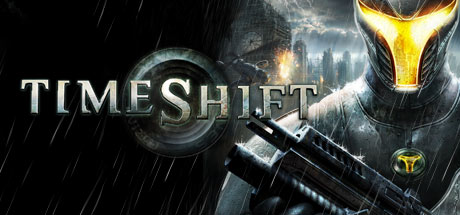
And TimeShift™, though brief, pulses with the same fractured urgency: Dr. Krone’s reckless Time Jump doesn’t grant power—it unmoors. His disturbing alternate reality isn’t spectacle; it’s disorientation made tactile, the ground shifting not under your feet but beneath your sense of cause and effect. The player review admits it takes work to get playable—just as STONE OCEAN demands you lean in, rewatch, parse the geometry of Stands and the syntax of Pucci’s theology. Neither rewards passive consumption. Both treat time not as a river but as wiring—and tampering with it sends shocks up your spine.
This isn’t about matching powers or plot beats. It’s about who holds their breath when the lights flicker—not waiting for rescue, but listening for the hum beneath the silence, calculating the exact millisecond to pull the thread. These pairings belong to the viewer who replays Jolyne’s final stand not for the spectacle, but for the way her voice cracks just once before going steady; to the player who walks Rapture’s halls twice—first in awe, second in quiet rage; to anyone who’s ever stared at a locked door and felt, not hopelessness, but the electric itch of unraveling. They’re for those who know freedom isn’t given—it’s spliced, stolen, woven from the very constraints meant to bury you.
🎮61 Games That Match the Vibe






















Match Dimensions Explained
❓Frequently Asked Questions
Why does the Dahaka chase in Prince of Persia: Warrior Within feel so JoJo-esque?
Because it’s a relentless, almost supernatural pursuer that breaks reality to hunt you—just like Jolyne’s battles against Enrico Pucci’s time-altering Stand, Made in Heaven. The Dahaka phases through walls, rewinds time mid-chase, and forces split-second dodges, mirroring STONE OCEAN’s high-stakes, physics-defying tension. Fans of Jolyne’s prison-break pacing and sudden tonal whiplash (like the Green Dolphin Street Prison riot scene) consistently cite Warrior Within’s claustrophobic, time-bent corridors and Dahaka’s eerie persistence as the closest gameplay vibe.
Is there a JoJo's Bizarre Adventure: STONE OCEAN game adaptation?
No—there’s no official STONE OCEAN video game adaptation yet (as of 2024), despite the anime’s massive popularity. But if you’re craving that same blend of body horror, occult mystery, and time-warping stakes, BioShock™ nails the vibe: think DIO’s flesh-melting immortality meets Andrew Ryan’s dystopian ideology, or the visceral, grotesque transformation of characters like Brucie into splicers—very much like Jotaro’s battered-but-unbroken resilience in Green Dolphin Street.
How does TimeShift compare to Prince of Persia: Warrior Within for time-manipulation combat?
TimeShift gives you granular, real-time rewind/slow/stop powers (like a Stand user testing limits in a lab), while Warrior Within ties time control to narrative dread—the Dahaka *is* time hunting you, making every dodge feel existential. Both hit that STONE OCEAN ‘fighting fate itself’ energy, but Warrior Within leans harder into emotional weight and consequence (e.g., the Prince’s inner darkness surfacing mid-fight), whereas TimeShift is more about tactical precision—think Koichi’s Echoes Act 3 vs. Jolyne’s Stone Free unraveling in rapid succession.
What’s the best game like STONE OCEAN if I want that neon-noir, morally messy prison-break vibe with psychic body horror?
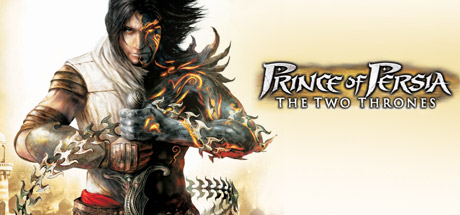
Prince of Persia: The Two Thrones™—it’s the only match with the ‘Neon Noir’ dimension, and its split-personality mechanic (Prince vs. Dark Prince) delivers STONE OCEAN’s psychological duality: Kaileena’s tragic resurrection echoes Emporio’s hidden identity, and Babylon’s rain-slicked, graffiti-drenched ruins feel like a noir remix of Green Dolphin Street. Plus, the combat’s brutal, fast, and layered with moral ambiguity—just like Jolyne choosing who lives or dies in the final act.