
The Future Diary
This psychological thriller, based on the manga written and illustrated by Sakae Esuno, is about Yuki, a loner who's not very good with people. He prefers to write a diary on his cell phone and talk to his imaginary friend, Deus Ex Machina – The God of Time and Space. However, Yuki soon learns that Deus is more than a figment of his imagination when he makes Yuki participate in a battle royale with eleven others. The contestants are given special diaries that can predict the future, each diary possessing unique features that give it both advantages and disadvantages. Within the next 90 days, the contestants must try to survive until there is only one left standing. The winner will become the new God of Time and Space.
(Source: FUNimation)
📺Anime Details
📝Editorial Analysis
The flicker of a phone screen in the dark—Yuki’s trembling thumb hovering over a message he can’t send, not to his crush, not to his mother, not even to Deus Ex Machina, who just whispered, “You will kill her. Or she will kill you.” His breath hitches. The diary glows—not with light, but with the cold certainty of a future already written, already bleeding into the present. That’s not suspense. That’s dread, thick and slow, like syrup laced with rust.

The Future Diary doesn’t trade in adrenaline spikes or heroic resolve. It lives in the suffocating gap between thought and action—where every choice is pre-recorded, every confession already corrupted by obsession, every “I love you” indistinguishable from a death sentence. It’s paranoia dressed as intimacy, isolation masquerading as connection, certainty weaponized as cruelty. You don’t watch it to win. You watch it to feel your own pulse stutter when Yukiteru checks his phone—not for hope, but for confirmation that the world has narrowed to one name, one location, one inevitable collision. The horror isn’t the gore (though it’s there), nor the gods (though they loom), but the way love curdles into surveillance, and survival demands you hollow out your own heart to fit inside someone else’s diary.
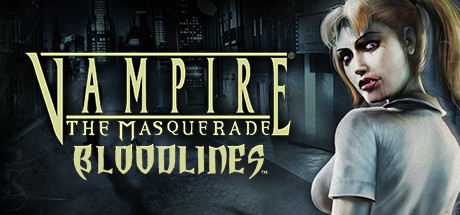
That emotional DNA—claustrophobic inevitability, body-as-battlefield, trust as fatal vulnerability—resonates in unexpected places. Take Vampire: The Masquerade - Bloodlines, where the player doesn’t just wear a monster’s skin—they feel its rot. The description names Body Horror & Occult as core dimensions, and the player review hints at something deeper than mechanics: the need for patches, workarounds, unstable systems—just like Yuki’s fractured psyche needing Deus’s glitchy, godlike intervention to hold reality together. When you’re a vampire in L.A., every social interaction is a potential exposure, every hunger a countdown; your body betrays you even as you weaponize it. That same violation of self—the way Yukiteru’s diary invades his privacy while promising salvation—is echoed in the game’s neon-noir dread: you’re never safe in your own form.
Then there’s S.T.A.L.K.E.R.: Shadow of Chernobyl, whose description frames the Zone not as terrain, but as a place where you fear not only radiation, anomalies and deadly creatures, but other S.T.A.L.K.E.R.s. Not enemies. Other S.T.A.L.K.E.R.s. That’s the key. Like the Diary Holders, they’re survivors shaped by the same hostile logic—desperate, compromised, unpredictable. The player review calls the map “big and beautiful,” but beauty here is deceptive, layered with invisible threats—just as Yukiteru’s world looks ordinary until the diary flashes “3:47 PM — Yuno stabs you in the neck.” Both force you to read silence, interpret stillness, suspect kindness. There’s no safe third party. Only mirrors wearing different faces.
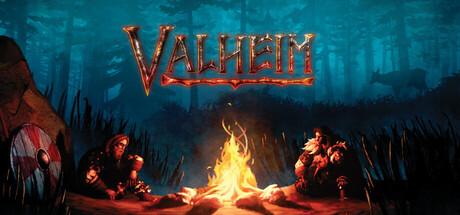
And Valheim, though draped in Norse myth, pulses with the same inescapable relational tension. Its description positions it as a “brutal exploration and survival game” set in “purgatory”—not heaven, not hell, but in-between, where every build is temporary, every alliance fragile, every raid a test of loyalty under duress. The player review nails it: “a troll destroys your entire house, then you…” —then you rebuild, yes, but also recalibrate trust, redistribute labor, question who stood where during the collapse. That exhaustion—the weight of maintaining bonds while knowing betrayal is structurally baked into the system—is pure The Future Diary. Yuno doesn’t just love Yukiteru. She archives him. In Valheim, you don’t just craft a longhouse—you log who placed each timber, who guarded the gate, who vanished before the boss fight. Intimacy is infrastructure. And infrastructure can be sabotaged.
This isn’t for the viewer who wants catharsis. It’s for the one who leans in when the music drops—not for a fight, but for a whisper. For the player who saves before talking to an NPC, not out of caution, but because they’ve learned love and violence wear the same syntax. It’s for people who recognize dread not as fear of death, but as the quiet horror of watching someone you adore slowly become a perfect, terrible reflection of your own unraveling. They don’t want to win. They want to witness—and survive the witnessing.
🎮42 Games That Match the Vibe










Match Dimensions Explained
❓Frequently Asked Questions
Why does Vampire: The Masquerade - Bloodlines feel like The Future Diary despite being an RPG?
Because both lean hard into psychological tension, morally grey choices, and characters who weaponize intimacy—like Yuno’s obsessive manipulation or VTM’s seduction-based Disciplines. You’ll recognize that same suffocating paranoia in Bloodlines’ neon-drenched L.A., especially during the Asmodeus Club scene where your vampire’s hunger wars with their humanity, just like Yukiteru’s diary-driven moral collapse.
Is there a visual novel adaptation of The Future Diary game?
No—there’s no official visual novel adaptation, but Chains nails that diary-like emotional escalation through its minimalist, high-stakes puzzle design. Each level forces you to chain bubbles under time pressure while the soundtrack swells and UI tightens, mimicking how Yukiteru’s entries get more frantic and fragmented as the survival game escalates.
How is S.T.A.L.K.E.R.: Shadow of Chernobyl similar to RAGE if both are on the 'Games Like The Future Diary' list?
They’re grouped not for tone, but for shared dimensions: both blend Survival & Crafting with Body Horror & Occult—and that’s where the Future Diary overlap clicks. In S.T.A.L.K.E.R., anomalies warp your body mid-run like Yuno’s reality-bending powers, while RAGE’s mutant designs (e.g., the Feral) echo the grotesque transformations seen in Diary’s ‘God’s Game’ hallucinations—both make survival feel deeply personal and physically violating.
What’s the best game like The Future Diary if I want that paranoid, isolated ‘trapped-in-my-own-head’ vibe?
S.T.A.L.K.E.R.: Shadow of Chernobyl—it’s the only one where you’re truly alone in a hostile, sentient-seeming world. That moment you hear distant radio static morph into whispers while navigating the abandoned Pripyat school? Or when your Geiger counter spikes *just* as your HUD glitches? It mirrors Yukiteru’s diary-induced dissociation better than any other title on the list.