
ODDTAXI
The taxi driver Odokawa lives a very mundane life. He has no family, doesn't really hang out with others, and he's an oddball who is narrow-minded and doesn't talk much. The only people he can call his friends are his doctor, Gouriki and his classmate from high school, Kakihana.
All of his patrons seem to be slightly odd themselves. The college student who wants the world to notice him online, Kabasawa. A nurse with secrets named Shirakawa. A comedy duo that just can't catch a break named the Homosapiens. A local hoodlum named Dobu. An idol group that's just starting out named Mystery Kiss... All these mundane conversations somehow eventually lead to a girl who's gone missing.
(Source: Crunchyroll)
📺Anime Details
📝Editorial Analysis
The rain in ODDTAXI doesn’t glisten—it clings. It slicks the asphalt of Tokyo’s backstreets into oily mirrors that reflect fractured neon, not beauty, but exhaustion: a flicker of Kabasawa’s phone screen lighting up Odokawa’s rearview, the dull sheen on Shirakawa’s coat as she steps out without looking back, the slow drip from a broken awning onto a discarded flyer for a comedy duo no one remembers. That’s the first breath of ODDTAXI: humid, low-ceilinged, thick with unspoken weight—not danger you brace for, but dread you absorb like damp through thin fabric.
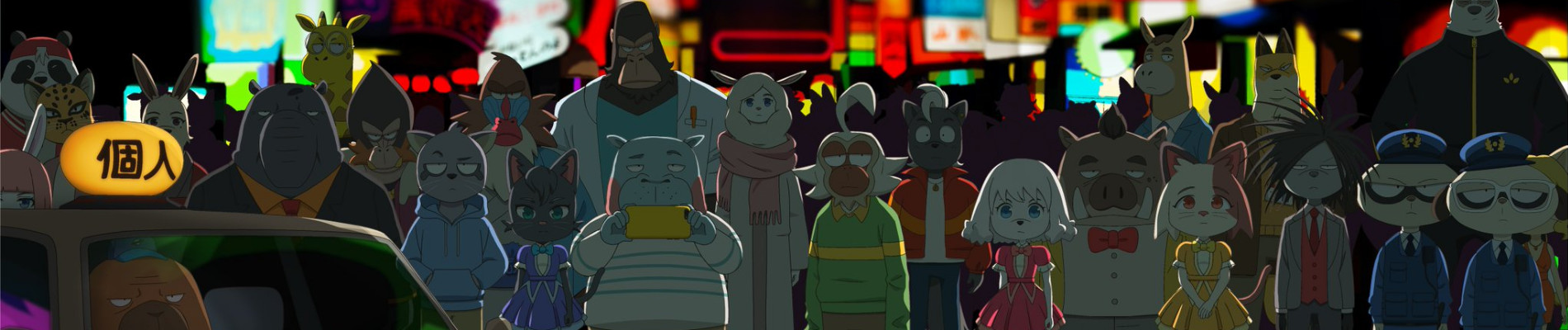
This isn’t noir as style—it’s noir as physiology. It makes you feel hyper-aware of silence between words, suspicious of kindness, tired of your own assumptions. The anthropomorphic animals aren’t whimsy; they’re camouflage—fur and beaks softening edges so the emotional violence lands slower, deeper. You don’t watch Odokawa drive—you occupy his quiet, his narrowed focus, his habit of listening past what people say to the tremor underneath. It’s urban alienation rendered in bassline thumps and subway announcements, where every passenger is a loose thread in a tapestry you’re not sure you want to unravel—because pulling one might collapse the whole thing. It makes you think about how much of connection is just waiting for the other person to stop performing.
That same suffocating, morally blurred intimacy lives in Max Payne. Its description nails it: “A man with nothing to lose in the violent, cold urban night… hunted by cops and the mob.” Odokawa isn’t shot at, but he’s cornered—by routine, by memory, by the slow erosion of his own boundaries. The player review recalls passing the controller after death, a shared ritual of futility mirroring how ODDTAXI’s ensemble stumbles forward in staggered, overlapping failures. Both trap you in a protagonist’s headspace where every decision feels less like agency and more like delaying the inevitable. And Max Payne 2: The Fall of Max Payne, called “a violent, film-noir love story”, hits the same nerve: love here isn’t warmth—it’s complicity, vulnerability as liability. Odokawa’s fragile bonds with Gouriki or Kakihana echo that—they’re not lifelines, but knots tightening under pressure, tender only because they’re so breakable.
Then there’s Vampire: The Masquerade - Bloodlines, described as delivering “a new type of RPG experience—one that blends all the core elements of a traditional RPG with the graphical richness, immediacy and brutal combat of a first-person shooter.” Its resonance isn’t in fangs or blood, but in Masquerade itself—the constant, exhausting performance of self. Shirakawa hides behind scrubs and calm tones; Kabasawa curates online attention like a ritual; even Odokawa’s stoicism is a mask against the noise of being human. The player review’s pragmatic note—“BUY IT ON GOG; if you want to use the steam version you need to download the unofficial patch…”—feels oddly fitting: both ODDTAXI and Bloodlines demand patience with systems that creak, with narratives that resist easy parsing, rewarding those who dig past surface glitches into the texture of decay.
Second Sight, too, pulses with this same frequency: “Combining an atmospheric, psychological thriller narrative with paranormal psychic abilities, stealthy exploration and intense shooter action…” Its player review calls it “one of my favourite games of all time… loved this game for its story and mechanics”—not despite the wonkiness, but with it. Like ODDTAXI’s jarring musical shifts or its characters’ abrupt tonal pivots, Second Sight’s “wonky mechanics” aren’t flaws—they’re symptoms. They make you feel unmoored, uncertain whether the distortion is in the world or in your perception. That’s the core ache: the suspicion that reality itself is poorly rendered, and you’re just trying to navigate it without breaking.
This pairing isn’t for someone who wants clean answers or cathartic action. It’s for the person who replays a single line of dialogue three times, wondering what wasn’t said. For the one who walks home at night listening to city sounds not as background, but as evidence. For the reader who underlines sentences about loneliness in novels, not because they’re sad, but because they’re accurate. It’s for those who find comfort not in resolution, but in the shared, quiet understanding that sometimes the most honest thing you can do is sit in the cab, watch the rain blur the lights, and wait—not for the destination, but for the next passenger to speak.
🎮32 Games That Match the Vibe







Match Dimensions Explained
❓Frequently Asked Questions
Why does Max Payne 2 feel so much like ODDTAXI despite being a cop thriller?
It’s all in the tone and structure—Max Payne 2 leans hard into tragic, fragmented storytelling with unreliable narration, morally gray characters like Mona Sax and Vladimir Lem, and surreal, dream-logic cutscenes (like the infamous 'drowning in blood' sequence) that mirror ODDTAXI’s psychological layering. Both use noir aesthetics—neon-drenched rain-slicked streets, voiceover monologues full of irony and existential dread—and explore identity collapse under systemic pressure, not just crime.
Is there an ODDTAXI video game adaptation?
No—there’s no official ODDTAXI game adaptation, and nothing on the horizon. But if you’re craving that same vibe, Vampire: The Masquerade – Bloodlines nails the adult, dark seinen energy: you play as a newly turned vampire navigating factional betrayals in a decaying, neon-lit Los Angeles, with dialogue choices that spiral into moral ambiguity—just like Hiroshi’s slow unraveling in ODDTAXI’s taxi cab confessions.
How does Second Sight compare to Max Payne for ODDTAXI fans?
Second Sight trades Max Payne’s bullet-time action for psychic-driven psychological disorientation—think John Vattic’s memory fragmentation and black-and-white flashbacks mirroring ODDTAXI’s non-linear reveals. While Max Payne leans into hard-boiled detective tropes, Second Sight mirrors ODDTAXI’s structural daring: both use unreliable perception (telekinesis vs. dissociative episodes) and quiet, eerie exploration (abandoned asylums vs. empty Tokyo streets) to build unease before the plot snaps into focus.
What’s the best game like ODDTAXI if I want that slow-burn, melancholic, late-night taxi ride mood?
Assassin’s Creed™: Director’s Cut Edition—yes, really. Its 11th-century Jerusalem isn’t Tokyo, but the lonely rooftop pacing, the whispered internal monologue as Altaïr walks past crowds he can’t truly join, and the political disillusionment echoing through every mission ('The truth is hidden in plain sight') hit the same contemplative, isolating rhythm as driving through ODDTAXI’s fogged cityscapes. It’s less about action, more about being a silent observer in a broken system—exactly the vibe.