
Junji Ito Maniac: Japanese Tales of the Macabre
From the horror master of manga comes a new anime series: JUNJI ITO'S MANIAC
A Netflix produced anime series adapting 20 stories chosen by Junji Ito, including from:
Souichi
The Hanging Balloons
The Strange Hikizuri Siblings: The Séance
Unendurable Labyrinth
The Long Hair in the Attic
Bullied
Where the Sandman Lives
Ice Cream Truck
Tomb Town
Library Vision
Headless Statue
📺Anime Details
📝Editorial Analysis
The attic door creaks open—not with a bang, but with that slow, dry rasp of warped wood resisting movement—and there it is: long hair, impossibly thick and black, coiling like living rope down the staircase, dripping faint moisture onto the floorboards. Not blood. Not slime. Just wetness, cold and quiet, as if the house itself has begun to weep. That’s the first breath of Junji Ito Maniac: Japanese Tales of the Macabre: not shock, but dread that settles in your molars, a hum beneath your ribs you can’t shake.
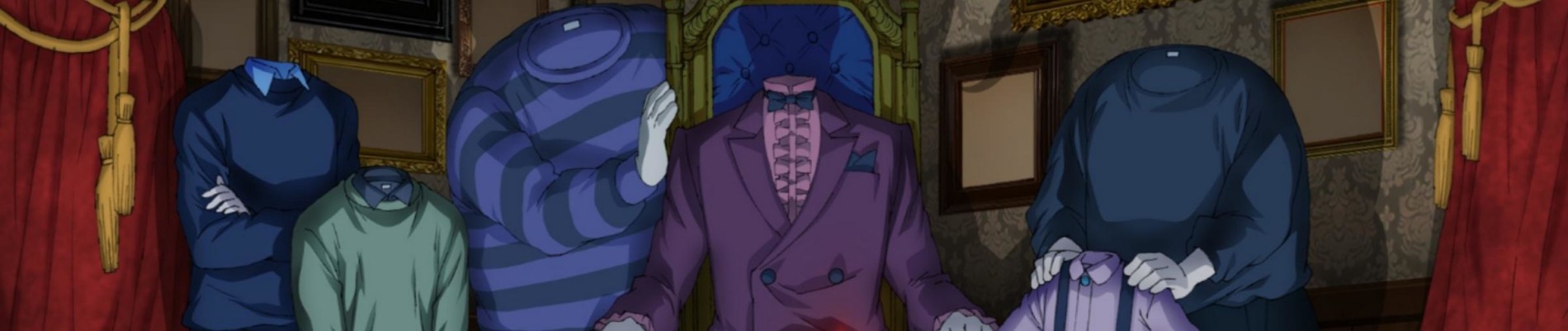
What makes this anthology so singular isn’t its ghosts or curses—it’s how deeply it trusts stillness to corrode you. The horror doesn’t leap; it accumulates. A child’s too-perfect smile lingers a half-second too long. A balloon floats upward—not toward the ceiling, but through it. A statue’s head rolls silently across pavement, then stops, facing the viewer, eyes already gone. There’s no jump-scare punctuation—just the unbearable weight of wrong continuity, of reality fraying at the edges while characters keep making tea, adjusting their collars, whispering about the weather. It’s cosmic indifference dressed in suburban wallpaper and school uniforms. You don’t fear death here—you fear recognition: that the world’s logic was always flimsy, and now it’s peeling back like old paint, revealing something hungry for symmetry, for repetition, for pattern.
That same suffocating, pattern-obsessed unease lives in DOOM + DOOM II, where hell isn’t fire and brimstone—it’s geometry made sentient. The game’s description calls it “the definitive, newly enhanced versions” of two 90s landmarks, but what echoes Junji Ito Maniac is deeper: the way walls bleed into each other in tight corridors, how demons warp mid-lunge, limbs elongating like taffy before snapping into new configurations. A player recalls building their first computer—a 486, with a Sound Blaster card—just to hear those guttural roars echo in their bedroom. That memory isn’t nostalgia; it’s embodied dread. Like Ito’s stories, DOOM weaponizes familiarity turned alien: the shotgun’s kick feels real, the health packs look like fruit juice—but the floor tiles pulse, the skybox glitches, and the air itself vibrates with something older than physics. Both works make you feel like a specimen under glass, watched by entities who find your panic aesthetic.
Then there’s BioShock™, described as “a shooter unlike any you’ve ever played,” loaded with “chemical weapons” and “brutal combat”—but its true kinship with Junji Ito Maniac lies in the architecture of collapse. Rapture isn’t destroyed by war or time alone; it’s undone by ideology curdling into flesh. The player review calls it “one of the most revolutionary games ever,” and what revolutionized it was how seamlessly it fused philosophy and body horror: splicers don’t just mutate—they worship their own dissolution, reciting slogans as their jaws unhinge. Just like Ito’s “Headless Statue,” where reverence twists into violation, or “The Long Hair in the Attic,” where devotion becomes parasitic growth—BioShock makes ideology visceral, sticky, biological. You don’t just fight monsters—you walk past their shrines, read their manifestos scrawled in blood, hear their prayers looped over intercoms. The horror isn’t external. It’s in the wiring, in the grammar of the world.
And Vampire: The Masquerade - Bloodlines, with its “graphical richness, immediacy and brutal combat,” mirrors Ito’s obsession with social rot made literal. Its description promises an RPG blending “core elements” with visceral action—but the player review cuts straight to the bone: “BUY IT ON GOG; if you want to use the steam version you need to download the unofficial patch…” That fragmented, jury-rigged existence? That’s Ito’s world. Characters wear masks—not just of politeness, but of species, of sanity, of gender. When a Toreador’s skin cracks to reveal porcelain beneath, or a Nosferatu’s voice distorts mid-sentence into subsonic growl, it’s not spectacle. It’s unmasking as inevitability. Like “The Strange Hikizuri Siblings: The Séance,” where ritual collapses into recursive horror, or “Bullied,” where cruelty metastasizes into physical law—Bloodlines treats identity as a fragile covenant, one slip away from tearing.
This isn’t for people who want scares. It’s for the ones who pause mid-scroll when a shadow moves against the light, who re-read a sentence because the syntax suddenly feels off, who’ve stared at their own reflection until the face almost didn’t match. The kind of person who saves a screenshot of a glitched texture—not to fix it, but to study how the error reveals the scaffolding beneath. They don’t seek escape. They seek recognition: that the world is stranger, older, and far more attentive than it lets on—and that sometimes, the most terrifying thing isn’t what’s in the dark. It’s how calmly the dark waits.
🎮41 Games That Match the Vibe























Match Dimensions Explained
❓Frequently Asked Questions
Why does Quake III Arena show up in 'Games Like Junji Ito Maniac' when it’s just fast-paced arena shooter?
It’s all about the *dimensions*—Quake III Arena shares Junji Ito’s core 'Body Horror & Occult' and 'Adult & Dark Seinen' vibes through its alien god antagonists, grotesque power-up transformations (like the Quad Damage’s warping, reality-bending effects), and the lore of warriors being harvested and reshaped by ancient, incomprehensible entities—very much like the cosmic dread in 'The Hanging Balloons' or 'Uzumaki'. The player review even nods to its enduring cult status among dark, mature audiences.
Is there a Junji Ito horror game adaptation like the anime series?
No official Junji Ito–licensed game exists yet—but games like BioShock™ and Vampire: The Masquerade – Bloodlines hit that same uncanny, psychologically twisted space. BioShock’s Rapture features mutated splicers with melting flesh and parasitic Little Sisters, echoing Ito’s body horror; Bloodlines gives you vampiric degeneration quests where your character physically unravels (like turning into a swarm or suffering sanity-shattering visions), straight out of 'The Faceless Man' or 'The Long Dream'.
How does Shank compare to BioShock for Junji Ito-style horror?
Shank leans into grindhouse *stylized* body horror—think over-the-top dismemberment, grotesque boss designs like the Chainsaw Twins, and surreal, dream-logic set pieces—but it’s more cartoonish and action-first. BioShock goes deeper: its audio logs, decaying art deco environments, and splicer mutations (like the ‘Spider Splicer’ with fused limbs and twitching limbs) mirror Ito’s slow-burn dread and psychological unraveling. Both score 52 on the same dimensions, but BioShock’s tone is closer to 'Tomie' than Shank’s 'Tales of the Macabre' anthology energy.
What’s the best game like Junji Ito Maniac if I want that oppressive, slow-burn dread—not jump scares?
Go straight to BioShock™—its underwater city Rapture oozes with creeping unease: flickering lights, distorted radio whispers, and environmental storytelling that makes every corridor feel like a living nightmare. The way splicers mutate *in real time* around you (e.g., the ‘Houdini Splicer’ phasing through walls while shrieking) mirrors Ito’s themes of inescapable transformation, and the player review calls it 'revolutionary' for good reason—it redefined atmospheric horror long before the anime dropped.