Speed Grapher
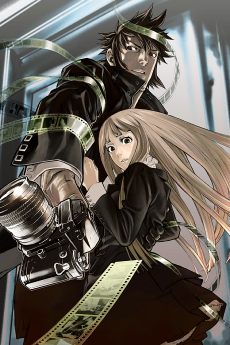
Ten years after the Bubble War, the dichotomy between the rich and the poor in the world becomes more prominent and Japan is no exception. The rich seek to satisfy their desires and derive pleasure for themselves, and Tokyo has materialized into such a city as a result. Saiga, once a war photographer, works for Hibara Ginza in the capitalist state of Tokyo. He infiltrates the Roppongi Club, a secretive base located in the red light district of the city, to collect information about them. However, he was caught in the process and brought forward to a girl called Kagura who was in the midst of a ritual. His contact with Kagura awakens his special ability: the power to make things explode when photographed. In order to unravel the mystery behind the Roppongi Club and Kagura, Saiga begins his solitary battle.
📺Anime Details
📝Editorial Analysis
The flicker of a camera shutter in the Roppongi Club’s basement—not the crisp click of a professional DSLR, but the wet, guttural thunk of Saiga’s modified lens firing off a burst that doesn’t capture light, but desire: a man’s greed liquefying into black tar, a woman’s lust crystallizing into jagged glass shards on her skin. That moment isn’t spectacle—it’s violation. The air smells like ozone and spilled sake, the bass from upstairs thrums through the floorboards like a failing heart, and Saiga doesn’t lower the viewfinder. He watches. Not to document. To unmake.

That’s the feeling Speed Grapher lives inside: dread with a slow shutter speed. It’s not about power fantasy—it’s about witnessing how systems calcify desire into cruelty. Ten years after the Bubble War, Tokyo isn’t rebuilding. It’s curating. The rich don’t just consume—they ritualize consumption at the Roppongi Club, where economics wears latex gloves and politics speaks in hushed chants. Saiga’s photography isn’t art or journalism anymore; it’s forensic theology. Every frame exposes how capital doesn’t just exploit bodies—it rewrites their physics, turning hunger into hunger for more hunger, turning pain into ornament. You don’t feel heroic watching him run. You feel complicit, breath shallow, fingers sticky with the same neon-slick residue clinging to the club’s velvet ropes.
That emotional DNA—claustrophobic grandeur, ideological rot dressed in silk, a city breathing like a wounded god—resonates sharply with three games whose real descriptions and player reviews confirm shared nerves. First, Assassin's Creed™: Director's Cut Edition, tagged as Political Thriller, Neon Noir, Dark Fantasy. Its description calls it a game that “redefines the action genre” not through spectacle, but through systems—the way power hides in architecture, in rituals, in the very geometry of Jerusalem’s alleys. A player notes the dated models “no issues with me”—because what lingers isn’t texture fidelity, but the weight of surveillance, the dread of stepping into a courtyard where every balcony holds an eye. Like Saiga ducking under Roppongi’s security lasers, Altair moves through spaces engineered to control desire—and both know: the most dangerous weapon isn’t the blade or the lens, but the permission granted by the system itself.
Then BioShock™, labeled Political Thriller, Body Horror & Occult, Adult & Dark Seinen. Its description boasts “weapons and tactics never seen”—but the horror isn’t in the plasmids’ glow; it’s in Andrew Ryan’s voice echoing through crumbling halls, just as Hibara Ginza’s pronouncements drip from hidden speakers in Tokyo’s financial district. A player calls it “revolutionary” not for its guns, but for how it makes ideology visceral: when your own body rebels, when your choices curdle into complicity, when the lighthouse isn’t salvation but initiation. Saiga’s photos don’t just harm—they reveal the grotesque logic binding pleasure to power, just as BioShock’s Little Sisters force you to confront ethics as metabolism.
Finally, Disco Elysium - The Final Cut, tagged Political Thriller, Neon Noir, Adult & Dark Seinen. Its description positions you as a detective with “a unique skill system” and “a whole city to carve your path across.” But the player review cuts deeper: “Capital has the ability to subsume all critiques into itself. Even those who would critique capital end up reinforcing it instead.” That line is Speed Grapher’s thesis—Saiga’s revenge doesn’t dismantle the Roppongi Club; it becomes another exhibit in its gallery. His trauma is monetized. His rage is aestheticized. The city doesn’t break—it digests.
This pairing isn’t for fans of “cool powers” or “edgy villains.” It’s for the person who watches Saiga develop film in a darkroom lit only by the red glow of his safelight—and feels their own pulse sync to the rhythm of the enlarger’s timer. For the player who pauses mid-game in Deus Ex: Game of the Year Edition, staring at the 2052 skyline while reading a newsfeed about “an ages old conspiracy bent on world domination,” and thinks: That’s not fiction. That’s the lease agreement. It’s for those who recognize dread not as fear, but as clarity—the chilling, electric certainty that the most terrifying thing isn’t the monster in the club’s basement, but the fact that the lights stay on, the music keeps playing, and everyone else is already dancing.
🎮40 Games That Match the Vibe














Match Dimensions Explained
❓Frequently Asked Questions
Why does Speed Grapher feel so much like BioShock when I'm exploring Rapture's halls?
It’s that shared blend of Political Thriller and Body Horror & Occult vibes—both use oppressive, decaying architecture to mirror psychological unraveling. In BioShock, you hear Andrew Ryan’s speeches echoing through flooded halls while mutated Splicers lurch from shadows, just like Speed Grapher’s surreal, fetish-tinged Tokyo where reality warps under ideological pressure. The score (79) and player review calling it 'revolutionary' back up how deeply its tone matches Speed Grapher’s unsettling, idea-driven dread.
Is there a Speed Grapher video game adaptation?
No—there’s never been an official Speed Grapher game. But fans looking for that same mix of Neon Noir, Political Thriller, and Adult & Dark Seinen energy land squarely on Disco Elysium (score: 69) or Deus Ex: Game of the Year Edition (score: 69). Both drop you into morally bankrupt cities where ideology is weaponized, dialogue choices reshape your worldview, and every alley feels soaked in rain-slicked conspiracy—just like Shido’s twisted photojournalism empire.
How does Vampire: The Masquerade - Bloodlines compare to Assassin's Creed in capturing Speed Grapher's vibe?
Bloodlines nails the Neon Noir + Dark Fantasy combo with its rain-lashed, vampire-run LA—think Speed Grapher’s fetish clubs and underground cults—but Assassin’s Creed leans harder into Political Thriller via its Templar/Assassin power struggle across Jerusalem’s holy sites. Bloodlines (score: 71) even mirrors Speed Grapher’s body horror through degeneration mechanics and grotesque blood rituals, while AC’s director’s cut (score: 81) delivers that same visceral, high-stakes tension during rooftop chases—just swap Shido’s camera lens for Altaïr’s hidden blade.
What’s the best game like Speed Grapher if I want that moody, rain-soaked, politically paranoid Tokyo-night feeling?
Disco Elysium — hands down. Its Revachol is all flickering neon signs, cigarette smoke, and ideological rot, matching Speed Grapher’s adult, psychologically dense atmosphere. You’ll interrogate unforgettable characters like Harrier DuBois while your skill checks whisper internal monologues about capital, fascism, or existential despair—exactly the layered, seedy-yet-intellectual mood you get watching Shido snap photos that literally warp reality. It’s got the 69 score and the player review quoting Marxist irony for proof.