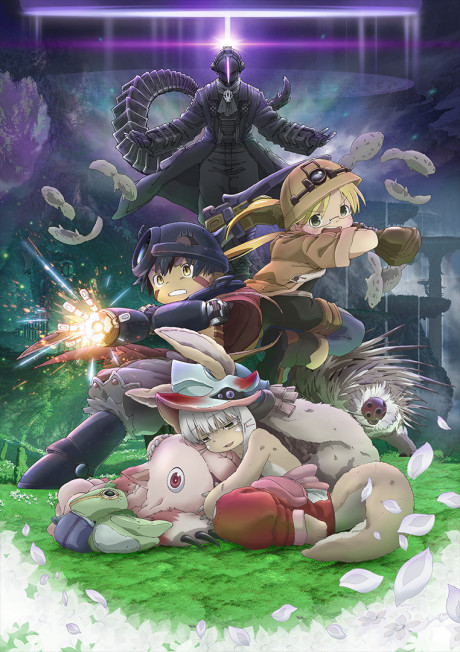
Made in Abyss: Wandering Twilight
A compilation film recapping the second half of the anime series.
The mystery surrounding her mother’s death deepens as Riko learns more about the truth of her origins. More determined than ever to travel to the bottom of the Abyss, Riko and Reg leave Ozen’s Seeker Camp and delve into the treacherous Third Layer — and beyond.
(Source: Sentai Filmworks)
📺Anime Details
📝Editorial Analysis
The air in the Third Layer doesn’t just thin—it resists. You feel it in Riko’s ragged breath as she scrambles over blackened, glassy rock that hums with latent energy, her fingers scraping raw against surfaces that shouldn’t exist. Her flashlight flickers—not from battery drain, but because the light itself seems unwelcome, bending away from certain shadows like water avoiding oil. There’s no music, just the low, subsonic thrum of the Abyss breathing beneath her boots, and the quiet, wet click of something unseen retracting into a fissure just out of frame. That silence isn’t empty. It’s listening.

What makes Made in Abyss: Wandering Twilight singular isn’t its genre checklist—it’s how it weaponizes scale and silence to make wonder feel like vertigo. This isn’t adventure as triumph; it’s adventure as slow, inevitable surrender—to mystery, to physics that mock human logic, to truths too vast to hold without breaking. The horror isn’t just gore or curses—it’s the recognition that every discovery deepens the wound: Riko’s mother didn’t vanish. She unraveled. And Riko’s own body may already be whispering back in the same language. It makes you think about inheritance—not of land or title, but of irreversible transformation. About how love can sharpen into obsession when the object of it is literally written into your bones—and buried miles underground.
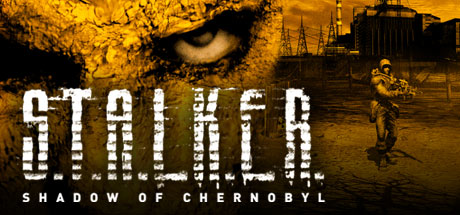
That emotional DNA—dread, awe, inescapable intimacy with decay—echoes in real ways in three games, not because they look alike, but because they share the same nervous system. S.T.A.L.K.E.R.: Shadow of Chernobyl, for instance, drops you into “the Zone”—a place where radiation isn’t just damage ticks, but presence: anomalies warp gravity, artifacts pulse with unstable energy, and mutated creatures aren’t monsters so much as consequences. Its player review nails it: “you fear not only the radiation, anomalies and deadly creatures, but other S.T.A.L.K.E.R.s.” That layered dread—environmental, biological, social—is pure Abyss. Like Riko navigating the Third Layer’s shifting geology and predatory fauna, the Zone forces you to read terrain like scripture: every shimmer in the air, every twisted tree, every silence before static crackle is data you must interpret—or die misunderstanding. Both refuse to explain. They insist you learn by consequence.
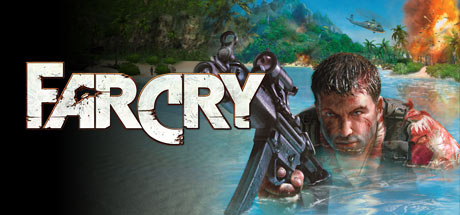
Then there’s Far Cry®, whose description calls it “a tropical paradise seethes with hidden evil,” and whose tag includes Adult & Dark Seinen. Its player review hints at something deeper than shooter mechanics: “A good game, though the AI is a bit messy but still fun…” But what lingers isn’t the gunplay—it’s the dissonance between lush, sun-drenched beauty and the wrongness festering underneath: cults, experiments, bodies remade in service of power. That tonal fracture—idyllic surface, grotesque substrate—is the Abyss in microcosm. Riko’s chibi moments aren’t comic relief; they’re the mind’s fragile scaffolding against cosmic weight. Similarly, Far Cry’s beauty isn’t decoration—it’s the trap that makes the horror stickier, more personal, more inescapable.
And Manhunt, brutal and unflinching, shares the Abyss’s most unsettling thread: agency erosion. Its description says, “You awake to the sound of your own panicked breath… If you can stay alive long enough, you may find out who did this to you.” Not what happened—but who. Identity, memory, even volition become unstable. Riko’s journey isn’t just downward—it’s inward, toward a self she may not recognize when she arrives. The player review calls it “disgusting… because Cockstar released a PAID STEAM COPY… unplayable due to anti-pir…”—but that frustration mirrors the Abyss’s own refusal to yield meaning cleanly. Both demand endurance through broken systems, where survival isn’t heroic—it’s gritty, messy, and often morally ambiguous.
This pairing sings for the person who watches Riko press forward with trembling hands—not because she believes she’ll win, but because stopping would mean admitting the truth is too heavy to carry. They’re the ones who reload after a failed anomaly jump in S.T.A.L.K.E.R., not for victory, but to witness the Zone’s logic one more time. Who pause mid-firefight in Far Cry not to aim better, but to stare at how sunlight catches the sweat on a cultist’s brow—human, yet utterly alien in context. Who play Manhunt not for gore, but for the weight of each creaking floorboard, each held breath—because that is where meaning hides: in the unbearable slowness of being known, hunted, and changed by forces older than names. They don’t seek answers. They seek resonance. And here, in the hum of the Abyss and the static of the Zone and the silence before the kill—they find it. Unsettling. Intimate. Inevitable.
🎮63 Games That Match the Vibe

























Match Dimensions Explained
❓Frequently Asked Questions
Why does S.T.A.L.K.E.R.: Shadow of Chernobyl keep showing up in 'Games Like Made in Abyss: Wandering Twilight' lists?
It’s all about that oppressive, awe-tinged dread—like when Riko and Reg descend into the Abyss’s Fifth Layer, you feel wonder *and* visceral unease. S.T.A.L.K.E.R. nails that same vibe: stumbling through the Zone’s fog-draped ruins, hearing distant anomaly distortions, watching your Geiger counter tick up as you pass mutated creatures—no hand-holding, just haunting environmental storytelling and body horror baked into every rusted pipe and warped corpse.
Is there a Made in Abyss anime or game adaptation of Wandering Twilight?
No—'Wandering Twilight' isn’t an official Made in Abyss title at all. It’s a fan-made or mislabeled descriptor sometimes attached to games that evoke the series’ tone (like S.T.A.L.K.E.R. or Manhunt), but there’s zero anime episode, manga arc, or official Bandai Namco game by that name. If you saw it on a storefront or forum, it’s likely a misleading tag—stick with the real canon or verified matches like Far Cry or Chains for that melancholic, layered atmosphere.
How does Chains compare to Manhunt if I want something with Made in Abyss’ emotional weight but way less gore?
Chains is basically the serene, meditative flipside to Manhunt’s brutal tension—think Riko’s quiet moments sketching in her notebook versus the gut-punch horror of the Curse. Chains uses soft pastel bubbles and gentle physics-driven chaining (like linking three cerulean orbs to clear a path) to build calm focus, while Manhunt forces you into shadowy alleys with ragdoll executions and audio-triggered panic. Both score high on Emotional Narrative, but Chains delivers that ache without a single drop of blood.
What’s the best game like Made in Abyss for that ‘beautiful but deeply unsettling’ twilight mood?
Far Cry®—especially the original—is your strongest match. Remember how the Abyss’ bioluminescent fungi glow eerily in total darkness? Far Cry mirrors that with its jungle: sun-dappled canopies hiding whispering cultists, sudden shifts from serene bird calls to distorted chants, and those unforgettable hallucinatory cutscenes where reality frays (like Jack Carver’s fever dreams). It’s not just ‘dark’—it’s lush, adult, and psychologically unmoored, just like the Abyss’ most haunting descents.