
ERASED
Satoru Fujinuma is a 29 year old manga artist struggling to make a name for himself following his debut. But, that was not the only thing in his life that Satoru was feeling frustrated about… He has a unique supernatural ability of being forced to prevent deaths and catastrophes by being sent back in time before the incident occurred, repeating time until the accident is prevented. One day, he gets involved in an accident that has him framed as a murderer. Desperate to save the victim, he sends himself back in time only to find himself as a grade-schooler one month before fellow classmate Kayo Hinazuki went missing. Satoru now embarks on a new quest: to save Kayo and solve the mystery behind her disappearance.
📺Anime Details
📝Editorial Analysis
The snow falls sideways in Satoru Fujinuma’s childhood town—not gently, not romantically, but relentlessly, like time itself pressing down. You see it through the cracked window of his mother’s cramped apartment: gray light, muffled silence, the faint scrape of chalk on a classroom blackboard just before the bell rings—and then the world blurs, fractures, and snaps back into place with a sickening lurch. Not forward. Back. Always back. That moment—when Satoru’s breath hitches, his vision swims, and the scent of wet wool and pencil shavings floods his nose—is where ERASED lives: not in grand spectacle, but in the dread of repetition, the quiet horror of knowing what comes next—and still having to walk toward it.
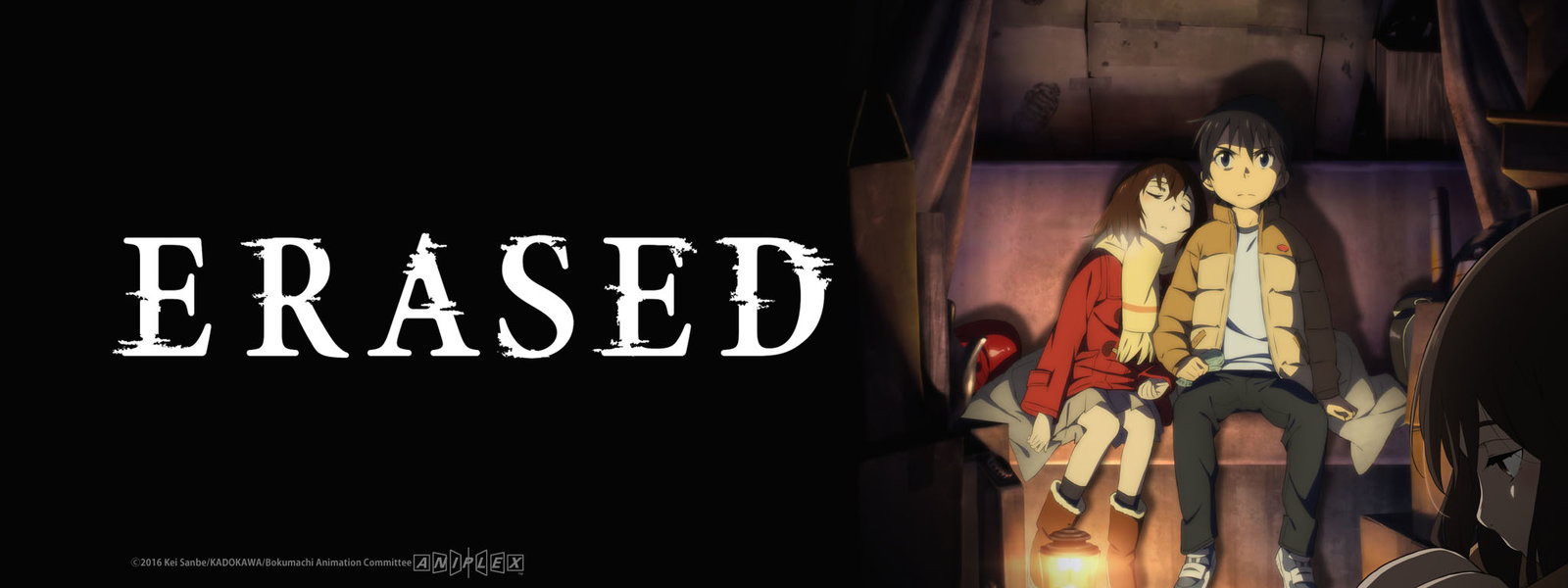
What makes ERASED’s atmosphere so singular isn’t its time-jumping premise—it’s how deeply it hurts. It doesn’t thrill in paradoxes or dazzle with mechanics. It aches. Every frame feels weighted: the hollow echo of empty school hallways, the too-bright fluorescence of convenience stores at 3 a.m., the way Satoru’s adult mind strains against a child’s body like a hand gripping a rusted hinge. This is time as trauma: not a tool, not a weapon, but a wound that reopens every time he slips backward. You don’t feel clever solving the mystery—you feel exhausted, complicit, haunted by the knowledge that prevention isn’t salvation; it’s delay wearing thin. The snowscape isn’t backdrop—it’s atmosphere made physical: cold, isolating, beautiful in its desolation, and utterly indifferent to the boy trying to hold a life together one fractured second at a time.
That same emotional gravity pulses through BioShock Infinite—not in its sky-cities or vigors, but in Booker DeWitt’s inescapable past, the way memory bleeds across realities until “wiping the slate clean” reveals itself as myth. The player review nails it: “I know that some people are still bitter about the Bioshock Infinite we could have gotten.” That longing—for a version of the story without consequence, without recursion—mirrors Satoru’s own desperate, looping attempts to outrun guilt. Both works trap you in cycles where choice feels illusory, and redemption is measured not in victory, but in how much you’re willing to bear.
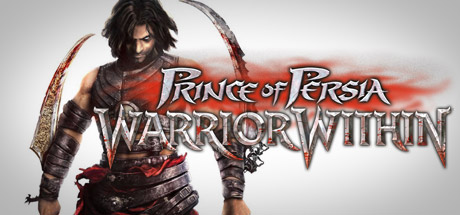
Then there’s Prince of Persia: Warrior Within, where Dahaka hunts the Prince not as villain, but as consequence given form—a relentless, shimmering shadow that cannot be outrun, only delayed, evaded, bargained with. The player review calls the chase “goated,” but what lingers isn’t the adrenaline—it’s the fatigue, the way every corridor narrows, every ledge feels borrowed. Like Satoru sprinting barefoot across frozen pavement, lungs burning, knowing Dahaka isn’t chasing him—it’s chasing the act of running. Time isn’t manipulated here; it’s pursued, and the pursuit leaves scars no sand can erase.
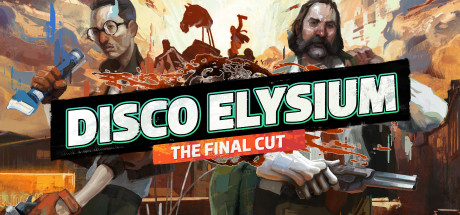
And Disco Elysium - The Final Cut? It shares ERASED’s bone-deep commitment to mystery as moral excavation. Not “who did it?” but “what does it cost to keep looking?” The detective doesn’t gather clues—he gathers shame, regret, complicity. The player review quotes capital’s cruel irony: “Even those who would critique capital end up reinforcing it instead.” That’s Satoru’s curse in miniature—every time he saves someone, he deepens his entanglement in systems he can’t control: institutional neglect, adult indifference, the slow suffocation of small-town silence. His investigation isn’t procedural—it’s autopsy, performed on his own conscience.
These pairings won’t resonate with someone seeking escapism or clean catharsis. They’re for the person who replays a game not for mastery, but to sit again with the weight of a decision—like the one where Satoru chooses not to tell his mother what he knows, because the truth would break her faster than the lie. For the reader who pauses mid-chapter to stare out the window, feeling the snow fall inside their ribs. For the player who lingers in a neon-lit alley not to fight, but to listen—to the hum of faulty streetlights, the distant wail of a siren that never gets closer, the quiet, relentless sound of time refusing to let go.
🎮46 Games That Match the Vibe









Match Dimensions Explained
❓Frequently Asked Questions
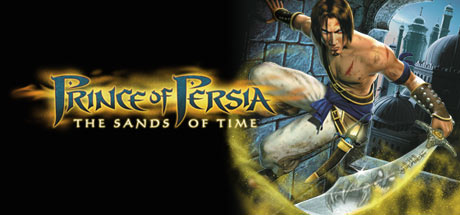
Why does ERASED feel so similar to Prince of Persia: The Sands of Time?
It’s all about that time-bending tension—both hinge on rewinding moments to fix fatal mistakes, like when Satoru Fujinuma re-lives a bus crash or the Prince undoes a fatal fall in the palace gardens. The Sands of Time nails that same desperate, personal stakes with its dagger-powered rewind mechanic and morally grey choices under pressure—plus both lean hard into Adult & Dark Seinen vibes with trauma, guilt, and fractured timelines.
Is there an ERASED video game adaptation?
No official ERASED game exists—but if you’re craving that same gut-punch mystery + time-loop urgency, BioShock Infinite hits closest: Booker DeWitt’s mission to rescue Elizabeth across collapsing realities mirrors Satoru’s race against fate, especially in the lighthouse and Comstock House sequences where memory fractures and identities blur. Both earned 83 scores and share the Time & Memory + Adult & Dark Seinen dimensions.
How does Prince of Persia: Warrior Within compare to Disco Elysium for psychological depth?
Warrior Within dives deep into guilt and consequence—like when Dahaka hunts the Prince across shifting sands and crumbling temples, forcing him to confront his past sins head-on—while Disco Elysium tackles trauma through dialogue and skill checks (e.g., 'Logic' failing during a breakdown in Martinaise). They’re worlds apart mechanically, but both are Adult & Dark Seinen experiences where your psyche *is* the battlefield—and neither lets you look away from the damage.
What’s the best game like ERASED if I want that melancholy, rain-soaked neon-noir vibe?
Disco Elysium — hands down. Think of ERASED’s quiet, heavy moments in the snow-covered Hokkaido streets, then swap snow for perpetual drizzle and streetlights bleeding color across wet pavement in Revachol. Its Neon Noir dimension matches perfectly, and scenes like confronting Cuno in the wharf or piecing together the ‘Case of the Drowned Man’ hit that same slow-burn, emotionally raw, morally ambiguous tone—plus it shares ERASED’s focus on memory, identity, and quiet devastation.