
Death Note
Light Yagami is a genius high school student who is about to learn about life through a book of death. When a bored shinigami, a God of Death, named Ryuk drops a black notepad called a Death Note, Light receives power over life and death with the stroke of a pen. Determined to use this dark gift for the best, Light sets out to rid the world of evil… namely, the people he believes to be evil. Should anyone hold such power?
The consequences of Light’s actions will set the world ablaze.
(Source: VIZ Media)
📺Anime Details
📝Editorial Analysis
The fluorescent hum of Light Yagami’s bedroom at 3:47 a.m. — that’s where it lives. Not in the grand showdowns, not in the rooftop confrontations, but there: a single desk lamp casting a tight, clinical pool of light over ruled paper, a fountain pen hovering, the scratch-scratch of ink on page as he writes a name — and somewhere, across the city, a heart stops. No music swells. No wind stirs the curtain. Just the quiet, suffocating weight of certainty. He knows. He chose. And the world doesn’t flinch — it just keeps breathing, unaware it’s been edited.

That’s the feeling Death Note weaponizes: the vertigo of moral absolutism meeting absolute power — not as spectacle, but as routine. It’s not about gore or shock; it’s the chill of bureaucracy applied to murder, the dread of logic so clean it erases empathy, the loneliness of being the only one who sees the system’s flaws — and deciding you’ll become the system instead. It makes you question whether justice is a process or a verdict signed in ballpoint. It makes you sweat in silence, not because something’s chasing you — but because you’re watching yourself become unrecognizable, one flawless deduction at a time.
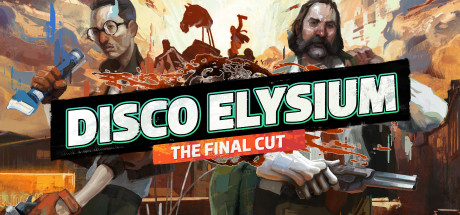
That same emotional DNA thrums in Disco Elysium - The Final Cut, where the city of Revachol isn’t just a setting — it’s a sentient, decaying ideology you’re forced to navigate with your own mind as the crime scene. Like Light, you’re a genius armed with overwhelming cognitive tools — but here, your skills argue against you, whispering contradictions, undermining your convictions. The player review nails it: “Capital has the ability to subsume all critiques into itself.” That’s Light’s tragedy too — his war on evil gets absorbed, repackaged, and sold back to him as righteousness. Both demand you interrogate your own certainty until it cracks.
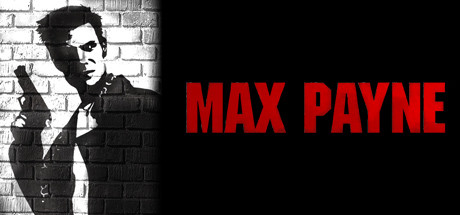
Then there’s Max Payne, where the noir isn’t stylistic — it’s physiological. You’re a fugitive, hunted by the very institutions you swore to serve, moving through rain-slicked alleys where every shadow hides a cop and a killer. The description says it outright: “A fugitive undercover cop framed for murder, hunted by cops and the mob, Max is a man with his back against the wall…” That’s Light in the Kira investigation — not physically running, but existentially cornered, rewriting reality to stay ahead of the truth. His brilliance is his only cover — just as Max’s bullet-time isn’t flair, it’s the last gasp of agency in a world that’s already decided he’s guilty.
And Prince of Persia: The Two Thrones™, with its Time & Memory dimension, mirrors Death Note’s most insidious horror: the erosion of self through consequence. The Prince returns to Babylon not as a hero, but as a vessel for something darker — a duality he can’t outrun, only manage. Like Light, he carries a parasitic consciousness (the Dark Prince) that speaks in seductive logic, justifying cruelty as necessity. The description hints at it: “he finds his homeland ravaged by war and the kingdom corrupted” — not by an external enemy, but by choices made in the name of order. Memory isn’t nostalgia here — it’s evidence. And every flashback is a confession.
These aren’t matches because they’re “dark” or “smart.” They’re kin because they trap you in the interiority of collapse: the moment your ethics stop guiding you and start justifying you. They don’t ask what would you do? — they make you live inside the answer, long after the screen fades.
You’d love this pairing if you’ve ever stared at a spreadsheet and felt the quiet thrill of control — then caught yourself wondering what lines you’d redraw just once, if no one was watching. If you’ve paused a game not to strategize, but to reread dialogue — searching for the exact sentence where the protagonist stopped being human and started being inevitable. If you don’t want heroes. You want the silence after the pen hits the page. The breath before the trigger clicks. The flicker of streetlight on wet pavement when you realize — you’re the monster the story’s been warning about. Not because you’re evil. But because you’re certain. And certainty, in these worlds, is the first symptom of infection.
🎮39 Games That Match the Vibe




Match Dimensions Explained
❓Frequently Asked Questions
Why is Disco Elysium listed as similar to Death Note when there’s no supernatural notebook?
Great question — it’s not about the notebook, but the *mind games*. Like Light Yagami, you’re a brilliant but deeply flawed investigator navigating moral decay in a broken city (Revachol), where every dialogue choice feels like a high-stakes deduction. The skill checks — like Logic or Empathy — force you to outthink suspects and institutions just like Light manipulates the police and Kira task force, and that ‘Capital subsumes all critiques’ line? Pure L vs. Light energy.
Is there a Death Note video game adaptation I can actually play?
No official Death Note game exists — not on consoles, PC, or mobile. But fans who crave that cerebral cat-and-mouse tension consistently land on Max Payne and Max Payne 2, where you play as a morally gray antihero (Max) unraveling conspiracies while hunted, much like Light’s dual identity. The noir voiceover, slow-motion gunfights mirroring Light’s calculated pauses, and even the tragic, self-destructive arc of Max Payne 2’s love story echo Death Note’s fatalism and psychological weight.
Max Payne vs. Prince of Persia: The Two Thrones — which one captures Death Note’s ‘cold genius’ vibe better?
Max Payne wins hands-down for that icy, hyper-observant intellect — think Light analyzing CCTV feeds or L crouching on the floor. Max’s internal monologue dissects motives, lies, and cause-effect chains in real time, and his detective work (like interrogating suspects in the original’s ‘Nightmare’ sequences) mirrors Light’s forensic manipulation. Prince of Persia trades logic for time-bending action and has Kaileena’s haunting presence, but its tone leans more tragic fantasy than clinical psychological warfare.
What’s the best Death Note-like game if I want that late-night, rain-soaked, morally exhausted feeling?
Disco Elysium — no contest. It drops you into the decaying port city of Revachol at 3 a.m., hungover and haunted, with your own mind literally talking back to you (like Light’s inner monologues or L’s obsessive whispering). The neon-drenched streets, political rot, and constant tension between ideology and survival — plus that devastating player review quote about capital consuming critique — hit the same nerve as Death Note’s descent into isolation and ideological collapse.