
Texhnolyze
In a man-made underground society, descendants of a banished generation vie for control of the crumbling city of Lux. Ichise, an orphan turned prize fighter, loses a leg and an arm to satisfy an enraged fight promoter. On the brink of death he is taken in by a young woman doctor and used as a guinea pig for the next evolution of Texhnolyze. With his new limbs, Ichise is taken under the wing of Oonishi, a powerful leader of Organ, an organization with some hold on Lux. As Ichise is drawn deeper into a war for territorial control of the city, he learns of his possible future from the young girl prophet Ran, who guides him from the shadows in his darkest times. With the explosion of the warfare, Ichise must uncover the truth about Lux and fight for his survival as he realizes his destiny.
(Source: Anime News Network)
📺Anime Details
📝Editorial Analysis
The air in Lux doesn’t just smell of damp concrete and ozone—it tastes like rust and stale breath. You feel it first in the silence between gunshots: Ichise dragging himself through a flooded service tunnel, his new texhnolyzed limbs whining under strain, hydraulic joints clicking like broken teeth, while distant sirens warp into something unrecognizable—neither warning nor call, just static bleeding from the city’s failing nervous system. No music swells. No voiceover explains. Just that slow, wet drag of metal on stone, and the low hum of a dying generator somewhere above, vibrating through the floor like a trapped pulse.

That’s not atmosphere—it’s weight. Texhnolyze doesn’t build its world with exposition or neon-lit skylines; it sinks you into the gravity of decay. This isn’t cyberpunk as spectacle—it’s cyberpunk as sedimentary layering: class struggle compacted over generations until the upper tiers forget light exists, and the lower tiers breathe dust so thick it coats the tongue. There’s no catharsis in rebellion here, no triumphant upgrade—only incremental erosion. Every act of survival is also an act of surrender. You don’t think about philosophy in Texhnolyze—you stumble over it, barefoot on shattered glass, your thoughts fraying at the edges like Ichise’s frayed neural interface. It makes you feel small, yes—but more precisely, unmoored: like meaning isn’t lost, but was never anchored to begin with.
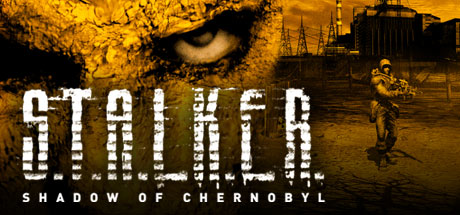
That same unmoored dread lives in S.T.A.L.K.E.R.: Shadow of Chernobyl, where the Zone isn’t a setting—it’s a presence that watches back. The description says you fear “radiation, anomalies and deadly creatures, but other S.T.A.L.K.E.R.s”—and that last clause lands like a gut punch because the real threat isn’t the environment, but the human echo within it: desperate, compromised, half-erased by the very forces they seek to exploit. A player review calls the map “big and beautiful,” but beauty here is grotesque—lush overgrowth strangling rusted tanks, mist clinging to abandoned labs like regret. That’s Lux, too: not ruined despite life, but because of it—life persisting like mold in sealed vents, indifferent to dignity.
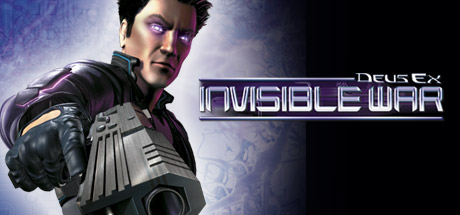
Then there’s Deus Ex: Game of the Year Edition, where the year is 2052 and “the gap between the insanely wealthy and the desperately poor grows ever wider.” That line isn’t backdrop—it’s architecture. Like Lux’s stratified levels, Deus Ex’s cities are vertical hierarchies made flesh: penthouse boardrooms humming with quiet control, while sewer-dwellers barter bio-scrap in flickering basements. A player notes how the game “gives you all options with one hit of the esc key”—but those options are always compromised. Hack the security grid? You’ll erase someone’s medical records. Negotiate with a corp exec? Their offer comes wrapped in surveillance terms. There’s no clean path, only trade-offs that accumulate like scar tissue—exactly how Ichise’s body becomes less his, and more a ledger of debts owed to Organ, to the doctor, to the city itself.
And Dreamfall: The Longest Journey, though tonally softer, shares Texhnolyze’s emotional grammar: “It’s less a long journey than a long drama,” reads the review—and that’s the key. Both works treat plot as secondary to duration: the ache of waiting, the exhaustion of repetition, the way grief settles not in climaxes but in silences between lines. Dreamfall’s dystopian arc isn’t about overthrowing systems—it’s about watching relationships calcify under pressure, watching ideals curdle into resignation. Like when Ichise stares at his reflection in a cracked visor, not recognizing the eyes behind the optics—not because he’s changed, but because recognition has become irrelevant. Survival isn’t heroic. It’s habitual. And habit wears you down.
This pairing isn’t for fans of slick upgrades or righteous revolutions. It’s for the ones who linger on loading screens just to hear the ambient rain in a ruined plaza. For players who pause mid-mission not to strategize—but to watch a stray dog limp across a collapsed overpass in S.T.A.L.K.E.R., wondering if it’s feral or just forgotten. For viewers who rewatch Ichise’s first walk after surgery—not for the mechanics, but for the way his shoulders slump before his knees lock, as if his body already knows the cost. These are stories for people who understand that dread isn’t fear of what’s coming—it’s the slow, cold certainty that nothing will ever truly end. Just settle. Just sink. Just keep walking, even when the ground feels less like earth and more like the inside of a collapsing ribcage.
🎮87 Games That Match the Vibe






















































Match Dimensions Explained
❓Frequently Asked Questions
Why does S.T.A.L.K.E.R.: Shadow of Chernobyl feel so much like Texhnolyze’s underground city of Lukus?
Because both trap you in a decaying, morally ambiguous urban wasteland where survival hinges on reading silence—not just gunfire. Like Lukus’ claustrophobic tunnels and flickering neon-lit corridors, the Zone’s abandoned Pripyat apartments and rusted industrial anomalies (like the ‘Vortex’ or ‘Electra’) force you into slow, tense navigation—no HUD tells you when danger’s coming, just like how Ichise stumbles through Lukus blindfolded in episode 12, relying on sound and instinct.
Is there a Texhnolyze video game adaptation?
No—there’s never been an official Texhnolyze game, and none of the titles in this list are adaptations. But Deus Ex: Game of the Year Edition comes closest in *spirit*: JC Denton’s arc mirrors Ran’s descent—both start as controlled operatives (a UNATCO agent / a Lucite enforcer) only to unravel conspiracies that erase their sense of self, culminating in scenes like JC confronting Walton Simons in the VersaLife labs, echoing Ran’s final confrontation with the Council in the subterranean archives.
How is Dreamfall: The Longest Journey different from Deus Ex in capturing Texhnolyze’s tone?
Dreamfall leans into quiet, character-driven despair—like Zoë Castillo walking alone through the rain-slicked, hollowed-out streets of Casablanca in Chapter 7, where dialogue hangs heavy and music fades out mid-sentence—mirroring Texhnolyze’s long silences and emotional exhaustion. Deus Ex, by contrast, gives you agency and systems (hacking, augmentations, branching paths), making its dystopia feel *engineered*, whereas Dreamfall’s world feels *worn down*, like Lukus after the Third Wave—less about rebellion, more about surviving the weight of memory.
What’s the best game like Texhnolyze if I want that slow-burn, emotionally drained, rain-soaked vibe?
Dreamfall: The Longest Journey—it’s the only one here built around lingering melancholy rather than action. Think of Zoë staring out her apartment window at Casablanca’s grey skyline for nearly a full minute while ambient synth hums underneath, or the way the game lingers on facial micro-expressions during arguments—exactly like Texhnolyze’s static shots of Rei sitting motionless in her clinic, listening to distant sirens. No shooting, no crafting—just atmosphere, ambiguity, and the ache of unresolved grief.