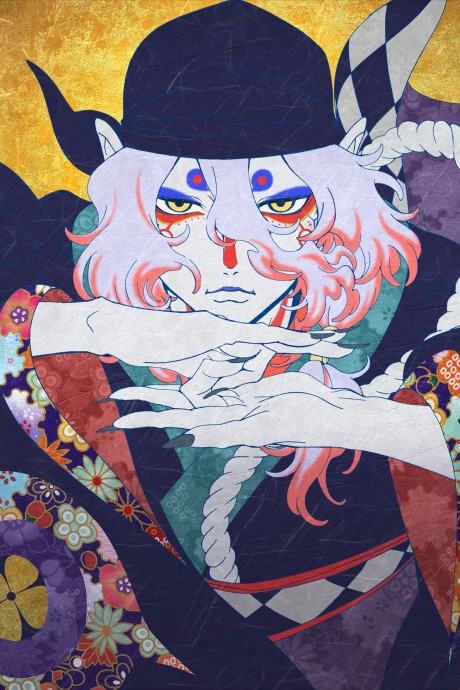
Mononoke The Movie: The Phantom in the Rain
The first movie in the Mononoke movie trilogy.
Asa and Kame strike up an immediate friendship when they arrive at the same time for their first day of duty at the Ooku, the splendid pleasure palace housing the harem of Lord Tenshi. The two young women are there to join the many hundreds of other maidservants—men are barred from entering, with immediate beheading the price of trespassing. It soon becomes clear that behind the luxurious lifestyle and ritualized routines of the Ooku lie sinister schemes and cynical rivalries. Meanwhile, a mysterious wandering potion-peddler known only as the Medicine Seller subtly insinuates himself into the Ooku, just as an uncanny, otherworldly menace begins to reveal itself.
(Source: Fantasia Film Festival)
📺Anime Details
📝Editorial Analysis
Rain falls in silver needles against the lacquered eaves of the Ooku—not gentle, not cleansing, but insistent, as if the sky itself is holding its breath before a confession. Inside, Asa and Kame stand side by side on their first day, bare feet silent on polished cypress, fingers trembling just once as they bow in unison—two girls folded into the same rigid posture, already learning how to vanish inside ritual. That stillness isn’t peace. It’s the quiet before the mononoke reveals itself: not as claws or fangs, but as the slow, suffocating weight of what’s unsaid—the hush after a girl stops speaking, the way a mirror holds your gaze a half-second too long when no one else is watching.
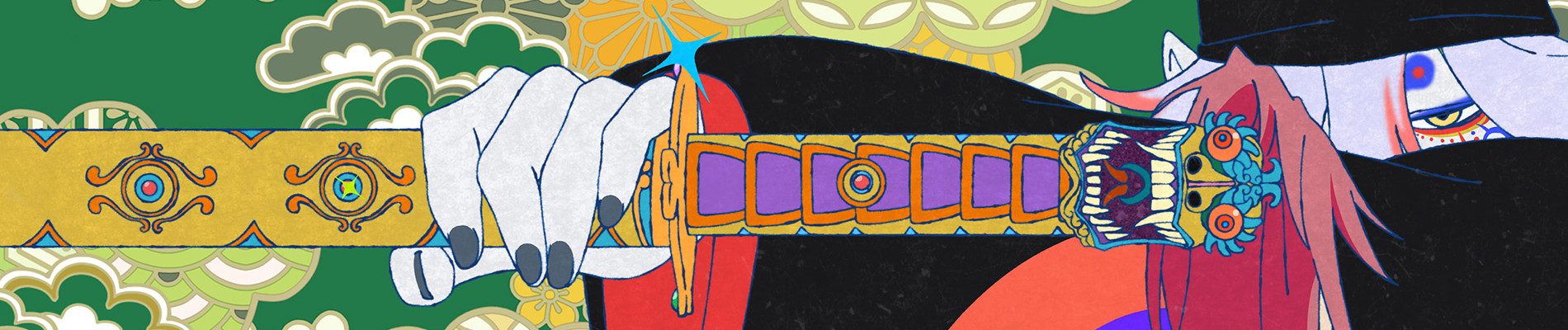
This isn’t horror that leaps. It’s horror that settles: thick as incense smoke in a closed chamber, cold as the porcelain bowl used to wash a corpse’s face. Mononoke The Movie: The Phantom in the Rain doesn’t traffic in jump scares or gore—it trades in silence with history in it, in the unbearable tension between duty and despair, in the way a woman’s name can be erased not by fire, but by repetition—by saying “Kame-san” until “Kame” dissolves into the role, then into the floorboards, then into the rain. You don’t fear the ghost here—you fear the moment you realize you’ve already started forgetting her. The tragedy isn’t that she dies. It’s that her death was never allowed to be her death. It was absorbed, smoothed over, reclassified—as incident, as shame, as weather.
That emotional DNA—the dread of erasure, the occult weight of systemic silence—echoes in games where violence isn’t spectacle, but symptom. DOOM + DOOM II, for instance: not just demon-slaying, but ritual exorcism made kinetic. Its description calls it “the definitive, newly enhanced versions”—but the player review remembers something rawer: building a 486 with a Sound Blaster, WOO!—a machine assembled like a shrine, every beep and roar a defiance against entropy. Like the Ooku’s strict rites, DOOM’s corridors demand precision, rhythm, reverence for form—even as hell breaks loose. Both are about maintaining order while standing inside collapse. The horror isn’t the monsters—it’s the terrifying clarity of knowing exactly what must be done, even as the walls bleed.
Then there’s BioShock 2, whose description drops the phrase “a monster has been snatching little girls”—not as action hook, but as moral residue. The player review? A frustrated, almost wounded litany: “Crashes non stop… Spent hours researching ways t…” That broken persistence mirrors Asa’s quiet, grinding labor—trying to function inside a system that’s already failing at the code level. The game stutters, freezes, refuses to render reality cleanly—just as the Ooku refuses to name grief, to let mourning take shape. Both are haunted not by ghosts, but by glitches in the covenant: promises made (safety, purity, salvation) that the architecture itself betrays.
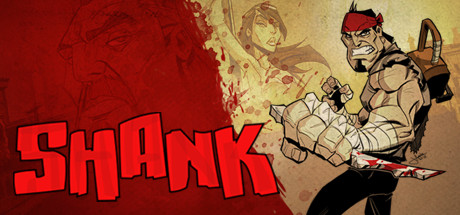
And Shank, described as “an over-the-top grindhouse game, packed to the rim with enemies, bosses, combos”—yet the player review admits “I must have rose tinted glasses back then because I enjoy this in the past.” That wistful dissonance—loving something because it’s fraying at the edges—is pure Mononoke. Shank’s hyper-stylized brutality isn’t nihilism; it’s ritualized release, like the exorcism chants in the film—repetition as resistance, blood as punctuation in a sentence no one else will write down. The violence isn’t cathartic. It’s witnessing, performed so someone, somewhere, might remember the shape of the wound.
These pairings aren’t for fans of “spooky stories” or “fast shooters.” They’re for people who recognize the ache of being seen only as function—the maid, the soldier, the survivor who keeps reloading because stopping would mean admitting the system was never built to hold you. They’re for viewers who feel the weight of a single raindrop hitting a roof tile and know, instantly, that it’s the sound of something ending quietly, without ceremony. For players who type “ioquake3” into a terminal not for nostalgia—but because some truths only land when the frame rate stutters, when the texture tears, when the world briefly forgets to lie smoothly. This is art for those who’ve ever bowed low—and felt, in that posture, both devotion and dissolution. That is the phantom. And it’s always raining.
🎮29 Games That Match the Vibe




Match Dimensions Explained
❓Frequently Asked Questions
Why does Quake III Arena keep coming up in Mononoke The Movie game recommendations?
Because both lean hard into that eerie, ritualistic body horror vibe—like the rain-soaked transformation scenes in Mononoke’s phantom sequences—while wrapping it in a dark, adult-oriented Seinen tone. Quake III’s alien gladiatorial arena, where warriors are warped and weaponized by ancient forces, mirrors the movie’s themes of cursed power and violent metamorphosis, not just in mood but in how visceral and unrelenting the combat feels.
Is there a Mononoke The Movie: The Phantom in the Rain video game adaptation?
No—there’s no official game adaptation. All current matches (like DOOM + DOOM II or BioShock 2) are *thematic* parallels, not licensed tie-ins. They share Mononoke’s core dimensions—Body Horror & Occult, Adult & Dark Seinen—but none feature Princess Mononoke, the Forest Spirit, or even rain-soaked Shinto imagery; they’re tonal cousins, not spin-offs.
Shank vs. BioShock Infinite: which one captures Mononoke’s grim, rain-drenched atmosphere better?
BioShock Infinite nails the oppressive, mythic weight—think Booker wading through Columbia’s storm-lit streets while Elizabeth unravels cosmic horrors—much like Mononoke’s rain-slicked, spiritually charged landscapes. Shank’s grindhouse energy is more stylized and cartoonish; it shares the ‘adult’ and ‘body horror’ tags, but swaps Mononoke’s melancholy grandeur for over-the-top, gory action.
What’s the best game like Mononoke The Movie if I want something deeply atmospheric and haunting—not just gory?
Go with BioShock 2. Its decaying underwater city Rapture, echoing with distorted lullabies and Little Sisters’ whispers, channels Mononoke’s sense of tragic, sentient decay—especially in scenes where you confront the Lamb or navigate flooded halls choked with rust and regret. It’s less about fast-paced combat and more about lingering dread, just like the Phantom’s slow, sorrowful appearances in the rain.