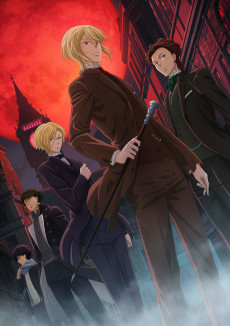
Moriarty the Patriot
In the late 19th century, the British Empire nobility reigns while its working class suffers at their hands. Sympathetic to their plight, William James Moriarty wants to topple it all. Frustrated by the systemic inequity, Moriarty strategizes to fix the entire nation. Not even consulting detective Sherlock Holmes can stand in his way. It's time for crime to revolutionize the world!
(Source: Funimation)
Note: The first episode received an early screening on September 21st, 2020. The regular TV broadcast started on October 11th, 2020.
📺Anime Details
📝Editorial Analysis
Rain slicks the cobblestones of Whitechapel like oil on black velvet. A single gaslamp flickers—dying, but not yet gone—as William James Moriarty stands motionless beneath it, collar turned high, gloved hands folded. Not in prayer. In calculation. His breath doesn’t fog. His eyes don’t blink. He watches a carriage roll past—gilded, silent, carrying nobility who’ve never stepped into this street without an escort—and something cold settles in his chest: not rage, not sorrow, but certainty. The system isn’t broken. It’s designed. And he will dismantle it—not with a scream, but with arithmetic.
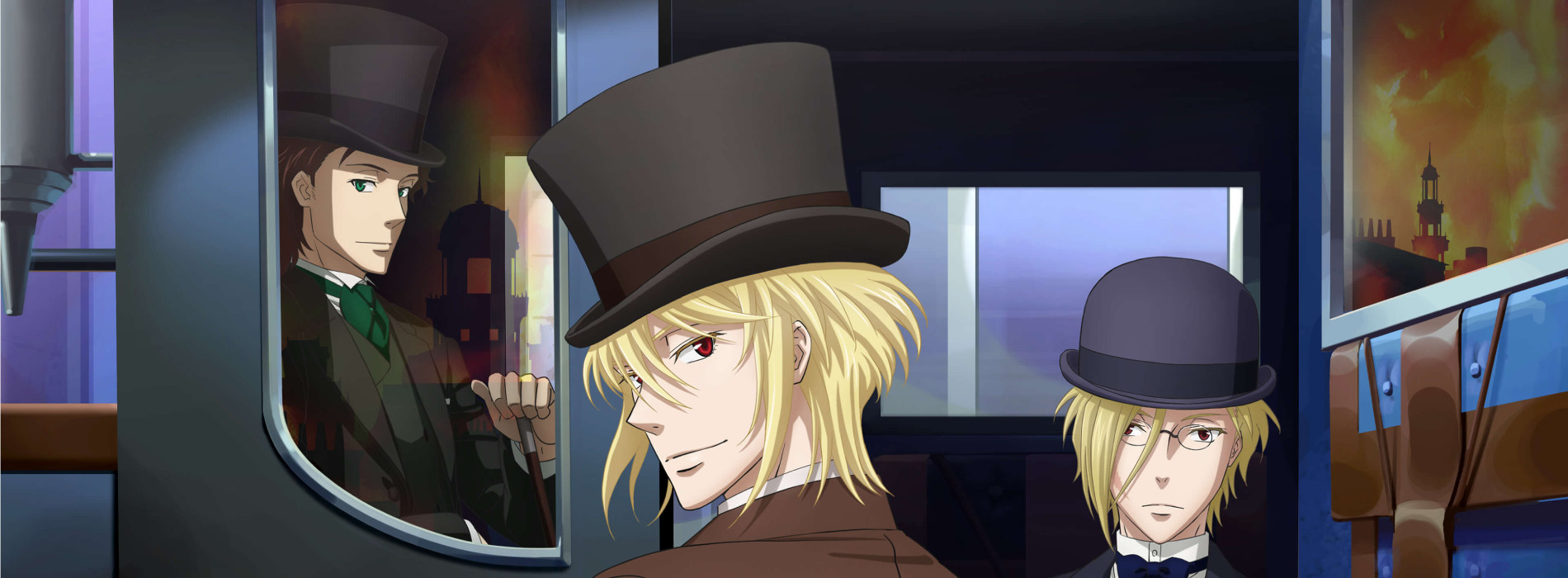
That’s the feeling Moriarty the Patriot cultivates: architectural despair. Not the raw, guttural fury of rebellion, but the quiet, suffocating weight of seeing injustice not as anomaly—but as blueprint. Every frame hums with the friction between polished mahogany drawing rooms and the damp brick walls where children sleep three to a pallet. It’s not about “good vs evil.” It’s about structure: how law enforces hierarchy, how evidence is curated, how even mercy becomes another tool of control. You don’t just watch Moriarty plan—he makes you audit the empire alongside him. Your pulse doesn’t race; it lowers, steadies, aligns with his rhythm: deliberate, unhurried, inescapable.
That same resonance lives in Disco Elysium - The Final Cut, where the city of Revachol isn’t just a setting—it’s a living indictment. Its description calls it a “groundbreaking role playing game” where you carve your path across “a whole city,” and the player review cuts deeper: “Capital has the ability to subsume all critiques into itself. Even those who would critique capital end up reinforcing it instead.” That’s Moriarty’s central tragedy—his revolution risks becoming just another layer of the same machine. Both works force you to interrogate systems, not suspects. You don’t solve a crime—you map its infrastructure.
Then there’s Max Payne, described as “a man with nothing to lose in the violent, cold urban night… hunted by cops and the mob.” The feeling matches Moriarty’s isolation—not physical, but ideological. When Moriarty walks through St. James’s Park at dawn, flanked by loyalists who follow him not out of love but recognition, it mirrors Max’s solitary descent: both are men who’ve seen the gears turn and chosen to jam them, knowing the cost is total alienation. The player review recalls passing the controller after death—a ritual of shared exhaustion. That’s the emotional echo: you don’t win. You endure. You persist. You make the system stutter.
And though Assassin's Creed™: Director's Cut Edition feels tonally distant—its description touts “next-gen” action and “redefin[ing] the action genre”—the player review quietly reveals its darker spine: “Being an older game now, some of the models and textures are quite dated but no issues with me…” That dismissal of surface polish for substance? That’s Moriarty’s ethos. He doesn’t care if his bombs are elegant—he cares if they land. Both works treat history not as backdrop, but as weaponized memory: the Templars’ control over knowledge, Moriarty’s manipulation of lineage and inheritance law—they’re variations on the same theme: power hides in archives, not armories.
Who loves this pairing? Not just fans of “dark stories.” It’s the person who reads Marx and Dostoevsky, who pauses mid-episode to sketch Moriarty’s ledger pages in their notebook, who replays the Disco Elysium precinct scene not for clues—but to hear the cop sigh, “We’re all just trying to hold the line until someone else figures out how to draw it different.” It’s the player who doesn’t skip Max Payne’s monologues because they’re listening, not waiting. They don’t want catharsis. They want alignment: the slow, grinding satisfaction of thought meeting consequence, of intellect pressing back against gravity. They don’t root for heroes. They track leverage. And when Moriarty adjusts his cufflink before signing a death warrant—or when Max reloads with one bullet left—they don’t look away. They lean in. Because in that silence between actions, that’s where the real revolution begins: cold, certain, and unforgiving.
🎮43 Games That Match the Vibe











Match Dimensions Explained
❓Frequently Asked Questions
Why is Disco Elysium so often compared to Moriarty the Patriot?
Because both dive deep into morally grey political intrigue with razor-sharp, literary dialogue—Disco Elysium’s detective Harry DuBois wrestling with ideology in Revachol mirrors Moriarty’s cerebral, subversive dismantling of Victorian power structures. You’ll feel that same weight in scenes like the ‘Capital’ monologue or interrogating the unionists, where every choice echoes Moriarty’s calculated manipulation of systems—not just people.
Is there a Moriarty the Patriot video game adaptation?
No—there’s no official game based on Moriarty the Patriot. But fans seeking that same tone land on titles like Max Payne 2: The Fall of Max Payne, which nails the tragic noir romance and layered conspiracy (think Max’s doomed bond with Mona Sax mirroring William’s twisted devotion), plus those slow-motion bullet-time takedowns that echo Moriarty’s precise, theatrical violence.
Max Payne vs. Assassin’s Creed Director’s Cut— which captures Moriarty’s blend of historical grit and ideological tension better?
Max Payne 2 wins hands-down for Moriarty’s vibe: its script drips with fatalistic poetry and systemic critique (like the ‘Falling Down’ monologue), while Assassin’s Creed Director’s Cut leans more into broad-stroke Templar-vs-Assassin allegory without Moriarty’s psychological intimacy or Victorian-era specificity—plus, AC’s dated textures and clunky parkour can’t match Max’s tight, cinematic pacing during a rain-soaked betrayal scene.
What’s the best game like Moriarty the Patriot if I want that brooding, rain-slicked, morally exhausted detective mood?
Crash Time 2 *tries* for that neon-noir cop vibe—but skip it. Its janky physics and awful controls ruin immersion. Go straight to Max Payne: you’re a framed, alcoholic ex-cop crawling through grimy urban hellscape, making choices that fray your sanity (like choosing to trust a corrupt lieutenant), all wrapped in that signature slow-mo despair Moriarty fans crave—just swap London fog for New York snow.