
BTOOOM!
In the blink of the mind's eye, Ryouta Sakamoto suddenly finds himself transported from playing the hit Btoom! video game to being stranded on a mysterious island, equipped with a day's worth of provisions, a bag of bombs, a strange crystal embedded in his left hand and a huge gaping hole in his memory. But it doesn't take long to figure out what's going on, especially after the first person Ryouta meets tries to kill him. Someone is attempting to recreate the ultra-violent Btoom! game in real life, and the island has been filled with an army of other unwilling players, each armed with one of the multiple variants of explosive weapons called BIM. Fortunately, Ryouta's an ace Btoom! player, but this insane version of the game has no reset switch or second lives, and there's only one way off the island: kill seven other people before they can kill you! Can Ryouta repurpose his game based skills fast enough to survive?
(Source: Sentai Filmworks)
📺Anime Details
📝Editorial Analysis
The salt stings Ryouta’s cracked lips before he even registers the wound—blood warm and thick, dripping onto sun-bleached coral sand as he staggers back from the blast. His left hand pulses, the crystal embedded there throbbing, cold and alien, while the scream of the girl he just killed—her face still wet with tears—echoes in his skull like a corrupted audio file. No music swells. No heroic pose. Just the hiss of smoke, the crunch of shattered glass from a nearby detonated mine, and the sudden, nauseating realization: this isn’t lag. This is real.
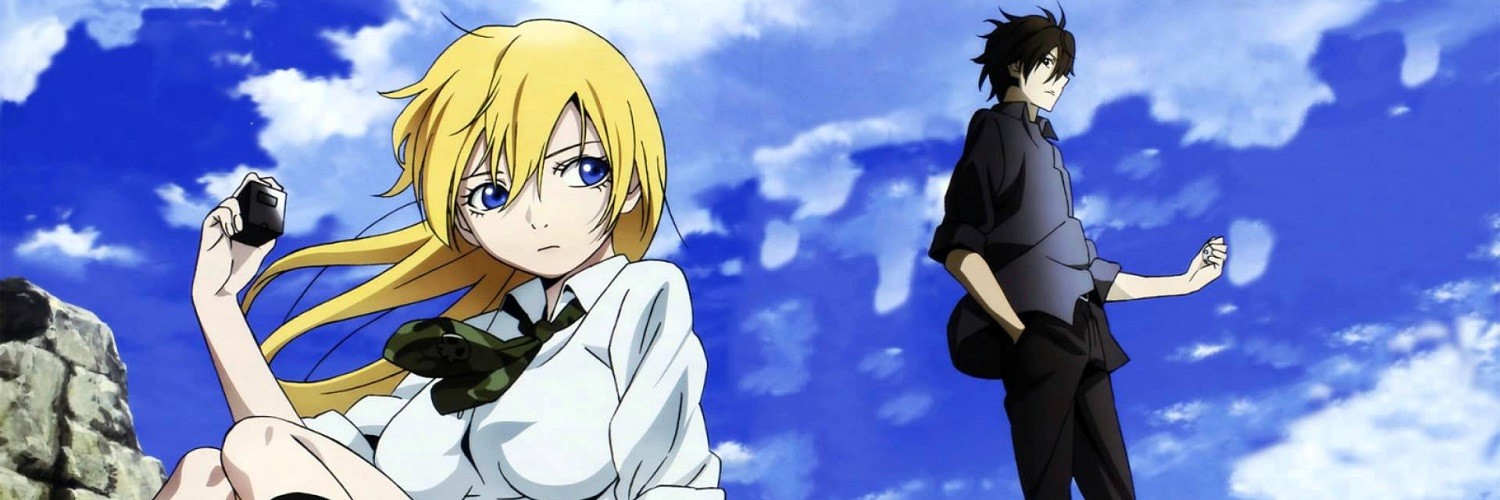
That moment isn’t about spectacle—it’s about disorientation made physical. BTOOOM! doesn’t seduce you with worldbuilding exposition or slow-burn dread. It drops you into the dissonance between muscle memory and mortality: the reflex to dodge left because that’s how you’d evade in the game, only to feel your ribs splinter under a real kick. The island isn’t just wilderness—it’s coastal claustrophobia, cliffs hemming in panic, tides erasing evidence, the ocean breathing just beyond sight like an indifferent god. Amnesia isn’t a plot device here; it’s the texture of every decision—Ryouta doesn’t know who he is, so every act of violence feels unmoored, every alliance tentative, every glance at another survivor charged with suspicion that might be memory. And the body horror? Not grotesque mutations—but the slow, intimate violation of the self: the crystal growing, the wounds refusing to close cleanly, the way a character’s hand trembles not from fear, but from the wrongness of their own nervous system recalibrating to kill.
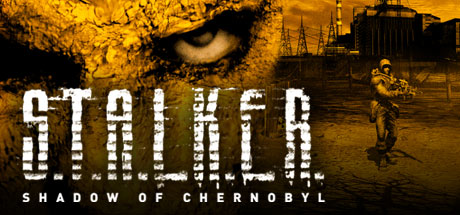
That raw, destabilizing survival-as-sensory-overload is why S.T.A.L.K.E.R.: Shadow of Chernobyl lands like a gut punch. Its Zone isn’t a map—it’s a presence: radiation that doesn’t announce itself until your vision blurs and your breath rasps, anomalies that warp physics without warning, and other stalkers who don’t shout threats—they vanish behind rusted tanks, then reappear with a knife already drawn. The player review nails it: “you fear not only the radiation, anomalies and deadly creatures, but other S.T.A.L.K.E.R.s”—exactly like BTOOOM!’s island, where every rustle could be wind… or someone counting down your life in seconds. Both force you to listen, to scan, to treat the environment as a hostile, intelligent entity—not a stage for action, but a living trap.
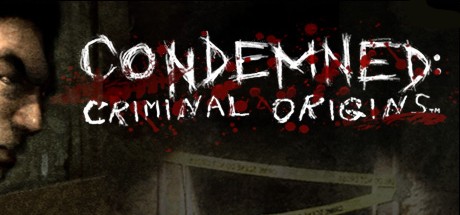
Then there’s Condemned: Criminal Origins, where the horror lives in proximity and perception. Its description asks: What twists the mind of an ordinary human into a serial killer? That’s Ryouta’s central question—reversed. He’s not descending; he’s unraveling, and the violence isn’t cathartic—it’s contagious, psychological, leaving him staring at his own hands like they belong to someone else. The player review calls it a “gem” worth hunting down, praising its unease: no HUD, no health bars, just blurred vision, ragged breathing, and the sickening thud of a pipe connecting with bone. Like BTOOOM!, it weaponizes vulnerability—every corridor feels too narrow, every shadow too deep, every encounter a potential fracture in sanity. The body horror isn’t spectacle; it’s intimacy gone wrong: blood on your knuckles, the weight of a weapon you didn’t choose, the way your own pulse drowns out reason.
Even RAGE, despite its lukewarm review calling it “uninspired,” shares something vital: its environmental hostility. The description emphasizes “an expansive world to explore” powered by tech that makes destruction tactile—glass shatters, metal buckles, vehicles crumple with physics that feel heavy. That matches BTOOOM!’s obsession with material consequence: bombs don’t just vanish enemies—they crater earth, ignite palm fronds, send shrapnel singing through humid air. When Ryouta uses a bomb to collapse a cliffside, it’s not strategy—it’s geology turning against you, just like RAGE’s wasteland, where the land itself is a weaponized, crumbling character. The review’s dismissal (“nothing spectacular”) ironically mirrors how BTOOOM! refuses polish—it’s gritty, imperfect, deliberately uncinematic in its brutality, trusting the discomfort of realism over flash.
This isn’t for the viewer who wants clean moral arcs or power fantasies. It’s for the one who keeps replaying the moment they first realized the game wasn’t a game—who lingers on the silence after a kill, who notices how light falls differently on a corpse in the jungle, who feels the weight of a crystal they can’t remove. It’s for players who reload not to win, but to understand the tremor in their own thumb when the crosshair shakes over a surrendering enemy. They’re the ones who’ll pause S.T.A.L.K.E.R. to watch dust motes dance in a beam of light piercing a collapsed reactor wall—and feel, just for a second, the same hollow vertigo as Ryouta, standing on that beach, tasting blood and salt and the terrifying, electric thrill of being utterly, irrevocably awake.
🎮38 Games That Match the Vibe




Match Dimensions Explained
❓Frequently Asked Questions
Why does S.T.A.L.K.E.R.: Shadow of Chernobyl feel so much like BTOOOM!'s 'Death Game' island?
Because both drop you into a hostile, lawless zone where survival hinges on scavenging gear, reading environmental threats (like radiation hotspots or invisible anomalies—think BTOOOM!'s traps), and facing off against desperate, unpredictable human enemies. The Zone’s oppressive atmosphere, body horror mutations, and occult undertones mirror the psychological dread and visceral stakes of Ryōta’s matches—especially scenes where he’s hunted through ruined buildings with limited ammo and no backup.
Is there a BTOOOM! video game adaptation?
No—there’s never been an official BTOOOM! game released. That’s why fans lean hard into titles like Condemned: Criminal Origins, which nails the gritty, close-quarters tension and moral ambiguity of the manga’s early investigation arcs; or Heroes of Might & Magic V, whose dark seinen tone and morally gray faction wars echo the series’ themes of manipulation and systemic violence.
How does Condemned: Criminal Origins compare to RAGE for BTOOOM! fans?
Condemned leans into claustrophobic, melee-driven psychological horror—think Kano’s brutal hand-to-hand fights in abandoned asylums—while RAGE is all about open-world vehicular chaos and flashy FPS action, like a high-speed arena battle gone wild. If you loved BTOOOM!’s raw, intimate brutality and detective tension, Condemned’s forensic clues, decaying environments, and visceral takedowns hit way closer than RAGE’s more generic, spectacle-first shooter pacing.
What’s the best game like BTOOOM! if I want that bleak, paranoid survival vibe—not just action?
S.T.A.L.K.E.R.: Shadow of Chernobyl is your top pick: its sprawling, irradiated Zone forces constant resource management (scavenging batteries, filters, medkits), eerie silence broken by distant screams or mutant shrieks, and morally ambiguous factions—just like how Ryōta navigates shifting alliances and hidden agendas in the Death Game. Even the player review nails it: ‘you fear not only the radiation, anomalies and deadly creatures, but other S.T.A.L.K.E.R.s’—pure BTOOOM! energy.