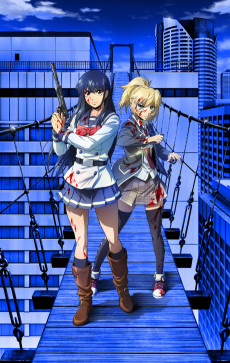
High-Rise Invasion
High school student Yuri Honjou finds herself lost in an “abnormal space” where countless skyscrapers are connected by suspension bridges and “masked figures” mercilessly slaughter their confused and fleeing victims. To survive in this hellish world, she has two choices: kill the masked figures or be killed. Yuri is determined to survive in order to destroy this irrational world, but what will be her ultimate fate?
(Source: Netflix)
📺Anime Details
📝Editorial Analysis
The first time Yuri Honjou stumbles onto a suspension bridge—wind howling, steel groaning, her breath ragged and too loud—the world tilts. Below her, no ground, only a yawning void swallowed by fog; ahead, a masked figure stands perfectly still, head tilted at an impossible angle, its porcelain face reflecting nothing but her own widening pupils. No music swells. No exposition drops. Just the creak of cables, the dry rustle of her uniform, and the slow, deliberate click as the mask’s jaw unhinges—not to speak, but to feed. That silence before violence isn’t tension. It’s dread made architectural.
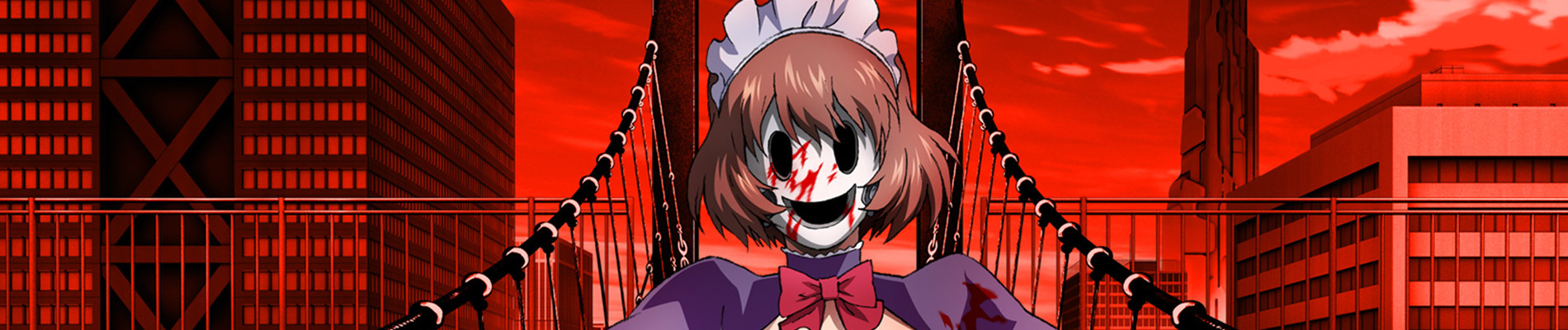
What makes High-Rise Invasion unforgettable isn’t its death-game premise—it’s how it weaponizes disorientation as atmosphere. This isn’t horror that jumps or shrieks. It’s the nausea of waking inside a dream you can’t wake from, where every corridor repeats just slightly wrong, every bridge sags with existential weight, and memory isn’t lost—it’s surgically absent, leaving only raw, animal urgency. You don’t just fear the masks—you fear your own hands, your own name, the way your reflection might blink a half-second too late. It’s amnesia as vertigo, survival as instinct stripped bare, and dystopia not as ruined cities but as logic itself unspooling. The skyscrapers aren’t backdrops—they’re cages built from cognitive collapse.
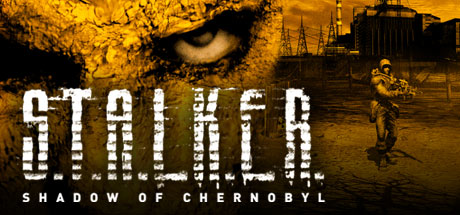
That same suffocating, reality-bleeding unease lives in S.T.A.L.K.E.R.: Shadow of Chernobyl, where the Zone doesn’t just kill you—it unmakes you. Its description nails it: “a very dangerous place, where you fear not only the radiation, anomalies and deadly creatures, but other S.T.A.L.K.E.R.s.” Like Yuri crossing bridges between towers, the player navigates a map that feels geologically unstable, where physics glitch, time distorts near artifacts, and trust evaporates faster than oxygen. A player review calls it “big and beautiful”—but beauty here is eerie, oppressive, layered with decay and whispered radio static. That’s the same awe Yuri feels staring down a canyon of glass and steel: grandeur that chokes.
Then there’s BioShock Infinite, whose description centers on Booker DeWitt “rescu[ing] Elizabeth, a myst…”—cut off, like memory itself. The game’s core isn’t just time travel or sky-cities; it’s memory manipulation as narrative architecture. Like Yuri’s fragmented past, Booker’s identity fractures under pressure, revealing layers of denial, guilt, and erased selves. A player review admits being “intrigued in the whole thing”—not by spectacle, but by the weight of what’s buried. Both works force you to question whether survival means reclaiming who you were—or becoming someone new enough to endure the horror.
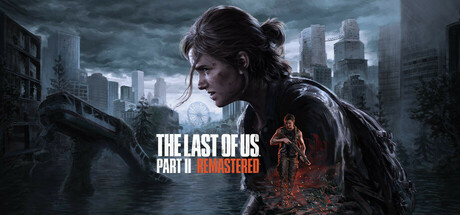
Even RAGE, with its id Tech® 5-powered wasteland, shares that body horror nerve. Its description highlights “breakneck vehicle combat” and “jaw-dropping graphics,” but the real resonance is in its dims: “Body Horror & Occult.” Yuri’s world warps flesh and function—masks aren’t worn, they fuse; bodies contort beyond biomechanics; survival demands relearning how limbs obey will. RAGE’s mutants and corrupted tech echo that violation: flesh twisted by radiation, machines breathing like lungs, the line between tool and tumor dissolving. A player calls it “uninspired” — but that flatness, that weary exhaustion in the review? It mirrors Yuri’s fatigue—not of action, but of perpetual recalibration in a world that refuses stable rules.
Who loves this pairing? Not just fans of “horror” or “action.” It’s the person who pauses mid-game to stare at a cracked wall texture, wondering if it’s decay—or a seam in reality. It’s the viewer who watches Yuri grip a railing and feels the vibration in their own palms. It’s the player who, after surviving a Zone anomaly or watching Elizabeth step through a tear, sits silent for three minutes, heart pounding—not from adrenaline, but from the terrible intimacy of a world that treats identity like faulty code. They don’t want escape. They want recognition: that flicker of understanding when dread isn’t abstract, but textured, architectural, breathing just behind the next door—or bridge—or loading screen.
🎮75 Games That Match the Vibe




















Match Dimensions Explained
❓Frequently Asked Questions
Why does High-Rise Invasion feel so much like S.T.A.L.K.E.R.: Shadow of Chernobyl?
It’s that shared vibe of oppressive, lonely dread—like when you’re creeping through the Zone’s fog-choked ruins or scaling a crumbling high-rise at night, both worlds making you sweat over every creak and distant scream. Both lean hard into Body Horror & Occult (think mutated stalkers vs. masked invaders with grotesque, ritualistic violence) and Survival & Crafting mechanics—scavenging ammo, managing stamina, and never feeling truly safe in a world that’s actively hostile to your body and mind.
Is there an anime or live-action adaptation of BioShock Infinite like there is for High-Rise Invasion?
Nope—unlike High-Rise Invasion, which got a Netflix anime series (and later a live-action film), BioShock Infinite has zero official adaptations. It *does* share High-Rise Invasion’s Cyberpunk & Dystopia and Body Horror & Occult dimensions—especially in Columbia’s floating city propaganda, Elizabeth’s tears revealing alternate realities, and Songbird’s twisted, biomechanical horror—but it’s stayed firmly in game-only territory, despite years of fan speculation.
How does RAGE compare to High-Rise Invasion in terms of tone and gameplay?
RAGE nails the same gritty, post-collapse survival energy—imagine swapping High-Rise Invasion’s vertical urban hellscape for RAGE’s sun-blasted wasteland full of mutant ‘Ferals’ and rogue AI enforcers. Both hit Survival & Crafting, Body Horror & Occult (RAGE’s nanotech corruption and flesh-melding tech mirrors the invaders’ masks and transformations), and Cyberpunk & Dystopia—but RAGE swaps psychological tension for breakneck vehicle combat and id Tech 5’s raw, chaotic action.
What’s the best game like High-Rise Invasion if I want something unsettling but darkly funny?
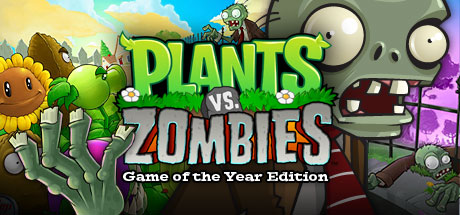
Plants vs. Zombies GOTY Edition—it sounds wild, but hear me out: both weaponize absurdity against existential threat (zombies vs. masked killers), layer Cyberpunk & Dystopia into everyday spaces (your lawn / your apartment building), and use Survival & Crafting to keep tension tight while undercutting it with goofy charm—like cherry bombs exploding a zombie mid-lunge, or watching a peashooter nervously guard your balcony just like a lone survivor barricading a high-rise stairwell.