
JUJUTSU KAISEN Season 3: The Culling Game Part 1
The third season of Jujutsu Kaisen.
After the Shibuya Incident, a deadly jujutsu battle known as the Culling Game orchestrated by Noritoshi Kamo erupts across ten colonies in Japan.
Haunted by guilt over the mass killings in Shibuya and wary of Sukuna’s interest in Fushiguro, Itadori chooses not to return to Jujutsu High. Instead, he teams up with Choso to exorcise the countless cursed spirits unleashed by Noritoshi Kamo.
Amid this chaos, the Jujutsu Headquarters revokes Yuji Itadori’s suspended death sentence and appoints special-grade sorcerer Yuta Okkotsu as his executioner.
Newly awakened modern sorcerers and resurrected ancient ones, now fighting as players in the Culling Game, collide with conflicting motives, driving the world once more toward an age ruled by jujutsu.
(Source: TOHO Animation)
📺Anime Details
📝Editorial Analysis
Rain slicks the cracked asphalt of Tokyo’s abandoned subway tunnels—not gently, but in cold, insistent sheets that echo the hollow drip of cursed energy bleeding from shattered barriers. Itadori stands ankle-deep in stagnant water, breath ragged, knuckles split and raw, staring at Choso’s back as they move together—not as students or rivals, but as two men who’ve seen too much blood pool under fluorescent lights that no longer hum. There’s no music swelling here. Just the low, wet groan of a collapsing ceiling beam—and the quiet, awful weight of choice: stay broken, or break something else first.

That’s the feeling JUJUTSU KAISEN Season 3: The Culling Game Part 1 lives inside: not adrenaline, but gravity. Not spectacle for its own sake—but the suffocating press of consequence. This isn’t urban fantasy as glittering neon wish-fulfillment. It’s urban fantasy as autopsy: every alleyway is a wound, every colony a triage zone, every exorcism a delayed confession. You don’t feel powerful watching Itadori fight—you feel accountable. His guilt isn’t backstory; it’s atmosphere. It hangs in the air like ozone before lightning, thick enough to taste. And Sukuna’s presence isn’t just menace—it’s inevitability, a slow, smiling tide you know will rise again. That’s what makes this season ache: it trades shounen triumph for moral vertigo, where survival doesn’t cleanse—you carry the stains with you.
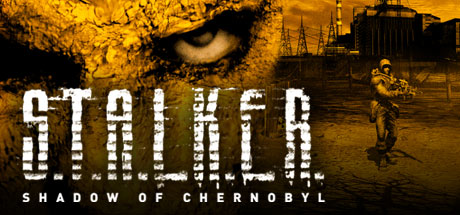
Which is why S.T.A.L.K.E.R.: Shadow of Chernobyl hits like a physical memory. Its description nails it: “a very dangerous place, where you fear not only the radiation, anomalies and deadly creatures, but other S.T.A.L.K.E.R.s.” That layered dread—environmental, biological, human—mirrors the Culling Game’s ten colonies perfectly. You’re not just dodging curses; you’re navigating zones warped by trauma, where trust fractures faster than concrete, and every corridor could hide Noritoshi Kamo’s design or a teammate’s last breath. A player review says, “The story is also really good, I'm intrigued in the whole thing”—exactly how it feels piecing together Kamo’s logic mid-battle, realizing his cruelty isn’t random, but architectural. Both demand you read the world like a wound map.
Then there’s Aliens versus Predator Classic 2000, whose player review cuts deep: “It’s fast, brutal, and absolutely unforgiving.” Not flashy—unforgiving. That’s the Culling Game’s rhythm: no respawns, no cutscene saves, no narrative safety net. When Itadori and Choso corner a high-level curse in a flooded department store basement, the fight isn’t about combos—it’s about angles, exhaustion, and the sickening lurch when your footing gives way on wet tile. The game’s three-campaign structure (Marine, Alien, Predator) echoes the anime’s fractured perspectives—Fushiguro’s isolation, Nanami’s grim calculus, even Kamo’s warped idealism—each lens sharpening the same brutal truth: power isn’t clean, and survival isn’t noble. It’s gritty, tactile, and leaves your palms damp.
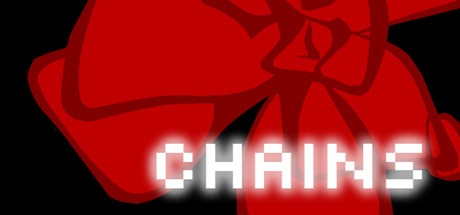
And yes—even Chains, that deceptively simple match-3 arcade game, resonates in its own quiet way. Its description calls it “relaxing,” but the player review reveals the tension beneath: “link 3 or more of the same color and clear enough till you can proceed and hit the next stage.” That’s Itadori’s entire arc right now—not grand destiny, but pattern recognition under pressure. Linking memories (Shibuya), emotions (guilt), and actions (exorcism) just long enough to survive the next wave. The “physics-driven” challenge mirrors how curses behave—not scripted, but reactive, shifting with intent and fatigue. It’s not about winning. It’s about sustaining the chain—one exorcism, one confession, one rain-slicked step—until the weight shifts, however slightly.
This pairing isn’t for the casual browser or the lore-hopper. It’s for the person who watches Itadori stare at his own trembling hand after a fight and feels that tremor in their own chest. For the player who reloads after dying in the Zone not to win—but to understand why the anomaly flared there, then. For those who don’t want catharsis—they want continuity, the heavy, beautiful burden of carrying forward, even when the map is burning and the rules keep changing. They love stories where power costs breath, where horror wears a human face, and where the most devastating moment isn’t a scream—but silence, right after the rain stops.
🎮36 Games That Match the Vibe














Match Dimensions Explained
❓Frequently Asked Questions
Why does S.T.A.L.K.E.R.: Shadow of Chernobyl feel like The Culling Game’s tense, unpredictable atmosphere?
Because both throw you into a hostile, rule-broken zone where danger lurks in anomalies (like the Zone’s invisible gravity wells or radiation storms) and other players/characters—just like how Yuji and Megumi navigate shifting terrain and ambushes from cursed spirits and rogue sorcerers. Its oppressive audio design, scarcity of ammo, and morally grey factions mirror the psychological weight and constant stakes of the Culling Game’s survival trials.
Is there a JUJUTSU KAISEN mobile game or official adaptation based on Season 3: The Culling Game Part 1?
No—there’s no official JUJUTSU KAISEN game covering Season 3 yet. But if you’re craving that same blend of occult dread and high-stakes survival, Aliens versus Predator Classic 2000 delivers a close vibe: playing as the Alien (body horror, stealth kills), Predator (tactical hunting), or Marine (resource-scarce combat) mirrors how characters like Gojo or Suguru switch roles between hunter, hunted, and strategist in the Culling Game arena.
How does Chains compare to Two Worlds II HD for someone who loves JUJUTSU KAISEN’s fast-paced action but needs something chill to unwind with?
Chains is the total opposite of Two Worlds II HD—and that’s why it works for decompressing after intense Culling Game episodes. While Two Worlds II HD leans into dark fantasy spectacle (think cursed spells and massive boss fights), Chains gives you zen-like match-3 rhythm with physics-driven bubbles—no stress, no permadeath, just satisfying color chains that echo the precision of a well-timed Domain Expansion setup… but with zero consequences.
What’s the best game like JUJUTSU KAISEN Season 3 if I want that gritty, body-horror-meets-occult vibe without needing a high-end PC?
S.T.A.L.K.E.R.: Shadow of Chernobyl is your answer—it runs surprisingly well on modest hardware and nails the visceral, decaying occult realism: mutated creatures, glitchy artifacts, and environments that feel *alive* with wrongness—just like Mahito’s Idle Transfiguration scenes or Choso’s blood manipulation sequences. RAGE has similar visuals but lacks that layered dread; STALKER’s world breathes unease in every rustle and static burst.