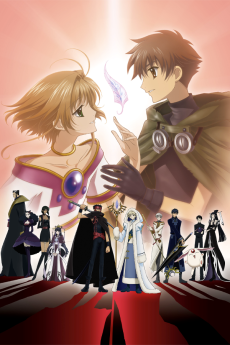
Tsubasa RESERVoir CHRoNiCLE
📺Anime Details
📝Editorial Analysis
The air in the ruined library of Clow Country tastes like burnt paper and forgotten names. Syaoran stands knee-deep in ash, clutching a feather that isn’t his, watching it dissolve before it hits the floor—another fragment of himself, another memory erased not by time, but by design. His hand trembles—not from fear, but from the quiet, gut-level horror of recognizing your own face in someone else’s eyes, then realizing you’ve never earned that recognition. That’s the first breath of Tsubasa RESERVoir CHRoNiCLE: not wonder, not awe—but dislocation, precise and surgical.
This isn’t just an isekai about jumping worlds. It’s about the weight of continuity when continuity has been shattered. Every portal opens not to possibility, but to consequence—each world a scar tissue over a wound you don’t remember making. You feel the ache of amnesia not as blankness, but as pressure: the ghost-limb sensation of love you can’t name, loyalty you haven’t earned, curses you inherited like birthmarks. The magic isn’t flashy—it’s leaky, unstable, threaded with grief and recursion. Even the feathers—fragments of Sakura’s soul—carry the quiet dread of entropy: beautiful, irreplaceable, and already dissolving. You don’t explore these worlds—you stumble through them, haunted by echoes of yourself whispering from alternate mirrors. It makes you question whether identity is a thing you build, or just a story you’re forced to reassemble from stolen pages.
That exact vertigo lives in BioShock Infinite’s collapsing towers of Columbia—where Booker DeWitt rescues Elizabeth not to save her, but to unmake himself. The description nails it: “Indebted to the wrong people… only one opportunity to wipe his slate clean.” But the slate won’t stay clean. Every choice fractures time; every truth unravels another layer of self. A player review admits, “I know that some people are still bitter about the Bioshock Infinite we could have gotten…”—that bitterness mirrors Syaoran’s quiet fury at being handed a destiny he didn’t choose, a love he’s supposed to remember but can’t feel. Both stories weaponize nostalgia against you: they dangle the comfort of a fixed past, then reveal it was always a lie you helped write.
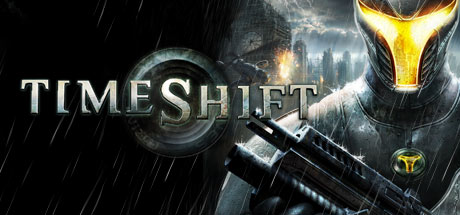
Then there’s TimeShift™, where Dr. Aiden Krone’s “reckless act” tears open reality into a “disturbing alternate reality”—not fantasy, but physics gone wrong. The description doesn’t mention emotion, but the feeling is identical: you’re not mastering time—you’re infected by it. Like Syaoran’s body betraying him with borrowed memories or cloned selves, Krone’s power warps causality until cause and effect bleed into each other. And the player review? “this little 4 hour game is a blast, but it takes a little work to get it into a playable state…”—that scrappy, almost broken charm? It echoes the anime’s deliberate roughness: the uneven animation during emotional breakdowns, the way sound design drops out mid-sentence when a character forgets their own name. Both demand you lean into the instability.
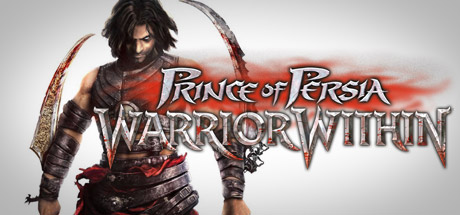
And Prince of Persia: Warrior Within—where the Prince is hunted by Dahaka, “an immortal incarnation of Fate itself.” Hunted not for what he did, but for what he will do. The description frames it as sword-slashing action, but the player review cuts deeper: “Dahaka chase is still as goated as it was before…” That relentless, inevitable pursuit? It’s Syaoran running toward his own erasure, Sakura walking toward oblivion because she loves him—not despite it. The curse isn’t external. It’s the logic of their bond made flesh, made monstrous, made inescapable. Both works treat time not as a river, but as a cage with doors that only open after you’ve walked through them.
These aren’t for fans of tidy epics or power fantasies. They’re for the person who replays a scene three times because they caught a flicker of doubt in a character’s eye—the one who pauses mid-game to stare at a loading screen, wondering if their save file is really theirs, or just a copy wearing their name. The kind of viewer who keeps a notebook not for theories, but for quotes they can’t stop hearing in their head: “I’m not the real me yet.” “What if I’m the curse?” “This memory feels borrowed.” They don’t want resolution—they want resonance. And when Syaoran’s hand closes around empty air, and Booker stares at his reflection in a broken mirror in Columbia, and Dahaka’s shadow falls across the Prince’s back—not as threat, but as recognition—that’s where the heart beats in time.
🎮75 Games That Match the Vibe













Match Dimensions Explained
❓Frequently Asked Questions
Why does Prince of Persia: Warrior Within feel so much like Tsubasa RESERVoir CHRoNiCLE’s darker arcs?
Because both dive deep into time-twisted consequences and hunted protagonists—like when the Prince flees the Dahaka across crumbling timelines, mirroring Syaoran’s desperate chases through fractured dimensions to undo irreversible choices. The game’s sand-powered time rewinds and body-horror mutations (e.g., the Dahaka’s shifting, skeletal form) echo Tsubasa’s recurring motifs of memory loss, cursed transformations, and parallel-world guilt.
Is there a Tsubasa RESERVoir CHRoNiCLE anime or game adaptation that actually captures the time/memory themes like BioShock Infinite does?
No official Tsubasa game adapts the manga’s full time/memory complexity—but BioShock Infinite nails that vibe *better than any licensed title*: Booker’s fractured identity, Elizabeth’s multiverse awareness, and the Lutece twins’ temporal paradoxes mirror how Tsubasa uses memory erasure (like Sakura’s feathers) and recursive timelines (e.g., Fei Wong’s loops). It’s not an adaptation—but it *feels* like stepping into the same haunting, layered reality.
How does TimeShift™ compare to Prince of Persia: Warrior Within for time-manipulation combat and occult dread?
TimeShift™ is more about tactical, moment-to-moment time control—freezing enemies mid-swing or rewinding your own death—while Warrior Within leans into visceral, momentum-driven swordplay *shaped by time*: you dodge the Dahaka’s attacks only by rewinding seconds, and its occult horror hits harder with grotesque transformations (like the Dahaka’s molting flesh) versus TimeShift’s sterile, sci-fi body horror. Both score 84 and share ‘Time & Memory’ + ‘Body Horror & Occult’ dimensions—but Warrior Within’s emotional weight and chase sequences hit closer to Tsubasa’s tone.
What’s the best game like Tsubasa RESERVoir CHRoNiCLE if I want that melancholy, memory-obsessed vibe with eerie beauty—not just action?
BioShock Infinite is your top pick: its rain-slicked Columbia floats with haunting grandeur, Elizabeth’s quiet sorrow over lost memories mirrors Sakura’s fading recollections, and the Luteces’ quantum dialogue (“Would you kindly?”) echoes Tsubasa’s existential questions about fate and repetition. Even the player review admits it delivers that bittersweet, intellectually charged melancholy—far more than Condemned’s gritty detective horror or TimeShift’s arcade intensity.