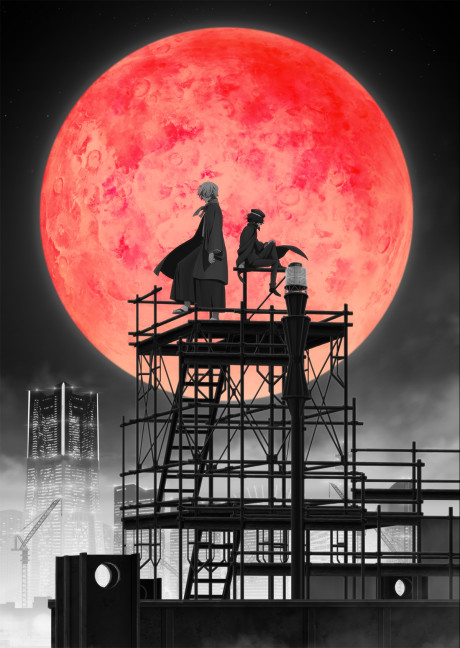
Bungo Stray Dogs 4
The fourth season of Bungou Stray Dogs.
No longer concerned with military affairs, Yukichi Fukuzawa intends to act as a lone bodyguard-for-hire, making use of his deadly swordsmanship. However, things are not going as planned for his freelance business, and that is when he crosses paths with a mouthy boy named Ranpo Edogawa. While their initial interactions are intertwined with a bizarre murder mystery, the aftermath prompts the formation of the Armed Detective Agency.
Presently, Ranpo finds himself chasing down a gifted individual with the dangerous ability to execute the perfect crime. But as the great detective unravels the case, he soon discovers an elaborate plot to obliterate the Agency in its entirety.
Although forewarned of the trap, the Agency continue their pursuit of the criminals, only to end up framed for the crime themselves. Now branded as wanted terrorists, the remaining members must find a way to prove their innocence—even if they must turn to sworn enemies for assistance.
(Source: MAL Rewrite)
📺Anime Details
📝Editorial Analysis
Rain slicks the cobblestones of Yokohama’s back alleys like spilled ink, and Yukichi Fukuzawa stands motionless beneath a flickering gaslamp—sword sheathed, coat collar high, breath steady. A boy with wild hair and sharper eyes—Ranpo Edogawa—leans against a rusted fire escape, chewing gum like it’s evidence. No music swells. No dramatic wind stirs. Just the low hum of distant trams, the drip-drip-drip from a broken awning, and the quiet, heavy weight of two people who’ve both seen too much violence disguised as order. That moment isn’t about power or plot—it’s about recognition: the kind that happens when two fractured intelligences lock eyes and realize they’re already speaking the same language of suspicion, irony, and exhausted idealism.
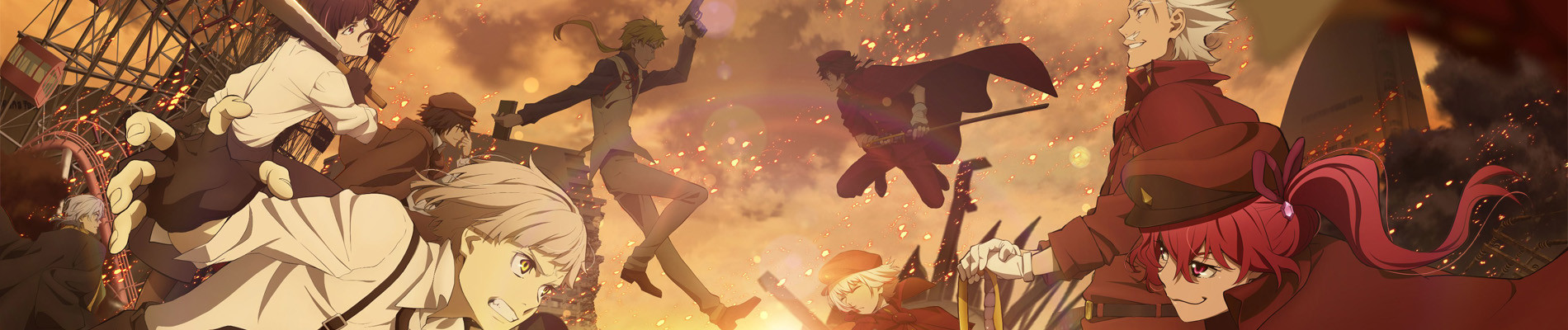
What makes Bungo Stray Dogs 4 vibrate isn’t its supernatural abilities or mafia skirmishes—it’s the texture of its urban melancholy. This is Yokohama not as backdrop but as character: damp, layered, morally porous. It’s the feeling of walking past a teahouse where a detective sips matcha while calculating how many lies he’ll need to tell before breakfast—and knowing he’ll tell them all gracefully. It’s the ache of institutional decay wrapped in dry wit, the sense that every handshake hides three unspoken betrayals, and every solved case leaves behind a ghost of the system that made it necessary. There’s no catharsis here—only resonance, like striking a tuning fork inside a hollow building and hearing the whole structure shiver.
That resonance echoes sharply in Disco Elysium - The Final Cut, where “a detective with a unique skill system” navigates “a whole city to carve your path across”—not with bullets, but with dialogue, doubt, and devastating self-awareness. The player review quotes: “Capital has the ability to subsume all critiques into itself. Even those who would critique capital end up reinforcing it instead.” That’s Ranpo’s smirk mid-interrogation. That’s Fukuzawa choosing not to draw his sword—not out of weakness, but because the real violence is structural, and drawing steel only sharpens the blade the system hands you. Both works treat mystery not as puzzle to solve, but as symptom to diagnose—and the diagnosis always hurts.
Then there’s Max Payne, where “a fugitive undercover cop framed for murder, hunted by cops and the mob,” fights “in the violent, cold urban night.” The description doesn’t mention rain—but you feel it. You feel the exhaustion in Max’s voiceover, the way every corridor feels like a trap he’s walked into twice before. That’s the same fatigue Fukuzawa carries in his shoulders when he declines another job offer—not because he lacks skill, but because the freelance market is just another syndicate wearing different suits. And the player review? “Back in the PS2 era, my friends and I used to play Max Payne 1 and 2 together. We had a rule: once you died, you passed the controller to the next player.” That communal, almost ritualistic endurance mirrors how Bungo Stray Dogs 4 builds its ensemble—not through exposition, but through shared near-failures, overlapping glances in smoke-filled rooms, the quiet understanding that survival isn’t solitary. It’s tactical, yes—but tactical in the emotional sense: reading a room before the first shot rings out.
Even Hitman 2: Silent Assassin, with its “retired assassin, forced back into action by treason,” taps the same nerve. Its description notes: “You may be a hired killer but you still have a sense of loyalty and justice.” That contradiction—the professional who refuses to become the monster the job demands—is Fukuzawa’s entire arc in Season 4. He doesn’t want the Agency. He builds it precisely because he won’t let the city’s rot go unchallenged—even if the challenge means becoming part of the very architecture he distrusts. The player review’s blunt honesty—“Decent” graphics, no fanfare—mirrors the anime’s aesthetic restraint: no overblown transformations, no heroic monologues—just a man adjusting his gloves before stepping into the storm.
This pairing isn’t for fans of “cool powers” or “epic battles.” It’s for the person who rewinds the scene where Ranpo folds a newspaper into a perfect crane—not because it’s cute, but because it’s the only thing in the frame that’s uncompromised, precise, and quietly defiant. It’s for the reader who underlines lines like “The law isn’t broken—it’s bent until it forgets its own name” and nods slowly. It’s for the player who saves before every interrogation in Disco Elysium, not out of fear of failure—but because they know the truth will cost something, and they want to choose how it costs them. These are stories for those who understand that the most dangerous weapons aren’t swords or silenced pistols—they’re silence, irony, and the unbearable lightness of choosing, again and again, to care.
🎮61 Games That Match the Vibe





Match Dimensions Explained
❓Frequently Asked Questions
Why does Bungo Stray Dogs 4 feel so much like Max Payne 2?
It’s the shared neon-noir atmosphere and tragic, dialogue-heavy storytelling—especially that brooding, rain-slicked love story vibe in Max Payne 2’s ‘The Fall of Max Payne’, where characters like Mona Sax and Max trade fatalistic monologues amid slow-mo gunfights. Both lean hard into stylized tactical combat (dodging bullets, cover-based tension) and psychological weight—like when Atsushi’s internal conflict mirrors Max’s self-destructive spiral.
Is there an anime or game adaptation of Disco Elysium that captures its Bungo Stray Dogs-style character depth?
No official anime exists—but Disco Elysium: The Final Cut *is* the closest spiritual cousin in gameplay and tone: think Kunikida’s sharp intellect and moral rigidity mirrored in Detective Harrier’s skill checks (Logic, Empathy, Drama), or Dazai’s chaotic charm echoing the game’s unreliable, alcohol-soaked narration in Revachol’s decaying port city. Players even call out lines like ‘Capital has the ability to subsume all critiques…’ the same way Bungo fans quote Dazai’s ‘I’m not a bad person—I’m just a bad influence.’
How does Assassin’s Creed: Director’s Cut Edition compare to Bungo Stray Dogs 4 in terms of political intrigue and faction warfare?
Both dive deep into ideological clashes—Bungo’s Port Mafia vs. Armed Detective Agency mirrors Assassin’s Creed’s Templars vs. Assassins, but with real historical texture: you’ll infiltrate Jerusalem’s markets as Altaïr while juggling loyalty, betrayal, and systemic oppression—just like watching Ōgai manipulate power structures behind the scenes. Reviewers even note how the dated models don’t distract from the weighty political thriller dimension that fans of Bungo’s layered worldbuilding crave.
What’s the best game like Bungo Stray Dogs 4 if I want that melancholy, rain-drenched detective mood with stylish action?
Max Payne is your go-to—it nails the ‘melancholy, rain-drenched detective’ vibe *before* it was trendy: Max’s voiceover drips with noir despair, his bullet-time dives echo Atsushi’s desperate lunges, and the PS2-era co-op memories (‘once you died, you passed the controller’) mirror how Bungo fans bond over shared emotional whiplash. Plus, both use visual storytelling—like Max’s dream sequences or Bungo’s surreal fight choreography—to externalize inner turmoil.