No Guns Life
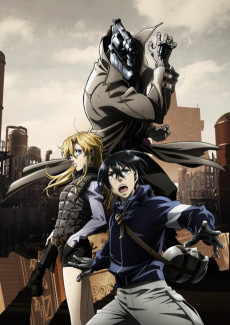
After the war, there are many "Extends" in the city, people whose bodies were modified to make them into dangerous weapons. Inui Juuzou is one of them, and he has no memories of his life and body before his head was transformed into a gun. Strangely enough, his head-gun is designed so that only someone behind him can pull the trigger. Juuzou makes a living by taking on cases involving Extends in the city, and he is assisted by Mary, an intelligent young woman that he has taken under his protection.
📺Anime Details
📝Editorial Analysis
Rain slicks the pavement like oil under sodium-vapor streetlights, and Juuzou stands motionless in the alley—back turned, head a cold, polished steel barrel, neck joint humming faintly. A client’s trembling hand hovers inches from his trigger ring. He doesn’t flinch. Doesn’t speak. Just waits. That silence isn’t calm—it’s loaded. Not with threat, but with surrender: his body is a weapon that requires another person to fire it. His agency isn’t in pulling the trigger—it’s in letting them. That moment isn’t action—it’s intimacy disguised as danger.
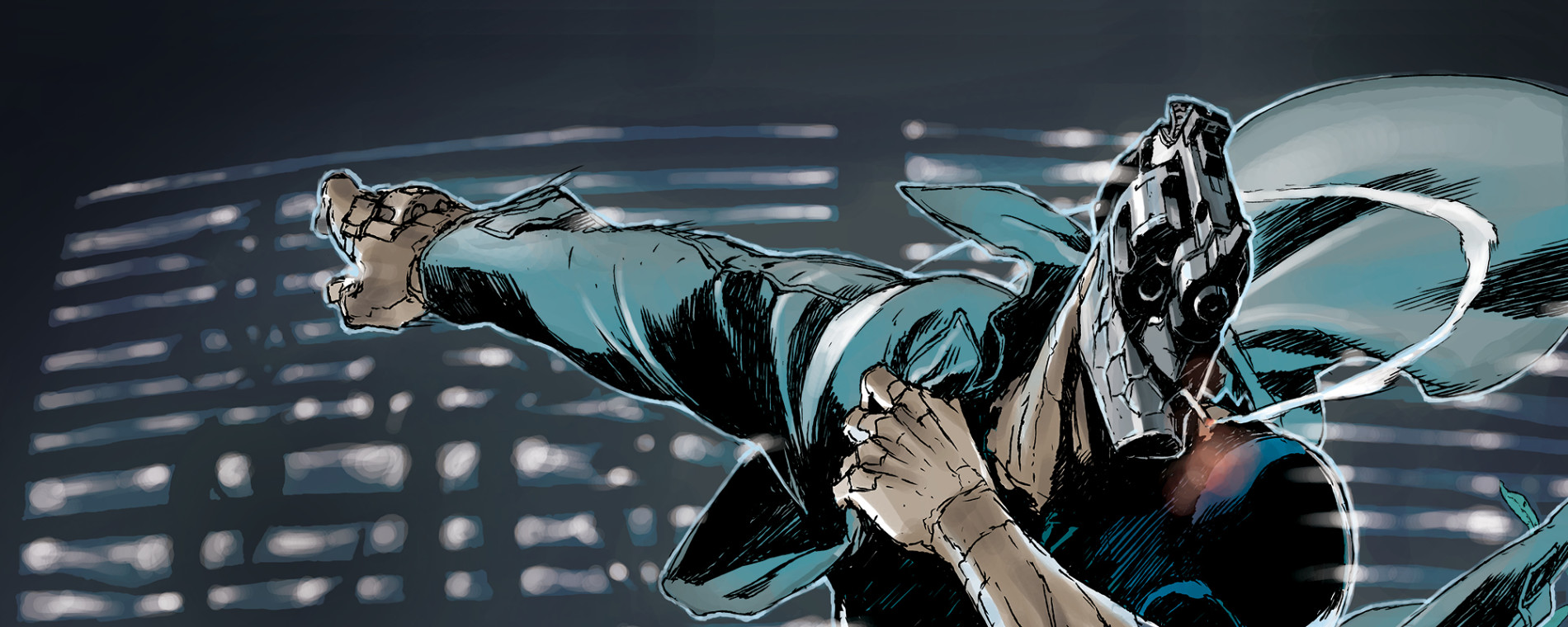
What makes No Guns Life ache like a bruise you can’t rub away isn’t its cybernetics or crime syndicates—it’s how deeply it trusts vulnerability as narrative gravity. This isn’t dystopia as spectacle; it’s dystopia as texture—the grime under fingernails, the way Mary’s voice softens just slightly when she says “Juuzou-san” after he’s taken another bullet for someone who didn’t ask him to. It’s weary, not cynical. Resigned, not broken. The city breathes exhaustion, not chaos. Every Extend carries a history they can’t access but feel in their joints—and Juuzou’s amnesia isn’t a plot device, it’s a metaphor for how trauma hollows out memory while leaving the body fully, painfully present. You don’t watch this anime to escape reality—you watch it because it mirrors the quiet weight of living inside a system that remade you without your consent, then expects you to bill hourly.
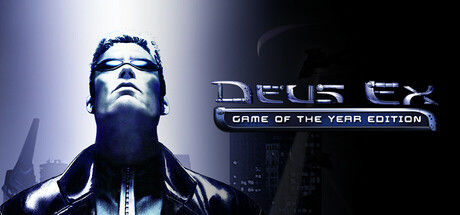
That emotional architecture resonates sharply with Deus Ex: Game of the Year Edition, where the world isn’t collapsing in explosions—it’s fraying at the seams: economies near collapse, wealth hoarded behind reinforced glass, conspiracies older than your grandparents. Its player review notes how the game starts up immediately, hands you all options at once—not as empowerment, but as burden. Like Juuzou’s open trigger ring, it gives you choice before context, agency before identity. You’re dropped into a world that already decided what you are—augmented, suspect, expendable—and every dialogue branch feels less like freedom and more like picking which version of compromise you’ll wear today. The Neon Noir dim isn’t lighting—it’s mood: rain-streaked windows reflecting corporate logos you can’t afford to question.
Then there’s BioShock™, where Rapture isn’t just underwater—it’s submerged in ideology. Its description calls it a shooter “loaded with weapons and tactics never seen”—but what lingers isn’t the plasmids or the Big Daddies. It’s the audio diaries whispering how easily conviction curdles into dogma, how quickly “progress” becomes a cage. Juuzou walks past billboards advertising Extend upgrades like they’re phone plans; Booker DeWitt walks past posters of Andrew Ryan declaring “No Gods or Kings”—both worlds sell salvation as surgery. The player review calls it “revolutionary,” and it was—but not for its guns. For how it made philosophy tactile, how every corridor felt like walking through someone else’s unraveling mind. That’s Juuzou’s world too: every case he takes peels back another layer of the lie that Extends are tools, not people who remember being held as children.
And BioShock Infinite, though set in floating Columbia instead of drowned Rapture, shares that same adult sorrow: Booker isn’t a hero—he’s a man drowning in debt and guilt, hired to retrieve a girl who sees all possible versions of him. His description says he must “wipe his slate clean”—a phrase Juuzou would recognize instantly, since his entire existence is a blank slate with a gun grafted to it. The player review mentions bitterness about “the Bioshock Infinite we could have gotten”—but what’s real is the ache beneath the critique: the longing for redemption that keeps slipping through your fingers, like Juuzou trying to recall Mary’s name before he knew her, or the shape of his own hands before they were replaced.
This pairing isn’t for fans of “cool cyborgs” or “gritty shooters.” It’s for the ones who pause mid-fight to watch rain collect in a robot’s shoulder joint. For readers who underline sentences about silence in novels. For players who save before major choices—not to avoid consequences, but to sit with the weight of them longer. It’s for people who understand that trust is the most dangerous thing in a broken world—and that sometimes, the bravest act is turning your back, and waiting to see if someone chooses to protect you instead of pull the trigger.
🎮29 Games That Match the Vibe








Match Dimensions Explained
❓Frequently Asked Questions
Why does No Guns Life feel so similar to BioShock even though it's anime and not first-person?
It’s all about that oppressive, morally gray dystopia where science runs amok — think Rapture’s decaying Art Deco halls or Columbia’s floating zealotry, mirrored in Juzo Inui’s cybernetic body horror and the corporate-controlled cityscapes of NGT. Both use environmental storytelling to drip-feed lore: like finding audio diaries from doomed Little Sisters or reading fragmented memos from Tetsu’s lab while fighting through a rain-slicked neon alley in Neo-Kobe.
Is there a No Guns Life anime adaptation with gameplay elements?
No — there’s only the 2019–2020 anime series (no game tie-in), but if you love NGT’s tone and want *interactive* cyberpunk noir, Deus Ex: Game of the Year Edition nails it: hacking security cameras as JC Denton, choosing to talk your way past MIB-like agents in UNATCO HQ, or silently taking down Majestic 12 goons in the smog-choked streets of NYC — all with that same adult, dark seinen weight.
How does Deus Ex compare to BioShock Infinite for someone who loves NGT’s mix of philosophy and action?
Deus Ex (GOTY) gives you more grounded, systemic choice — like disabling a surveillance grid to sneak past guards in a corporate vault, then debating ethics with Walton Simons over comms — whereas Infinite leans into spectacle and symbolic set-pieces (e.g., the Songbird confrontation). Both match NGT’s ‘adult & dark seinen’ vibe, but Deus Ex’s branching dialogue trees and augmentations (like vision modes for scanning enemies) feel closer to Juzo’s tactical head-mounted HUD and moral ambiguity.
What’s the best No Guns Life-like game if I’m in the mood for rainy, neon-drenched loneliness and quiet dread?
BioShock 2 — especially wandering the flooded, algae-choked halls of Fontaine Futuristics or listening to Sofia Lamb’s distorted sermons over broken PA systems. That slow-burn isolation, the creak of rusted metal, and the constant hum of failing infrastructure? It’s NGT’s Tokyo at 3 a.m., just swapped for Rapture’s drowned decay. And yes, it’s glitchy on modern PCs (per the player review), but the atmosphere is unmatched.