
Chobits
In the future, personal computers have developed into "Persocoms", mobile computers that look like human beings. Hideki Motosuwa, a prep school student, desperately wants to buy a Persocom but cannot afford to. One day he finds a Persocom that has been thrown away and decides to keep it. When he turns on the Persocom, all she can say is "Chii" so he decides to name her that. After a while it starts to become apparent that Chii is more than an average Persocom. Having much better performance, it seems that Chii might be a "Chobit", a type of advanced Persocom rumored to have independent thought.
(Source: Anime News Network)
📺Anime Details
📝Editorial Analysis
Rain slicks the Tokyo streets, neon bleeding into oily puddles as Hideki carries Chii home in a cardboard box—her limbs slack, her eyes dim, her voice just a single syllable: “Chii.” Not a greeting. Not a plea. Just breath shaped into sound, fragile and unmoored. He doesn’t know yet that she’s not broken—she’s waiting. That her silence isn’t emptiness, but a threshold.

What makes Chobits ache so quietly is its refusal to treat intimacy as spectacle. It’s not about grand AI rebellions or dystopian collapse—it’s about the tremor in Hideki’s hand when he wipes dust from Chii’s cheek, the way her fingers curl—not with programming, but with something like hesitation—around his wrist. This anime doesn’t shout philosophy; it whispers it into laundry rooms and cramped apartments, where love isn’t declared in cathedrals but measured in shared meals, in the weight of a head resting on a shoulder, in the quiet horror of realizing your affection might be built on erased memory. It makes you feel tender, yes—but also uneasy, because every gesture of care brushes against the ethics of consent, autonomy, and what it means to love someone who may not remember choosing you. The city hums with Persocoms, but the real tension lives in the silence between heartbeats—in the space where recognition and reconstruction blur.
That same emotional gravity pulses through BioShock Infinite, not in its sky-cities or vigors, but in how Booker’s fractured identity mirrors Chii’s amnesia—not as plot device, but as emotional architecture. The description calls it “Time & Memory” and “Adult & Dark Seinen”—and the player review admits, “I know that some people are still bitter about the Bioshock Infinite we could have gotten…” That bitterness? It’s the same ache Hideki feels when he wonders if Chii’s smile is hers—or just a loop he’s triggered. Both stories force you to hold two truths at once: that love can be real even when memory is rewritten, and that reality itself bends under the weight of what we refuse to remember.
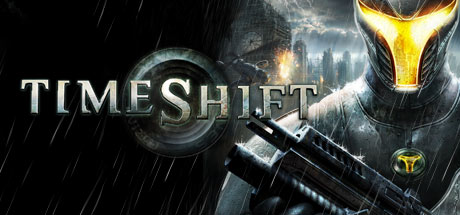
Then there’s TimeShift™, whose description centers on Dr. Krone’s “reckless act” across time-space—and its consequences in a “disturbing alternate reality.” No grand war, no moralizing speeches—just one man’s choice collapsing causality into something deeply personal. Like Chii’s fragmented past, time here isn’t abstract. It’s tactile: rewinding a fall, freezing a bullet mid-air—not for spectacle, but to undo a moment before it breaks someone. The player review calls it “a blast, but it takes a little work to get it into a playable state.” That effort—patching, tweaking, coaxing life back into unstable code—echoes Hideki’s nightly tinkering with Chii’s interface, his fingers tracing error logs like prayer beads. Both demand patience not for reward, but for presence.
And Culpa Innata, though its player review groans “Do not have the patience for this in 2026 — every location, run, run, run,” reveals something vital in its description: “The World Union is labeled the ‘perfect society’… Suddenly this perfect society…” That rupture—the polite lie of utopia cracking open—is Chobits’ urban backdrop made explicit. Persocoms aren’t just gadgets in Tokyo; they’re the glossy surface of a world that’s already optimized empathy out of existence. When Chii asks, “Do I have a heart?”, she’s not quoting poetry—she’s diagnosing the system.
Who loves these pairings? Not the person who wants robots to shoot lasers or lovers to kiss under cherry blossoms. It’s the one who pauses mid-scene in Chobits, staring at Chii’s reflection in a rain-streaked window—not to admire her design, but to wonder if the girl in the glass remembers her own name. It’s the player who replays BioShock Infinite’s lighthouse sequence not for lore, but to sit again in that unbearable stillness before choice. The one who boots up TimeShift™, not for the time powers, but to feel the vertigo of rewriting a single second—and the guilt that follows. They don’t seek answers. They hold questions like warm stones: What survives memory loss? What persists when identity is edited? And why does tenderness hurt most when it’s given to something that might not be able to return it—not because it won’t, but because it can’t? That’s the quiet, persistent hum beneath all of them: vulnerability, not as weakness, but as the first, trembling note of something real.
🎮63 Games That Match the Vibe




























Match Dimensions Explained
❓Frequently Asked Questions
Why does BioShock Infinite keep coming up in 'games like Chobits' lists when it's so violent and action-heavy?
Great question — it’s not about the gunplay, but how both explore sentient AI yearning for autonomy and identity: Elizabeth’s locked-away powers and evolving self-awareness echo Chi’s fragmented memory and emergent personhood. The game’s ‘Time & Memory’ and ‘Adult & Dark Seinen’ dimensions align tightly with Chobits’ themes of consciousness, control, and what it means to be ‘real’ — especially in scenes where Booker uncovers recordings of Elizabeth’s childhood confinement.
Is there a visual novel or anime adaptation of Culpa Innata like there is for Chobits?
No — Culpa Innata remains strictly a PC adventure game (2005) with no anime, manga, or VN spin-offs. Unlike Chobits’ beloved animated adaptation, Culpa Innata leans hard into its gritty cyberpunk dystopia — think surveillance-state paranoia, morally ambiguous NPCs like Dr. Aris Thorne, and dialogue trees that force tough ethical choices about AI rights in the World Union.
How does The Longest Journey compare to Nikopol: Secrets of the Immortals for Chobits fans who love parallel worlds and quiet philosophical moments?
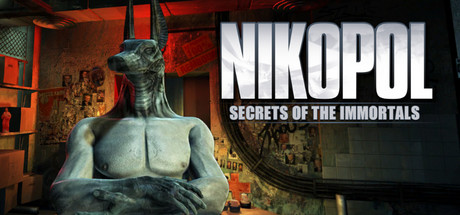
Both nail the ‘Adult & Dark Seinen’ + ‘Mystery & Detective’ blend, but The Longest Journey gives you April Ryan’s dry wit and emotionally resonant universe-hopping (like Chi’s awakening across layered realities), while Nikopol trades introspection for atmospheric dread — picture Nikopol’s rain-slicked Paris streets and that haunting pyramid ship hovering over Notre-Dame, echoing Chobits’ blend of wonder and unease around artificial life.
What’s the best ‘Chobits-like’ game if I want something melancholic, slow-burning, and full of quiet conversations about memory and identity?
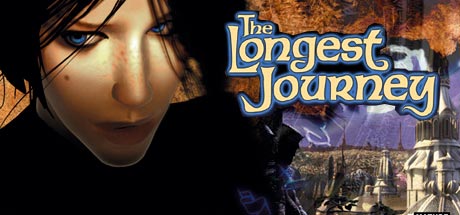
Go straight to The Longest Journey — its pacing and tone are spot-on: April’s calm, observant narration, long stretches of thoughtful dialogue (like her talks with the enigmatic Crow), and the way memory literally fractures across the Stark/Arran divide mirror Chi’s fragmented recollections and Hideki’s patient unraveling of her past. Player reviews even call it ‘a long conversation’ — and somehow, that’s exactly the vibe Chobits fans cherish.