
SHADOWS HOUSE
High atop a cliff sits the mansion known as Shadows House, home to a faceless clan that pretends to live like nobles. They express their emotions through living dolls that also endlessly clean the home of soot. One such servant, Emilico, aids her master Kate as they learn more about themselves and the mysteries of the house.
(Source: Funimation)
📺Anime Details
📝Editorial Analysis
The silence after the soot falls. Not the quiet of emptiness, but the weight of it—gray, fine, clinging to every surface, every breath, every unblinking doll-face that doesn’t blink because it can’t. Emilico kneels, rag in hand, wiping the same hallway floor for the third time that hour, her fingers smudging ash into something that looks like a face—then watching it dissolve under the next drift. Kate stands just behind her, motionless, her own face blank—not empty, but waiting: waiting for a feeling she’s never been allowed to name, waiting for a memory that’s been scrubbed clean like the marble beneath Emilico’s knees.
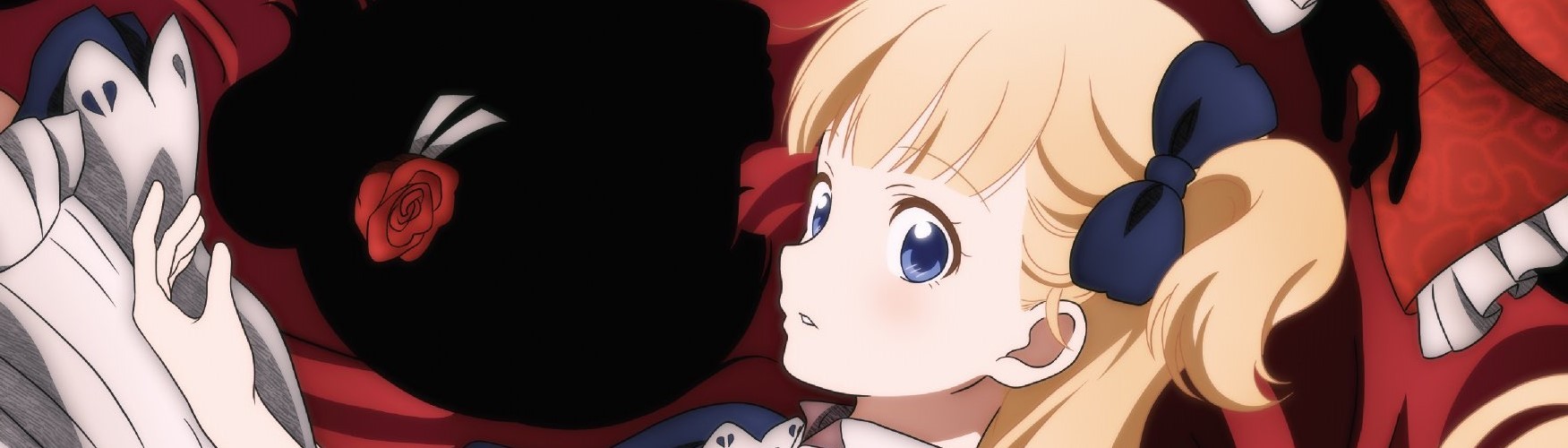
That silence isn’t peaceful. It’s charged—with withheld breath, with choreographed obedience, with the slow, grinding horror of a system so polished it gleams like porcelain… right up until you press your thumb against the glaze and feel the hairline crack. SHADOWS HOUSE doesn’t scream its dread. It polishes it. Every bow, every starched cuff, every whispered “yes, my lady” hums with the tension of something deeply wrong wearing the costume of perfect order. You don’t fear the monsters under the bed—you fear the maid who knows exactly how many strokes it takes to make the dust vanish just so, and who smiles while doing it. It makes you feel complicit. Not because you’ve done anything—but because you’re watching, breathing the same air, recognizing the logic: if the soot is evil, and the dolls are emotion, and the masters are hollow… then what does it mean to clean? To serve? To remember?
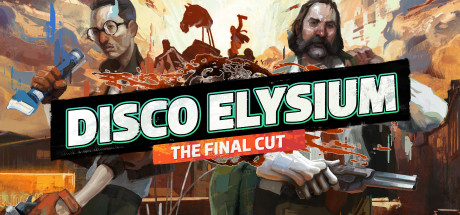
That emotional DNA—submerged trauma, institutional gaslighting, the terror of self-erasure disguised as duty—resonates sharply with Disco Elysium - The Final Cut. Its description calls it a “groundbreaking role playing game” where you interrogate a city and yourself, and one player review nails the core ache: “Capital has the ability to subsume all critiques into itself. Even those who would critique capital end up reinforcing it instead.” That’s Shadows House in a sentence—the mansion doesn’t need guards or chains; it runs on internalized hierarchy, where questioning the soot-cleaning ritual feels like treason against your own purpose. Both make you feel the exhaustion of thinking inside a cage whose bars are made of language, duty, and inherited silence.
Then there’s BioShock, described as a shooter loaded with “weapons and tactics never seen”—but its player review hails it as “one of the most revolutionary games ever!” not for guns, but for how it unfolds ideology as architecture. Rapture isn’t just underwater—it’s built on a lie that everyone breathes like oxygen. So is Shadows House: a gothic edifice where “nobility” is performance, “emotion” is delegated labor, and “memory manipulation” isn’t sci-fi—it’s policy. The horror isn’t in the jump-scare, but in realizing the butler’s calm instructions, the maid’s flawless curtsy, the child-master’s vacant stare—they’re all symptoms of the same engineered amnesia. You don’t fight splicers; you watch Emilico fold a napkin exactly as trained, and wonder what folded her.
And BioShock Infinite, with its dimension-hopping descent into “Time & Memory”, mirrors the anime’s slow, devastating unraveling of identity. Its description frames Booker DeWitt’s mission as debt-payment—“wiping his slate clean”—while a player review admits the pain of “the Bioshock Infinite we could have gotten.” That wistful, almost mournful gap between what is and what was erased or promised? That’s Kate staring at her own reflection in a soot-streaked window, wondering why her hands tremble when no one’s watching—and why Emilico’s smile never reaches her eyes when she thinks Kate isn’t looking. Both works treat memory not as data, but as stolen land, and recovery not as triumph, but as excavation through layers of sanctioned forgetting.
This pairing isn’t for fans of “dark fantasy” or “mystery plots.” It’s for the person who pauses mid-episode when a maid adjusts her glove just so, and feels a cold prickle—not of fear, but of recognition. For the player who replays Prince of Persia: Warrior Within not for the swordplay, but for the Dahaka’s relentless pursuit—the way time itself becomes an antagonist that knows your name, even when you’ve forgotten it. They’re drawn to stories where power wears lace, where rebellion begins with a single untrained blink, and where the most radical act isn’t escape—it’s remembering how your own breath sounds when no one’s counting it.
🎮37 Games That Match the Vibe










Match Dimensions Explained
❓Frequently Asked Questions
Why does Disco Elysium keep coming up in SHADOWS HOUSE discussions?
Because both dive deep into oppressive, gilded-cage societies where characters wear masks—literally and psychologically. In SHADOWS HOUSE, the nobles hide behind porcelain faces while the Shadow House enforces rigid hierarchy; in Disco Elysium, you play a detective unraveling truths in Revachol, a decaying city where ideology literally haunts the streets (like that chilling ‘Capital’ skill check where your own thoughts quote Marxist theory). Fans love how both use atmosphere, layered dialogue, and systemic dread—not jump scares—to build tension.
Is there a SHADOWS HOUSE video game adaptation?
No—there’s no official SHADOWS HOUSE game yet, but fans often reach for BioShock or Prince of Persia: Warrior Within when craving that same gothic, claustrophobic power imbalance. BioShock’s Rapture mirrors the House’s false utopia: think Andrew Ryan’s ‘objectivist’ paradise crumbling under its own hypocrisy, just like the Shadow House’s ‘perfection’ hiding exploitation. And Warrior Within’s Dahaka chase? That relentless, inevitable pursuit echoes how SHADOWS HOUSE’s rules close in on Emilico and Kate—no escape, only adaptation.
How is Assassin’s Creed Director’s Cut Edition similar to SHADOWS HOUSE?
It’s not about parkour or assassins—it’s about the weight of inherited systems. Like SHADOWS HOUSE’s noble families bound by centuries-old oaths and bloodlines, Assassin’s Creed’s Templars and Assassins are locked in a cyclical, ideological war where identity is inherited, not chosen. The game’s dated textures might feel ‘old,’ but that very sense of faded grandeur—crumbling Crusader fortresses echoing with lost purpose—mirrors the Shadow House’s decaying opulence and suffocating tradition.
What’s the best game like SHADOWS HOUSE if I want that eerie, melancholic ‘gilded cage’ vibe?
BioShock Infinite is your top pick—especially for its haunting blend of beauty and rot. Elizabeth’s gilded tower prison in Columbia, with its floating gardens and forced cheer, hits the same notes as the Shadow House’s ornate halls and silent corridors. When Booker first sees her through the tear, trapped behind glass and lace, it’s pure SHADOWS HOUSE energy: elegance as control, innocence weaponized, and every pretty surface hiding something deeply unsettling.