
Occultic;Nine
The "paranormal science" story follows nine idiosyncratic individuals, linked by the "Choujou Kagaku Kirikiri Basara" occult summary blog run by 17-year-old second-year high school student Yuuta Gamon. Little incongruities that occur around these nine eventually lead to a larger, unimaginable event that may alter what is considered common sense in this world.
(Source: Anime News Network)
📺Anime Details
📝Editorial Analysis
The flicker of a laptop screen in a dim Tokyo bedroom—17-year-old Yuuta Gamon scrolling through Occultic;Nine’s “Choujou Kagaku Kirikiri Basara” blog at 3:47 a.m., cursor hovering over a post titled “The Ninth Ghost Is Already Inside Your Browser Cache.” His fingers don’t click. He just stares. The air hums—not with sound, but with pressure, like the world’s operating system has just thrown an unlogged error. That’s the feeling: not dread, not wonder—but unease that migrates. It settles behind your eyes, makes your thumb twitch when you scroll past a news headline, makes you double-check your browser history.
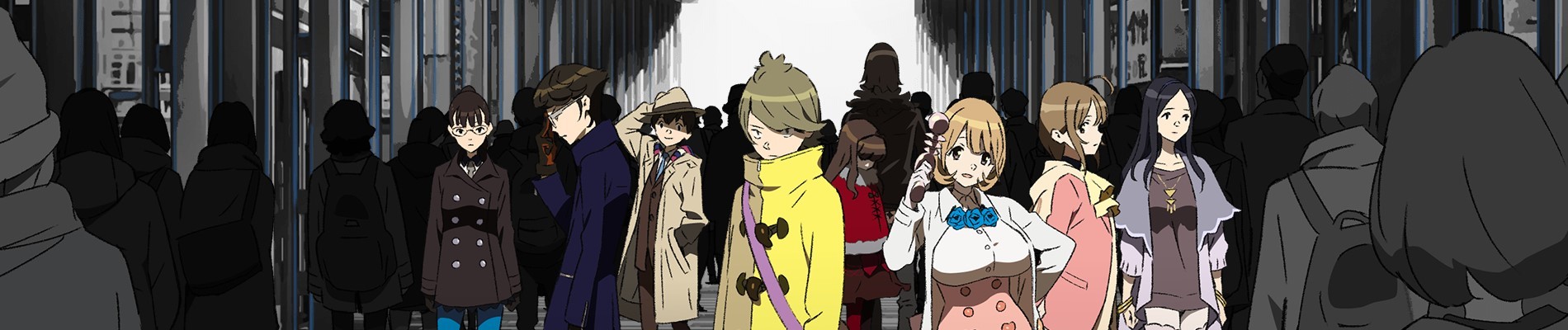
What makes Occultic;Nine unlike anything else isn’t its occult trappings or nine-character ensemble—it’s how it weaponizes cognitive friction. It doesn’t ask you to believe in ghosts; it makes you feel the glitch between belief and dismissal, between data and delusion. Every character’s dissociative identity, every suicide reference, every cult footnote isn’t spectacle—it’s texture. You’re never sure if the conspiracy is real or if reality itself is fraying at the seams of collective attention. It’s not about solving a mystery—it’s about surviving the aftermath of noticing too much. You don’t leave the show with answers. You leave with a tremor—a quiet, persistent suspicion that your own perception is running outdated firmware.
That tremor vibrates at the same frequency as BioShock™. Its description calls it a shooter “loaded with weapons and tactics never seen”—but what lingers isn’t the plasmids or Big Daddies. It’s the moment Fontaine’s voice cracks through Rapture’s intercom, and the player realizes they’ve been complicit in their own conditioning. Like Yuuta parsing blog posts while ignoring his own dissociation, Jack navigates a world where ideology wears the mask of logic—and freedom looks exactly like obedience. A player review nails it: “one of the most revolutionary games ever! genuinely changed the gaming world…” That revolution wasn’t technical—it was epistemological. Both Occultic;Nine and BioShock™ force you into a state of unmoored certainty, where every truth claim carries the static of its own construction.
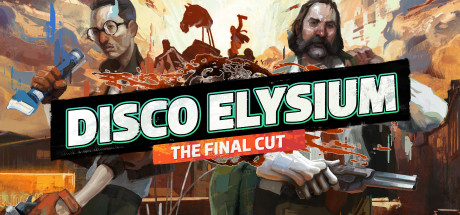
Then there’s Disco Elysium - The Final Cut, whose description positions you as “a detective with a unique skill system” in “a whole city to carve your path across.” But the real resonance is in the player review’s brutal line: “Capital has the ability to subsume all critiques into itself. Even those who would critique capital end up reinforcing it instead.” That’s Occultic;Nine’s core engine—how the occult blog, the cult, the suicide clusters, even Yuuta’s own fragmented psyche—they’re all nodes in a system that feeds on attention, interpretation, and resistance alike. You don’t escape the loop. You become part of its syntax. Both works trap you inside a logic so total, questioning it only proves its depth. The detective isn’t solving the case—he’s being diagnosed by it.
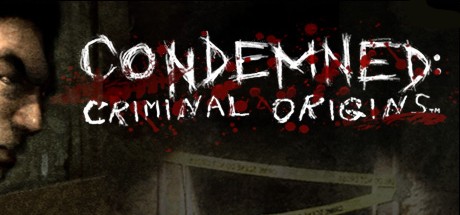
And Condemned: Criminal Origins, with its blunt question—“What twists the mind of an ordinary human into a serial killer?”—lands with the same visceral weight as Occultic;Nine’s treatment of dissociation. Not as pathology, but as contagion. The game’s player review urges you to “find a way” to play it—even though it’s vanished from Steam—because it’s “a gem.” That urgency mirrors how Occultic;Nine treats information: rare, unstable, dangerous to possess. Both refuse catharsis. They offer no clean resolution—just the slow, grinding realization that the horror isn’t out there. It’s the architecture of thought itself, rewiring in real time.
This isn’t for people who want tidy endings or heroic clarity. It’s for the ones who pause mid-scroll when a Wikipedia edit feels off, who hear a phrase repeated three times and suddenly question its origin, who’ve ever whispered “Wait—why does this feel familiar?” and then spent ten minutes tracing the echo back to a half-remembered forum post. It’s for readers who annotate margins in red pen, players who reload saves not to win—but to verify. For those who know the scariest thing isn’t the ghost in the machine. It’s realizing you’re the ghost—and the machine is learning your name.
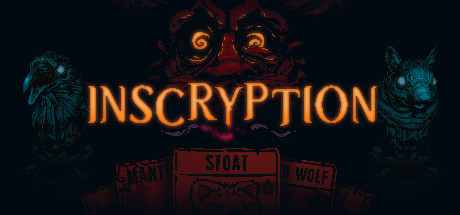
🎮32 Games That Match the Vibe










Match Dimensions Explained
❓Frequently Asked Questions
Why is BioShock listed as similar to Occultic;Nine when it’s not about anime or cults?
Great question — it’s not about anime aesthetics, but the *core vibe*: BioShock’s Rapture is a decaying, ideologically obsessed city where Objectivism curdles into body horror and occult-adjacent madness (think Little Sisters’ grotesque harvesting, ADAM mutations, and the ‘Would you kindly?’ mind-control reveal). That same blend of political thriller + visceral, metaphysical dread — especially in the way ideology warps reality — is why fans of Occultic;Nine’s layered conspiracies and psychological unraveling keep coming back to it.
Is there an anime or visual novel adaptation of Disco Elysium like Occultic;Nine?
No — Disco Elysium has no anime or visual novel adaptation (and likely never will, given its deeply text-driven, RPG-first DNA). But that’s *why* fans of Occultic;Nine love it: like Occultic;Nine’s ensemble cast debating quantum consciousness and cult psychology, Disco Elysium drops you into Revachol with 24 distinct skills (like Logic, Empathy, or Esprit de Corps) constantly arguing in your head — especially during scenes like the ‘Inland Empire’ hallucination or the haunting ‘Coral’ investigation, where reality frays just as hard as in Occultic;Nine’s ‘Schrödinger’s Cat’ sequences.
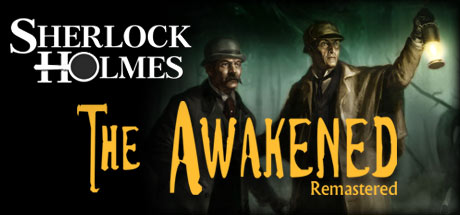
How does Condemned: Criminal Origins compare to Sherlock Holmes: The Awakened (2008) for occult detective vibes?
Condemned leans hard into raw, first-person *body horror* — think forensic crime scenes where you physically examine mutilated corpses under flickering lights, then get ambushed by shambling, ritual-scarred killers in decaying urban ruins. Sherlock Holmes: The Awakened, meanwhile, trades that grit for gothic Cthulhu-lite atmosphere: you’re piecing together Lovecraftian clues in Arkham-esque locales, interrogating cultists who chant in distorted Latin before transforming into tentacled horrors. Both nail ‘occult detective’, but Condemned is *visceral panic*, while Awakened is *intellectual dread* — like comparing Occultic;Nine’s ‘Shin’ya’ breakdowns to its ‘Ritsu’ exposition scenes.
What’s the best game like Occultic;Nine if I want that ‘late-night conspiracy rabbit hole’ feeling with zero combat?
Disco Elysium — hands down. There’s *no combat at all*, just your brain (and 24 skill voices) dissecting a murder in a rain-soaked, politically fractured city. You’ll spend hours cross-examining suspects in the Whirling-in-Rags bar, debating Marxist theory with a communist bartender, or staring at a dead man on a pier while your ‘Logic’ and ‘Authority’ skills bicker about whether he jumped or was pushed — all while the world feels *exactly* like Occultic;Nine’s ‘9th Level’ paranoia: dense, self-referential, and emotionally exhausting in the best way.