
Nadia: The Secret of Blue Water
In 1889, the world is on the pinnacle of great discoveries in technology. In mankind's grasp for the future, a sinister foe known only as Gargoyle, obsessed with restoring the former Atlantean empire to the glory it once held, begins his plans to take over the world. Nadia, with the help of a young inventor, Jean Raltique, and the mysterious captain Nemo of the submarine Nautilus, must fight to save the world from Gargoyle and Neo-Atlantis. Based on the Novel '20,000 Leagues Under the Sea' by Jules Verne.
(Source: Anime News Network)
📺Anime Details
📝Editorial Analysis
The salt-stung wind whips Nadia’s blue hair as she stands on the deck of the Nautilus, not in terror—but in awe—watching the sun sink behind a horizon stitched with steam and smoke, while brass gears hum beneath her feet and Jean fiddles nervously with a half-assembled gyroscope. It’s 1889, but time feels elastic: horse-drawn carriages rattle past electric arc lamps; telegraphs crackle beside glowing Atlantean glyphs; and somewhere below the waves, Captain Nemo stares into a holographic star chart—not with triumph, but sorrow. That moment isn’t just spectacle—it’s yearning. A longing for wonder that hasn’t yet curdled into cynicism, for discovery that still believes in dignity, for technology that serves memory—not erasure.

What makes Nadia: The Secret of Blue Water vibrate so uniquely isn’t its steampunk trappings or orphan heroine trope—it’s how it holds innocence and consequence in the same breath. You feel the thrill of the Nautilus’s first dive like your own lungs are filling with cold, clean seawater—and then you feel the weight of Gargoyle’s obsession, not as cartoon villainy, but as the chilling echo of real historical imperialism dressed in Atlantean robes. This is adventure where every gear-turn carries moral gravity; where romance blooms not through proximity, but through shared witness to beauty and ruin; where “coming of age” means learning that saving the world doesn’t mean purging its shadows—it means choosing which light to carry into them. It’s tender, unflinching, and deeply humane—a rare warmth in a genre often obsessed with scale over soul.
That emotional DNA pulses strongest in BioShock™, whose description names it a shooter “loaded with weapons and tactics never seen”—but player reviews call it “one of the most revolutionary games ever!” because it weaponizes discovery itself. Like Nadia deciphering Atlantean ruins aboard the Nautilus, BioShock makes you feel the seduction of ideology before revealing its rot—Rapture’s art deco grandeur mirrors 1889’s gilded optimism, and its collapse echoes Gargoyle’s Neo-Atlantis: both built on the lie that progress absolves power of ethics. The review’s awe—“genuinely changed the gaming world”—mirrors how Nadia reshaped anime’s capacity for moral texture in adventure storytelling.
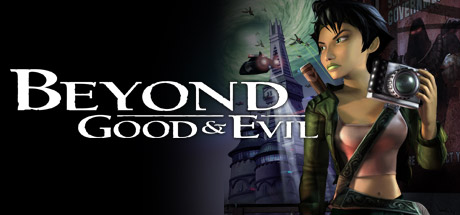
Then there’s Beyond Good and Evil™, where you play Jade—a young investigative reporter exposing “a terrible government conspiracy” alongside her loyal pig friend Pey’j. Its description frames resistance as quiet, persistent, embodied: not grand battles, but stolen data, hidden broadcasts, trust earned in glances and shared silence. That resonates with Nadia’s arc—not as a chosen one, but as a girl who listens, who questions Nemo’s silence, who shields Jean not with force, but with presence. The player review’s ecstatic “Crazyyy game!” lands because Jade’s courage feels grounded, like Nadia’s—never mythic, always human-scale. Both reject spectacle-as-substance; both believe truth lives in the margins—in a journal entry, a whispered name, a repaired radio.
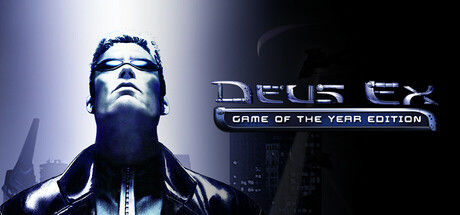
And Deus Ex: Game of the Year Edition, with its 2052 setting of “economies close to collapse” and “an ages-old conspiracy bent on world dom[ination]”, shares Nadia’s structural heartbeat: the sense that history isn’t linear, but cyclical—Atlantis falls, rises as Neo-Atlantis, threatens again. Its player review praises how the game “gives you all options with one hit of the esc key”—a nod to agency rooted in clarity, not chaos. Like Nadia choosing mercy over vengeance when facing Gargoyle’s broken disciples, Deus Ex trusts you to weigh consequences before pulling the trigger. Not “what can I do?” but “what must I become to do it?”
This pairing sings for the viewer who cried when Nadia finally understood Nemo’s grief—not because he was tragic, but because he remembered too well; for the player who paused BioShock’s combat to stare at a child’s abandoned doll in Rapture’s flooded halls; for anyone who’s ever held a controller or turned a page and felt that quiet, electric recognition: the world is broken, yes—but the most radical act isn’t conquest or escape. It’s choosing wonder anyway.
🎮7 Games That Match the Vibe


Match Dimensions Explained
❓Frequently Asked Questions
Why is BioShock listed as similar to Nadia: The Secret of Blue Water?
Both dive deep into political intrigue wrapped in grand, decaying sci-fi settings—BioShock’s Rapture mirrors Nadia’s mysterious underwater ruins and colonial-era maritime conspiracies, especially with its themes of utopian hubris and hidden societies. Like Nadia’s Captain Nemo-inspired figures and secret societies, BioShock’s Andrew Ryan and Fontaine weaponize ideology while hiding world-altering tech beneath the waves.
Is there a video game adaptation of Nadia: The Secret of Blue Water?
No official video game adaptation of Nadia exists—but games like Beyond Good and Evil capture its spirit perfectly: Jade’s plucky journalism, her bond with the loyal, wise-cracking pig Pey’j, and the urgent mission to uncover government lies feel straight out of Nadia’s globe-trotting, submarine-chasing energy. Even the art direction—warm lighting, expressive characters, and grounded-yet-wondrous sci-fi—echos Nadia’s tone far more than most licensed anime games ever did.
How does Beyond Good and Evil compare to Deus Ex: Game of the Year Edition?
Beyond Good and Evil is lighter on systemic stealth and cybernetic augmentation but matches Deus Ex’s political thriller core—Jade exposing the DomZ conspiracy on Hillys parallels JC Denton unraveling Majestic 12 in 2052, both using investigation, hacking (Jade’s security overrides), and ally-driven intel gathering. But where Deus Ex leans into gritty, morally gray choices and RPG depth, Beyond leans into charm, momentum, and tactile platforming—think Jade swinging from pipes in the lighthouse vs. JC vaulting over crates with augmentations.
What’s the best game like Nadia if I want that ‘wondrous discovery’ vibe with a strong female lead?
Beyond Good and Evil is your absolute top pick—Jade isn’t just a reporter; she’s curious, compassionate, and constantly uncovering lost tech, alien biology, and buried histories, just like Nadia piecing together the Blue Water mystery aboard the Nautilus. The game’s sun-drenched beaches, ancient temples, and even the eerie quiet of the lighthouse basement all nail that same sense of awe and intimate wonder you get watching Nadia trace constellations or descend into Atlantis.