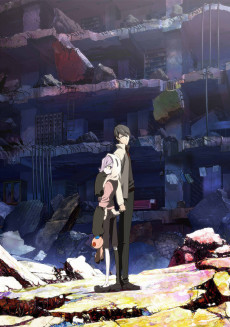
UN-GO
He pursues his job as the "Last Great Detective". Others call him the "Defeated Detective". What's certain is that he's Shinjurou Yuuki, a young man with a passion for mysteries and a talent for solving them that has made him the target of dark forces now stirring within the sinister underworld of a near future Tokyo. That could prove lethal, given that not even the other "good guys", including the police, are exactly on Shinjuro's side. Fortunately Yuuki's not completely on his own, and with the aid of his uniquely talented associate Inga, he's ready to cut a swath through the veils of secrecy that have been laid before him.
Get ready for mind against matter and a lot of cloak and dagger as the ultimate battle of clue and deduction begins in UN-GO!
(Source: Sentai Filmworks)
📺Anime Details
📝Editorial Analysis
Rain slicks the neon-drenched streets of Neo-Kyoto like oil on black glass—Shinjurou Yuuki stands beneath a flickering holographic ad for The World Union, its serene, smiling face dissolving into static as he exhales cigarette smoke that vanishes before it rises two inches. His coat is rumpled, his eyes tired but sharp, scanning not the crowd, but the gaps between them—the silence where a lie breathes. A police cruiser glides past, its speakers broadcasting sanitized updates about “harmonious civic order,” while a distant siren wails—not urgent, but ritualistic, like a clock ticking down in a room no one’s allowed to enter. This isn’t tension. It’s weight: the kind that settles behind your ribs when you realize every institution you’re supposed to trust has already rewritten the rules—and forgot to tell you.
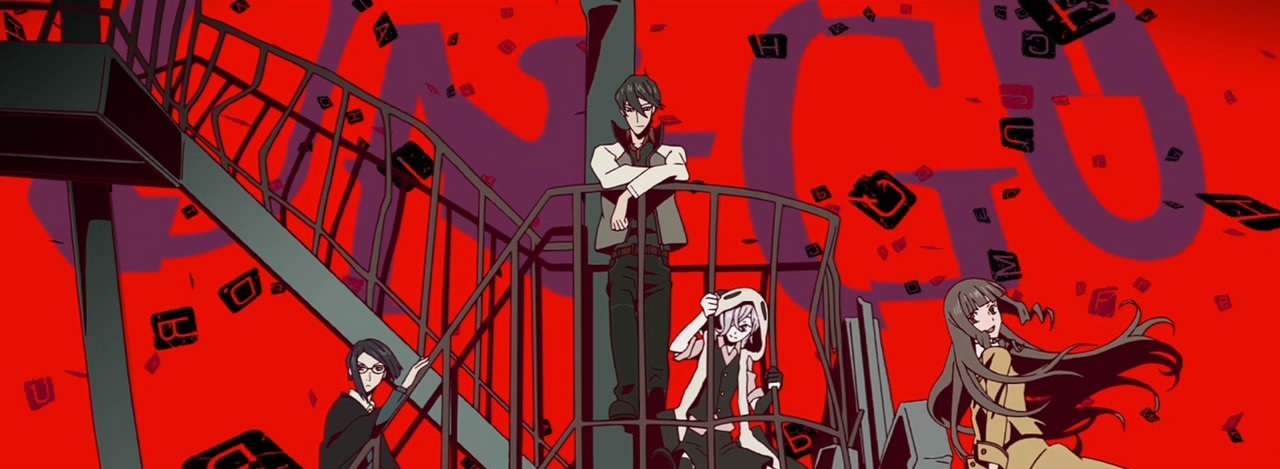
What makes UN-GO ache like this isn’t its sci-fi trappings or shapeshifting monsters—it’s the exhaustion of truth-seeking in a world that has outlawed epistemology. You don’t feel like a detective solving clues; you feel like a linguist trying to translate a language whose grammar was burned by decree. The dystopia isn’t rubble and ruin—it’s polished chrome, seamless surveillance, and polite, smiling coercion. Every conversation hums with subtext you know matters, but can’t quite isolate—because the system doesn’t break; it bends perception itself. You think about complicity—not just who pulled the trigger, but who calibrated the gun, who certified the bullet, who taught the shooter to call it “duty.” It’s heavy, quiet, and unforgiving—not because violence erupts, but because it’s always already been absorbed, digested, and served back as policy.
That same suffocating precision lives in Culpa Innata, where the World Union is labeled the “perfect society”—prosperity as science, disease and war erased, sex as entertainment—until the cracks widen into chasms of cognitive dissonance. Just like Shinjurou navigating Tokyo’s sanctioned narratives, Culpa’s protagonist walks through a world where every corridor, every interface, every cheerful voiceover performs utopia while withholding the architecture of control. One player confesses: “Do not have the patience for this in 2026 — every location, run, run, run — not enjoyable”. That frustration? It’s real, and it’s on purpose: the game mirrors UN-GO’s emotional rhythm—the exhaustion of moving through spaces designed to exhaust inquiry, where progress feels less like revelation and more like administrative attrition.
Then there’s BioShock, whose genius lies not in its guns or plasmids, but in how Rapture’s ideology curdles into architecture—every Art Deco archway, every leaking pipe, every whispered audio diary a testament to how ideals calcify into prisons. Like Shinjurou confronting the police who arrest truth-tellers “for their own safety,” BioShock forces you to fight men who genuinely believe they’re liberating you—even as their bullets tear your flesh. A player calls it “one of the most revolutionary games ever! genuinely changed the gaming world…”—and what they’re praising isn’t spectacle, but structural irony: the way the world’s logic holds, even as it collapses morally. That’s UN-GO’s heartbeat too—the horror isn’t chaos, but consistency: a system so internally coherent it can justify anything.
And Deus Ex: Game of the Year Edition, set in 2052, where economies teeter and an “ages-old conspiracy bent on world domination” operates not from shadows, but boardrooms and biotech patents. Its description names the exact same dread UN-GO cultivates: inequality so vast it becomes ontological, power so embedded it stops feeling like force and starts feeling like weather. A reviewer notes how the game “starts up (immediately), and gives you all options with one hit of the esc key”—that immediacy, that refusal to gatekeep agency even as the world denies it, echoes Shinjurou’s solitary, unglamorous work: no fanfare, no backup, just you, a notebook, and the unbearable clarity of seeing what others have trained themselves not to see.
This pairing isn’t for fans of “cool detectives” or “gritty futures.” It’s for the ones who pause mid-scene—not to admire the animation, but to trace the silence between lines of dialogue, who replay a boss fight not for mastery, but to catch the tremor in a villain’s voice when they quote official doctrine. It’s for people who feel relief, not excitement, when a story refuses easy answers—and who carry that weight home, quietly, like Shinjurou lighting another cigarette under a broken sign, watching the city breathe its perfect, poisoned air.
🎮33 Games That Match the Vibe



















Match Dimensions Explained
❓Frequently Asked Questions
Why does UN-GO feel so much like Culpa Innata even though they're from different countries?
Both lean hard into that oppressive, 'perfect society' facade hiding rot—UN-GO’s post-war Japan with its media-manipulated justice system mirrors Culpa Innata’s World Union where prosperity is scientifically enforced and dissent is erased. You’ll recognize the same claustrophobic dread in scenes like UN-GO’s courtroom theatrics and Culpa Innata’s sterile interrogation rooms, both dripping with adult, dark seinen tension (66 on Metacritic, same dimension tags). Just don’t expect breezy pacing—Culpa Innata’s infamous ‘run, run, run’ fatigue (per that player review) is *not* what UN-GO delivers.
Is there a UN-GO video game adaptation?
No—there’s never been an official UN-GO game. The franchise stayed firmly in anime/manga territory, which is why fans looking for that same vibe gravitate toward games like BioShock (64) or Deus Ex: GOTY (61), both of which nail UN-GO’s core cocktail: political conspiracy, morally slippery detectives (think Ryunosuke’s sharp tongue vs. JC Denton’s quiet pragmatism), and worlds where truth is weaponized. If you’re hoping for a detective-led, dialogue-heavy cyber-noir with philosophical weight, those are your closest living cousins.
How does BioShock compare to Assassin's Creed Director's Cut for UN-GO fans?
BioShock’s a tighter fit—its Rapture is basically UN-GO’s Kanai City dialed up to dystopian opera: propaganda-laced audio logs replace UN-GO’s theatrical monologues, and Andrew Ryan’s speeches echo Enjouji’s manipulative rhetoric. Assassin’s Creed Director’s Cut (64) has the neon-noir lighting and political thriller bones, but its parkour-and-templar focus lacks UN-GO’s intimate, dialogue-driven mystery—plus, that dated texture complaint in the player review? Yeah, it shows in the pacing and immersion compared to BioShock’s world-building density.
What’s the best UN-GO-like game if I want that moody, rain-slicked, morally gray detective vibe?
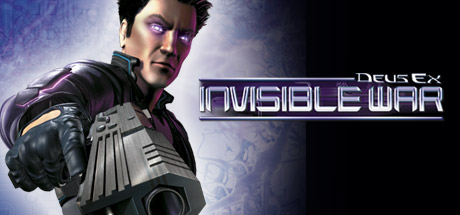
Deus Ex: Game of the Year Edition (61) is your answer—it drops you straight into 2052’s decaying cities where every alley smells like wet concrete and bad decisions, just like UN-GO’s fog-draped Tokyo. You play JC Denton, a cyborg agent who questions authority *constantly*, mirroring Ryunosuke’s razor-edged skepticism—and the game lets you solve cases via hacking, stealth, or brutal force, all while drowning in neon-noir shadows and political paranoia. Skip Invisible War (same score, but ‘nothing compared to its predecessor’ per the review) and go straight to GOTY for that authentic, weighty, morally ambiguous pulse.