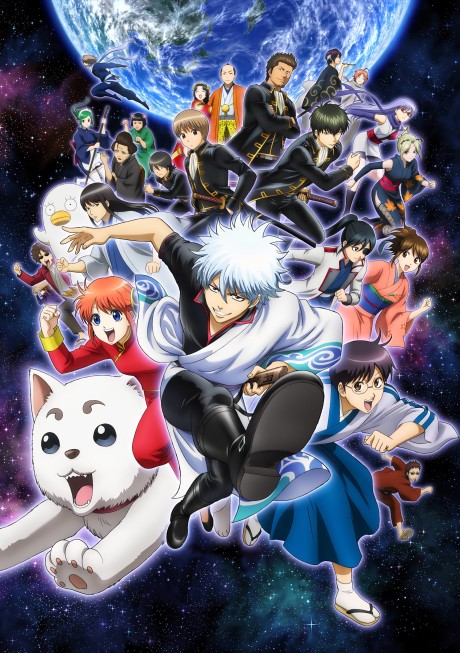
Gintama Season 3
Gintoki, Shinpachi, and Kagura return as the fun-loving but broke members of the Yorozuya team! Living in an alternate-reality Edo, where swords are prohibited and alien overlords have conquered Japan, they try to thrive on doing whatever work they can get their hands on. However, Shinpachi and Kagura still haven't been paid... Does Gin-chan really spend all that cash playing pachinko?
Meanwhile, when Gintoki drunkenly staggers home one night, an alien spaceship crashes nearby. A fatally injured crew member emerges from the ship and gives Gintoki a strange, clock-shaped device, warning him that it is incredibly powerful and must be safeguarded. Mistaking it for his alarm clock, Gintoki proceeds to smash the device the next morning and suddenly discovers that the world outside his apartment has come to a standstill. With Kagura and Shinpachi at his side, he sets off to get the device fixed; though, as usual, nothing is ever that simple for the Yorozuya team.
Filled with tongue-in-cheek humor and moments of heartfelt emotion, Gintama's fourth season finds Gintoki and his friends facing both their most hilarious misadventures and most dangerous crises yet.
(Source: MAL Rewrite)
📺Anime Details
📝Editorial Analysis
The smell of rain on hot pavement, the sticky-sweet tang of melted strawberry daifuku clinging to your fingers, and Gintoki’s voice—slurred, exhausted, utterly unimpressed—as he mutters “I’m not crying. It’s just pachinko dust in my eyes” while staring at a broken umbrella and a bloodstain on his sleeve that isn’t his own. That’s Season 3 of Gintama: not the punchline first, but the quiet, ragged breath after the joke collapses.
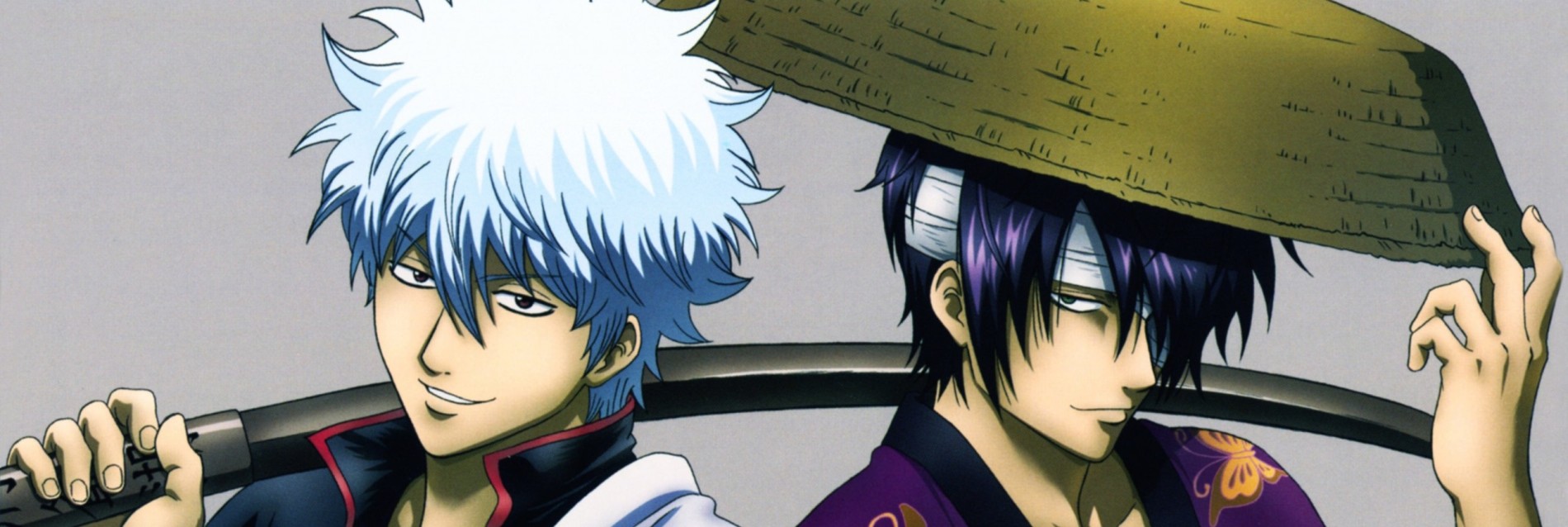
This season doesn’t live in genre—it lives in dissonance. One minute you’re watching Kagura kick a vending machine for withholding her juice, the next you’re hearing Shinpachi recite the Edict of Sword Prohibition like a prayer he no longer believes in, his voice cracking on the word “citizen.” The feeling isn’t satire or slapstick alone—it’s grief wearing a paper mask, laughter that starts as a cough and ends as a choke. It’s the weight of living under alien rule not as spectacle, but as bureaucracy: rent due, permits denied, a sword license revoked because “public safety” means disarming those who remember how to protect. You don’t feel heroic. You feel accountable—to your friends, your debts, your dumb, stubborn refusal to stop calling this place home.
That emotional DNA pulses strongest in Disco Elysium - The Final Cut. Its description calls it a “groundbreaking role playing game” where you interrogate unforgettable characters—and the player review drops a line straight from Yorozuya’s kitchen table: “Capital has the ability to subsume all critiques into itself. Even those who would critique capital end up reinforcing it instead.” That’s Shinpachi’s ledger, Kagura’s stolen rice balls, Gintoki’s silent rage when he burns his old uniform—not as rebellion, but as ritual. Both Disco Elysium and Gintama Season 3 weaponize irony not to deflect pain, but to hold it at arm’s length long enough to name it. The comedy isn’t escape. It’s armor, thin and dented, worn daily.
Then there’s Beyond Good and Evil™, where you play Jade—a reporter exposing government lies on a colonized planet, aided by her loyal pig friend Pey’j. The description says: “Play as Jade, a young investigative reporter, and expose a terrible government conspiracy. It is up to you and your loyal pig friend Pey'j to save your planet and its inhabitants.” That’s the Yorozuya, down to the absurdity: three broke misfits stumbling into systemic rot while trying to recover a lost cat or fix a leaky faucet. The player review calls it “Crazyyy game!”—exactly how Kagura yells “CRAZY! GIN-CHAN IS CRAZY!” after he punches a bureaucrat for refusing to stamp a form, then buys her melon soda with the last of his change. Both understand that resistance isn’t always grand—it’s showing up, again, with mismatched socks and unshakable loyalty.
And Overlord™, with its tagline “How evil can you get?”, shares something quieter but sharper: the moral slippage of survival. Its description says “Your actions impact the game world. With incredible power at your disposal…”, but the player review nails the tone: “the story the humor, it give off Strong Fable vibes…” Not Fable the game—but fable as in myth-as-coping-mechanism. Gintama Season 3 does the same: Gintoki’s drunken rants aren’t just gags—they’re parables told sideways, where the “overlord” isn’t a dark lord, but the system itself, and the only way to survive it is to parody its logic until it stutters. When Gintoki bows deeply to a corrupt official while whispering “I’ll kill you in my next life,” it’s not catharsis—it’s Overlord’s dark fantasy translated into salaryman despair.
You’d love these pairings if you’ve ever laughed so hard your ribs hurt—then paused mid-laugh because the background music shifted, just for half a second, into something hollow and ancient. If you keep a notebook where one page lists “reasons swords should be legal” and the next is doodled with tiny, perfect chrysanthemums. If you believe tragedy hits hardest when delivered with soy sauce and a side of miso soup. This isn’t about liking “anime” or “games”—it’s about recognizing the same tremor in two different mediums: the shiver before the storm, the warmth of shared ramen in a world that keeps raising the price, the stubborn, beautiful refusal to let the universe have the last word—even when it’s holding the receipt.
🎮15 Games That Match the Vibe





Match Dimensions Explained
❓Frequently Asked Questions
Why is Disco Elysium listed as similar to Gintama Season 3 when it’s so serious?
Great question — it’s the *tone whiplash* that matches! Like Gintama S3’s arc where Hijikata’s ‘Terrorist Arc’ swings from absurd yakuza parodies to real emotional weight (his PTSD, the Shinsengumi’s crumbling loyalty), Disco Elysium nails that same rhythm: one minute you’re drunkenly debating capitalism with a sentient billboard, the next you’re having a raw, silent breakdown in your hotel room. The political thriller dimension + razor-sharp parody + sudden emotional gut-punches (like the ‘Shivers’ mechanic revealing buried trauma) mirrors how Gintama uses comedy to smuggle in pathos.
Is there a Gintama Season 3 video game adaptation?
No — there’s never been an official Gintama Season 3 game. The closest licensed titles are the older PS2 games like *Gintama: The Otter of the Shogun*, which only loosely adapt early arcs and skip Season 3 entirely. So fans looking for that specific blend — the Joui War buildup, the Shinsengumi’s internal fractures, and the tonal chaos of episodes like ‘The Day I Became a Demon’ — have to lean into *spiritual* matches instead, like how *Overlord* lets you toggle between over-the-top evil spectacle and surprisingly poignant worldbuilding about power and corruption.
Disco Elysium vs. BioShock — which captures Gintama Season 3’s mix of satire and political tension better?
Disco Elysium wins on satire + character-driven politics; BioShock nails the *visual* political thriller vibe. Disco’s detective constantly arguing with his own skill voices (like ‘Logic’ snarking at ‘Empathy’) feels like Gintama’s inner-monologue gags — think Katsura’s ‘I am not a terrorist!’ rants juxtaposed with actual moral ambiguity. BioShock’s Rapture is more like Gintama’s ‘alternate Edo’ concept: a decaying ideological utopia (objectivism vs. joi ideals), but its satire is environmental and systemic, while Disco’s is verbal, chaotic, and deeply personal — just like Season 3’s debates between Takasugi and Gintoki.
What’s the best game like Gintama Season 3 if I want that ‘absurd but secretly heartfelt’ late-night vibe?
Go straight to *Beyond Good and Evil™* — especially the 20th Anniversary Edition. That ‘late-night investigative reporter hiding in her lighthouse, scribbling notes while Pey’j snores nearby’ energy? Pure Gintama S3’s quieter moments: Jade’s weary idealism mirroring Gintoki’s ‘I’m not a hero’ speeches, the way the game slips from goofy alien market banter into chilling reveals about the Alpha Section’s propaganda machine — just like how Gintama pivots from Okita’s ‘I’m a virus’ bit to the heartbreaking fallout of the Benizakura arc. It’s warm, weird, and quietly devastating.