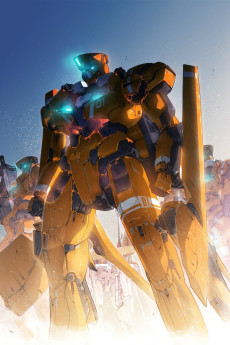
ALDNOAH.ZERO
In 1972, the Apollo 17 mission found a hypergate to Mars on the surface of the moon. Upon landing, astronauts discovered a enchanted utility later referred to as 'Aldnoah', giving the astronauts a status of superiority. Soon, many humans have relocated to Mars, and have adapted to the name 'Martians'. After Princess Asseylum, a royal Martian princess, descends onto Earth in an attempt to create a treaty between both planets, a war breaks out between Earth and Mars, and Martian soldiers begin to descend from the sky, riding steel giants, intent on exterminating humanity.
(Source: Anime News Network)
📺Anime Details
📝Editorial Analysis
The first explosion isn’t on Mars—it’s inside the UN building in Geneva. A single Aldnoah-powered blast tears through marble and protocol, vaporizing diplomats mid-handshake as Princess Asseylum’s peace envoy collapses into ash and screaming static. That moment isn’t spectacle; it’s betrayal made physical—a treaty signed in ink, shattered by a weapon no one understood, wielded by people no one truly knew. You don’t see the war start—you feel the floor drop out from under diplomacy itself.
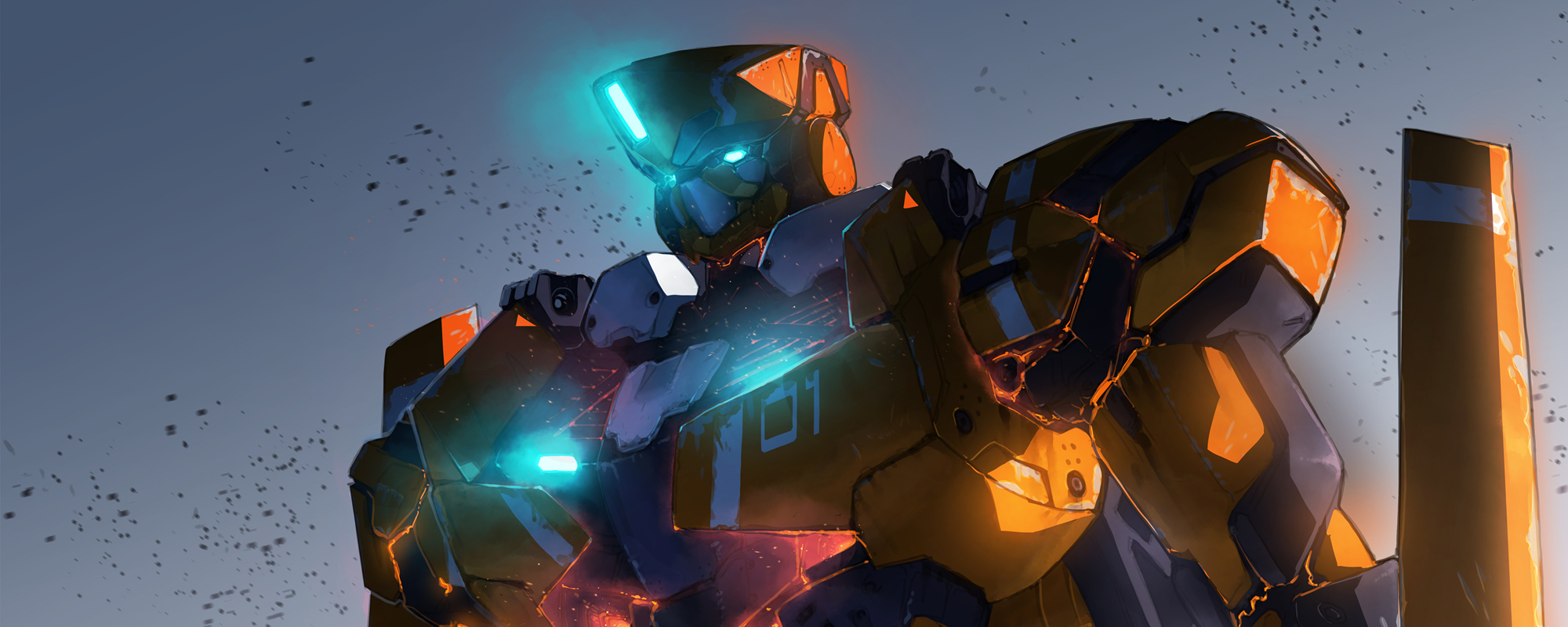
What makes ALDNOAH.ZERO ache so deeply isn’t its mecha or its orbital bombardments—it’s the suffocating weight of miscommunication as inevitability. Every Martian soldier carries Aldnoah tech like inherited scripture; every Earthling pilot fires blind into the sky, convinced they’re defending rubble while Martians believe they’re avenging genocide. There are no mustache-twirling villains—just soldiers reciting doctrine, politicians reading pre-written statements, and a princess whose voice is erased before her words land. It’s loneliness dressed in tactical gear, grief disguised as strategy, distrust calcified into law. The moon isn’t a setting—it’s a silent witness to humanity’s oldest failure: building bridges only to burn them when the blueprints don’t match.
That emotional DNA pulses strongest in Assassin's Creed™: Director's Cut Edition. Its description calls it a “Political Thriller, Tactical Warfare” game—and yes, the textures are dated, as one player notes, but that roughness mirrors ALDNOAH.ZERO’s aesthetic: grainy surveillance feeds, flickering comms, mission briefings delivered with bureaucratic exhaustion. Like the anime, it traps you in systems larger than yourself—where your blade or rifle is just punctuation in someone else’s manifesto. You don’t choose sides; you navigate layers of deception so thick they’ve fossilized into policy. The player’s admission—“no issues with me”—echoes how ALDNOAH.ZERO asks you to accept moral ambiguity not as a flaw, but as atmosphere.
Then there’s BioShock™, scored 73 and tagged “Political Thriller, Sci-Fi & Space.” Its description hypes “weapons and tactics never seen”—but what lingers is the drowned grandeur, the Art Deco ruins of Rapture echoing Mars’ crystalline spires and Earth’s cratered cities. Both worlds were built on a lie sold as salvation: Aldnoah as divine mandate, Rapture’s objectivism as evolutionary destiny. A player calls it “one of the most revolutionary games ever!”—not for its shooting, but for how its world thinks aloud, how its audio logs and broken statues whisper ideology like ghosts. ALDNOAH.ZERO does the same: every ruined schoolhouse on Earth, every sealed archive on Mars, speaks louder than any monologue.
Even Act of War: Direct Action, with its modest 59 score, resonates—not in polish, but in urgency. Its description frames it as “a frightening tale of suspense, international intrigue and geopolitical military conflict,” rooted in “today’s headlines.” One player shrugs: “the dialogue for the campaign is dumb and a bit cringe but it’s like C&C 3.” That’s the key: it’s functional paranoia. Like ALDNOAH.ZERO’s rapid-fire intel drops and intercepted transmissions, Act of War treats conspiracy not as plot twist but as infrastructure—where a satellite feed glitch or a mistranslated intercept can shift a front line. The cringe isn’t amateurish; it’s authentic, the sound of institutions speaking past each other in real time.
This pairing isn’t for fans of clean victories or heroic certainty. It’s for the person who watches a Martian dropship descend over Tokyo Bay and feels their throat tighten—not at the scale, but at the silence between the pilot’s orders and the civilians below, neither side able to hear the other’s fear. It’s for the player who replays BioShock’s lighthouse approach not for the jump-scare, but for the way the ocean swells before the truth hits. It’s for those who keep returning to ALDNOAH.ZERO’s third episode—not for the duel, but for the three seconds after the cockpit cracks open, when the two pilots lock eyes and realize, simultaneously, that their briefing packets were written by different gods. They’d love these pairings because they don’t want escape. They want recognition: that war isn’t waged with guns alone, but with grammar, with translation errors, with the unbearable weight of a word—peace, treaty, surrender—that means something entirely different depending on which side of the hypergate you learned to spell it.
🎮6 Games That Match the Vibe


Match Dimensions Explained
❓Frequently Asked Questions
Why does Assassin's Creed: Director's Cut Edition match ALDNOAH.ZERO so well despite being set in the Middle Ages?
Because both hinge on high-stakes political thriller tension—like when Inaho Kaizuka uncovers Martian colonial lies, Assassin's Creed drops you into the Crusades-era power struggles between Templars and Assassins, where every rooftop leap and assassination carries weighty ideological consequences. The tactical warfare dimension shines in how Altaïr must observe guard patterns and plan takedowns just like Inaho calculating orbital trajectories before a strike.
Is there an ALDNOAH.ZERO game adaptation?
No—there’s never been an official ALDNOAH.ZERO video game adaptation. But fans looking for that same blend of mecha-scale drama and geopolitical friction often land on BioShock (73) or Act of War: Direct Action (59), since both replicate ALDNOAH’s core vibe: BioShock’s Rapture mirrors the show’s claustrophobic, morally fractured societies, while Act of War’s real-time strategy simulates the tense, multi-front military diplomacy seen in the Vers Empire–Earth conflict.
How does BioShock compare to Act of War: Direct Action for ALDNOAH.ZERO fans?
BioShock leans hard into sci-fi & space with its underwater dystopia, philosophical monologues, and plasmid-powered chaos—think Slaine’s internal conflict meets the eerie grandeur of the Ares-class battleship. Act of War, meanwhile, is pure tactical warfare: real-time command of special forces, satellite intel, and kinetic raids across global hotspots—closer to the grounded, boots-on-the-ground tension of Earth’s UN forces scrambling after Martian dropships.
What’s the best game like ALDNOAH.ZERO if I want that ‘tense, morally gray war thriller’ vibe?
Assassin's Creed: Director's Cut Edition (76) nails it—especially its stealth-driven political intrigue and morally ambiguous missions, like when Altaïr must choose between mercy and mission-critical elimination, echoing Inaho’s cold calculus during the Mars embassy siege. The Tactical Warfare + Political Thriller dimensions align tightly with ALDNOAH’s balance of battlefield precision and layered diplomacy.