
Berserk: The Golden Age Arc III - The Advent
One year has passed since Guts left the Band of the Hawk and Griffith was imprisoned by the Kingdom of Midland for treason.
In the dead of night, at a camping site where they hide, the Band of the Hawk is attacked by Bakiraka assassins led by Silat. When all seems lost, Guts returns from his journey. "You destroyed everything." Crying that Griffith is nothing without Guts, Casca and Guts are joined together body and soul. Griffith is imprisoned in the oldest building in Wyndham Catle, the Tower of Rebirth.
📺Anime Details
📝Editorial Analysis
The air in that forest clearing is thick—not with mist, but with silence just before the scream. Bakiraka blades flash under moonlight, Casca’s breath hitches as she staggers back, blood already slick on her thigh, and then—Guts arrives. Not with fanfare, not with a roar, but with the wet, heavy thunk of his sword biting into flesh, his face half-shadowed, eyes burning with something older than rage: recognition of what’s already been lost. That moment isn’t triumph. It’s surrender—to gravity, to consequence, to the unbearable weight of love twisted into complicity. You feel it in your molars.
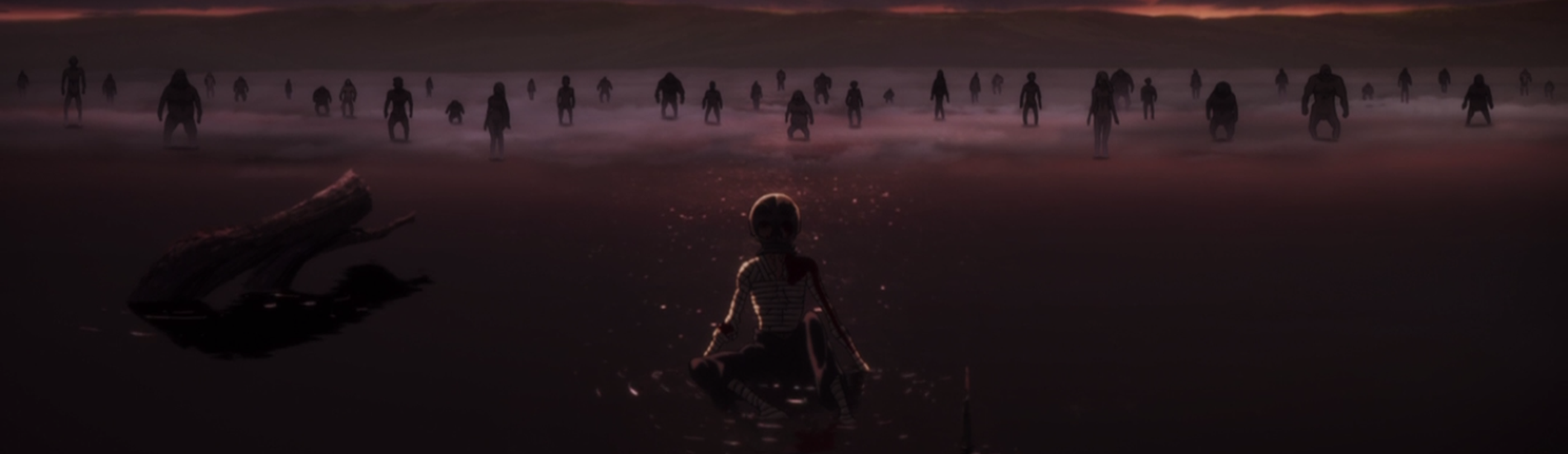
What makes Berserk: The Golden Age Arc III - The Advent ache so deeply isn’t its gore or even its cosmic horror—it’s the intimacy of violation. This is tragedy you don’t watch from a distance; you’re pressed against Casca’s trembling spine as she’s pinned, forced to witness Griffith’s final, radiant betrayal not as spectacle, but as betrayal of self. The medieval world isn’t backdrop—it’s a cage of stone, rust, and rotting wool, where every swordplay sequence feels like muscle tearing against bone, where torture isn’t stylized but textural: rope burns, splintered wood, the slow drag of iron on skin. You don’t just fear the demons—you fear what the light does to the people you love when it finally falls on them.
That same suffocating intimacy lives in Vampire: The Masquerade - Bloodlines, where the “Dark Fantasy” and “Body Horror & Occult” dimensions aren’t set dressing—they’re physiological. Like Guts’ arm fused to steel, the player’s vampiric body mutates against their will, limbs distorting mid-conversation, hunger overriding morality in real time. A player review nails it: the need for an unofficial patch to make it work mirrors how The Advent forces you to lean in, adjust, endure glitches in the system—because the truth isn’t clean, and neither is survival. The “Adult & Dark Seinen” tag isn’t demographic—it’s diagnostic: this is fiction that assumes you’ve already felt your own humanity fray at the edges.
Then there’s Alice: Madness Returns, where Victorian London’s grime clings like dried blood and Wonderland isn’t escape—it’s amplification. Its “Action Spectacle” doesn’t dazzle; it disorients, just like the Eclipse’s surreal geometry folding around Guts’ broken body. The player review’s frustration—editing config files manually to cap FPS—echoes the anime’s refusal to grant control: you must wrestle the interface, just as Casca wrestles her own collapsing mind. Both works treat trauma not as backstory but as environment: a place you walk through, slip in, get cut by.
And Thief: Deadly Shadows, with its “rich atmosphere” and guards who feel alive, delivers the same claustrophobic dread as the Wyndham Castle sequences—where Griffith isn’t just imprisoned in stone, but in silence, in waiting, in the unbearable stillness before divine annihilation. Garrett moves like Guts moves when he’s exhausted: shoulders low, breath shallow, every footfall measured not for stealth alone, but for the sheer effort of remaining human in a world that rewards cruelty. The “Adult & Dark Seinen” dimension here isn’t about sex or swearing—it’s about moral exhaustion worn like chainmail.
Who loves these pairings? Not fans of “dark themes” as aesthetic. Not collectors of edgy lore. It’s the person who’s ever sat up at 3 a.m., heart pounding not from fear—but from recognition. The one who’s traced the scar on their own forearm and wondered if it’s a wound or a signature. The reader who rereads the same paragraph three times because the sentence about Casca’s hands—how they stop shaking after the horror, not before—feels like a confession. They don’t want catharsis. They want witnessing. And in that forest clearing, in that vampire’s crumbling mansion, in Alice’s warped nursery, in Garrett’s rain-slicked rooftops—they find it: a shared, unblinking gaze into the dark, where light doesn’t save you—it reveals.
🎮24 Games That Match the Vibe








Match Dimensions Explained
❓Frequently Asked Questions
Why does Vampire: The Masquerade - Bloodlines feel like the closest match to Berserk's Golden Age Arc III's tone?
Because both drown you in grim, morally gray worldbuilding where faith is shattered and bodies twist under supernatural corruption—like Guts’ Brand scar or Bloodlines’ vampiric degeneration mechanics. You’ll recognize the same oppressive weight in scenes like the asylum’s body-horror set pieces or the political backstabbing among vampire clans, mirroring the Apostles’ betrayal and Griffith’s descent.
Is there a Berserk anime game adaptation that captures the Golden Age Arc III's ending?
No official Berserk game adapts *The Advent* specifically—but *Thief: Deadly Shadows* nails its vibe through atmosphere and emotional restraint: Garrett’s silent, weary professionalism mirrors Guts’ stoic resolve after the Eclipse, and the game’s rain-slicked, gothic city feels like a spiritual cousin to Doldrey’s doomed grandeur and the fog-choked ruins of the Tower of Rebirth.
How does Alice: Madness Returns compare to BioShock in capturing Berserk’s blend of psychological trauma and body horror?
Both weaponize mental collapse as visceral spectacle—Alice’s Wonderland warps limbs and logic like the Apostles’ mutations, while BioShock’s Little Sisters and splicers echo the grotesque physical cost of ambition, just like Griffith’s transformation. But Alice leans harder into surreal, personal horror (think Guts’ hallucinations post-Eclipse), whereas BioShock frames it through dystopian ideology—making Alice feel closer to Berserk’s intimate, character-driven dread.
What’s the best game like Berserk: Golden Age Arc III for when I want that slow-burn, oppressive dread before the storm hits?
Go straight to *Thief: Deadly Shadows*: its hushed tension—slipping past guards in candlelit cathedrals, hearing distant chants, feeling the weight of every creaking floorboard—is pure pre-Eclipse unease. It’s not about big battles yet; it’s about dread coiling in your gut, just like watching Griffith smile too long in Doldrey’s throne room—or waiting for the Falconia parade to begin.