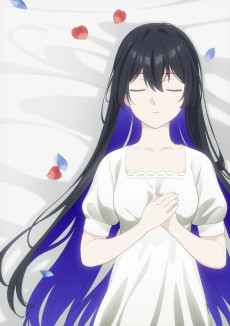
Unnamed Memory Season 2
📺Anime Details
📝Editorial Analysis
The first time the curse takes hold—when her breath catches mid-sentence, fingers freezing over a royal decree, eyes widening not with fear but recognition—that’s when you feel it: the quiet horror of time not slipping, but stitching itself back together around her like old, fraying thread. Not a reset. Not a loop. A re-knitting. That moment isn’t spectacle—it’s intimacy laced with dread. You lean in, pulse tight, because this isn’t about saving the world. It’s about saving her, even as she forgets your name again.
What makes Unnamed Memory Season 2 ache so deeply isn’t its dragons or swordplay—it’s how memory becomes architecture. Every whispered incantation, every royal negotiation, every flicker of warmth between two adults who’ve loved and lost across decades—they’re all built on foundations that vanish the second you step on them. The magic doesn’t dazzle; it exhausts. The witches don’t wield power like wands—they bargain with it like debt collectors. And the gore? Never gratuitous. It’s the physical echo of what happens when time refuses to stay linear: skin splitting where chronology tears, scars that bloom backward, wounds that open before the blade strikes. You don’t watch this anime—you hold your breath waiting for the next fracture in continuity, the next soft collapse of certainty. It makes you think about love not as destiny, but as repair work: slow, tender, and always haunted by the knowledge that the thing you’re mending might dissolve before your hands leave it.
That emotional DNA—the weight of time as both wound and witness—pulses strongest in Prince of Persia: Warrior Within™. Its description names the “Dahaka, an immortal incarnation of F” (the fragment cuts off, but the implication is clear: Fate, or perhaps Forfeit), and the player review nails the resonance: “Dahaka chase is still as goated as it was before.” That relentless, personal pursuit—where time isn’t abstract but hunting you, where every corridor you flee down feels like a memory you haven’t lived yet—that’s the same breathless claustrophobia of Unnamed Memory Season 2’s cursed timelines. Both treat time not as a river, but as a collapsing tunnel—and the terror isn’t dying, it’s being unwritten mid-sentence.
Then there’s Assassin's Creed™: Director's Cut Edition, where the description positions it as a “Political Thriller” nested inside Dark Fantasy—and the player review admits flaws, but shrugs them off: “no issues with me but I can…” That weary, grounded pragmatism mirrors the anime’s royal affairs. No grand coronations here—just exhausted monarchs signing treaties with ink that smudges from trembling hands, spies whispering in candlelit antechambers where loyalty shifts faster than a curse’s onset. The political maneuvering isn’t backdrop; it’s the oxygen. Like Altair navigating Damascus’ layered betrayals, the protagonists of Unnamed Memory Season 2 negotiate love under the same suffocating pressure: every gesture weighed, every confession delayed by protocol, every kiss measured against dynastic consequence.
And Dark Messiah of Might & Magic, with its “Body Horror & Occult” dimension and player calling it “a fantastic melee combat game that still holds up pretty well today,” lands with visceral precision. Its description promises “ferocious combat in a dark and im” (cut off—but the tone is unmistakable: impenetrable, immoral, imploding). That’s the gut-punch of Unnamed Memory Season 2’s magic system: spells don’t glow—they rupture. Curses don’t enchant—they unmake. When a dragon’s scale flakes off like necrotic skin, or a witch’s hand cracks open to reveal clockwork gears beneath, it’s not spectacle—it’s violation. Just like Dark Messiah’s brutal, physics-driven dismemberment, this anime treats the body as terrain contested by time and magic—not sacred, not heroic, but fragile, fleshy, and terrifyingly reversible.
This pairing isn’t for the escapist. It’s for the one who watches a sunset and wonders if they’ll remember the exact shade of orange—or if memory itself is just another spell wearing thin. For the player who replays Prince of Persia: Warrior Within™ not for nostalgia, but because the Dahaka’s footsteps still echo in their ribs. For the reader who underlines passages in political fantasy not for plot, but for the quiet exhaustion in a ruler’s voice when they say “I cannot afford mercy today.” These are stories for people who know love is harder when you have to relearn how to hold someone’s hand—every single time.
🎮40 Games That Match the Vibe




Match Dimensions Explained
❓Frequently Asked Questions
Why does Prince of Persia: Warrior Within keep showing up in 'Games Like Unnamed Memory Season 2' lists?
Because both lean hard into the 'Time & Memory' and 'Dark Fantasy' dimensions — like how Warrior Within’s Dahaka chase sequences mirror Unnamed Memory’s haunting, time-bent flashbacks to past traumas. The Prince’s guilt-ridden descent into the underworld, especially that claustrophobic Hourglass Chamber scene where memories physically collapse around him, hits the same emotionally raw, visually oppressive vibe as Season 2’s fragmented recollections of Lapis and Vesper.
Is there an anime or game adaptation of Unnamed Memory Season 2?
No official game adaptation exists yet — but fans often reach for Last Epoch (81 score) when craving that same blend of 'Time & Memory' + 'Body Horror & Occult', especially during its Chronomancer class storylines where you literally unravel timelines while your own body mutates mid-fight. It’s not a licensed tie-in, but the way Last Epoch handles cursed relics and memory-erasing void magic feels like stepping into the show’s lore without permission — in the best way.
How does Assassin's Creed Director's Cut compare to Kingdom Come: Deliverance II for political intrigue like Unnamed Memory Season 2?
Assassin’s Creed wins on tight, high-stakes conspiracy — think Al Mualim’s betrayal arc mirroring Lord Vesper’s hidden agendas — while Kingdom Come: Deliverance II leans into gritty, systemic feudal maneuvering (like negotiating with Bohemian nobles who shift allegiances hourly). Both nail 'Political Thriller' and 'Dark Fantasy', but if you want whispered betrayals in candlelit chambers and sudden dagger-in-the-back moments? Go AC. If you want paperwork, inheritance disputes, and slow-burn courtly sabotage? KCII delivers.
What’s the best game like Unnamed Memory Season 2 if I want that oppressive, body-horror-tinged fantasy vibe?
Dark Messiah of Might & Magic is your go-to — its 'Body Horror & Occult' dimension hits *hard*, especially during the Blacksmith’s Tower sequence where enemies melt into tar-like sludge and your own limbs briefly warp mid-combo. Pair that with its grimy, rain-slicked alleys and the way the Source Engine makes every dismemberment feel visceral and wrong — it’s the closest thing to watching Vesper’s curse visibly twist reality, just with more broken kneecaps and less dialogue.