
Orb: On the Movements of the Earth
The setting is 15th-century Europe. It was a time when heretical ideas lead those to who possessed such a mindset to being burned at the stake for their beliefs.
The protagonist, Rafał, a child prodigy, is expected to major in theology, the most important subject at the time, at the university where he plans to skip a grade. One day, however, he comes across a mysterious man, and is now studying a possible "truth" in the midst of heretical thought!
(Source: Shogakukan, translated)
📺Anime Details
📝Editorial Analysis
The candlelight trembles—not from wind, but from the tremor in Rafał’s hand as he traces the flawed circle of Ptolemy’s epicycle on parchment, then erases it with a thumb stained black by ink and doubt. Outside the university cloister, a bell tolls for vespers; inside, silence thickens like cooled wax. He is twelve. His tutor expects a flawless disputation on Aquinas. Instead, he’s just copied three lines from a smuggled fragment—“The Earth is not the center, but one among wandering stars”—and his stomach has not unclenched since.
This isn’t dread dressed as drama. It’s the weight of knowing before you’re allowed to speak—of truth arriving not as revelation, but as quiet, illegal friction against every stone wall, every liturgical cadence, every glance from the Inquisitor’s clerk who lingers too long at the library door. Orb: On the Movements of the Earth doesn’t trade in spectacle or salvation. It lives in the gap between breaths: the pause before a confession, the hesitation before signing a petition, the way light falls differently on a manuscript when you realize its author was executed for the geometry inside it. You don’t feel heroic here. You feel exposed—as if your own curiosity could ignite the pyre.
That same exposure pulses through Assassin's Creed™: Director's Cut Edition, where the player navigates Jerusalem not as a warrior, but as an infiltrator whose very presence risks unraveling centuries of sanctioned myth. Its description calls it a Political Thriller and Dark Fantasy, but what mirrors Orb is how ideology becomes architecture—you scale minarets built on dogma, slip past guards whose loyalty is theological armor, and uncover truths buried beneath layers of sanctioned history. A player review admits the models are dated, yet finds no issue—because the tension isn’t visual fidelity; it’s the suffocating pressure of moving unseen through a world that would erase you for asking the wrong question. Like Rafał copying forbidden lines, Altaïr moves through spaces designed to punish inquiry—not with fire, but with blades that gleam in the same brittle light.
Then there’s BioShock™, labeled a Political Thriller and Adult & Dark Seinen—a game where ideology curdles into architecture, biology, and bullet. Its description boasts “weapons and tactics never seen,” but what resonates with Orb is the horror of systemic certainty: Rapture’s collapse begins not with violence, but with the absolute conviction that truth can be engineered, controlled, owned. A player calls it “one of the most revolutionary games ever”—not for its guns, but for how it makes you complicit in its unraveling logic, much like Rafał, who doesn’t reject theology outright, but watches it fracture under the weight of celestial observation. Both force you to hold two irreconcilable truths: that faith demands obedience, and that evidence demands revision—and neither gives you safe ground to stand on.
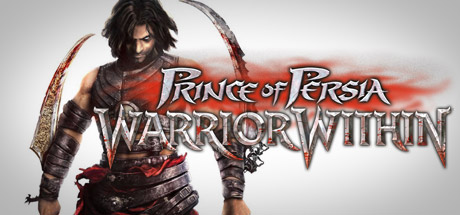
And Prince of Persia: Warrior Within™, with its Time & Memory dimension and Dark Fantasy texture, echoes Orb’s temporal gravity. Its description frames the Prince as hunted by Dahaka—an immortal incarnation of Fate itself. Not a monster, but consequence given form. That’s Rafał’s arc in miniature: not fleeing men with torches, but the slow, inevitable approach of time—the decade-long skip where childhood certainty curdles into adult silence, where friendships calcify into betrayals, where every star chart drawn is also a ledger of losses. A player calls the Dahaka chase “goated”—not for speed, but for how it weaponizes inevitability. Like the calendar turning in Orb, it doesn’t roar. It keeps pace.
These aren’t for fans of grand battles or tidy resolutions. They’re for the person who re-reads a single paragraph of Spinoza at 2 a.m., who pauses mid-game to stare at a crumbling fresco in Assassin’s Creed, who saves before a dialogue choice in Disco Elysium—not out of fear of failure, but because the weight of the choice itself is the point. They love stories where truth isn’t found—it’s endured, measured in heartbeats between orthodoxy and observation, in the space between a whispered hypothesis and the first spark of the pyre. They don’t want answers. They want the tremor.
🎮38 Games That Match the Vibe









Match Dimensions Explained
❓Frequently Asked Questions
Why does Orb: On the Movements of the Earth feel so much like BioShock when it’s not a shooter?
It’s all in the layered political thriller DNA and that slow-burn dread—like BioShock’s Rapture, Orb leans hard into ideological collapse and moral ambiguity, especially during its ‘Celestial Tribunal’ sequences where characters debate geocentrism vs. heliocentrism with the same chilling conviction as Andrew Ryan’s monologues. Both games weaponize environment storytelling: BioShock’s decaying art deco halls mirror societal rot, while Orb’s observatory chambers—with their cracked astrolabes and erased star charts—do the same for suppressed truth.
Is there a film or book adaptation of Orb: On the Movements of the Earth?
No official adaptation exists—but fans keep drawing parallels to Assassin’s Creed: Director’s Cut Edition’s structure, where historical revisionism isn’t just backdrop but core mechanic (e.g., rewriting Copernican manuscripts mid-mission mirrors how AC’s Animus lets you alter memory fragments). That ‘political thriller + dark fantasy’ blend is rare, and neither Netflix nor publishers have greenlit anything yet—though the Disco Elysium team once tweeted they’d ‘steal Orb’s dialogue trees in a heartbeat.’
How does Orb compare to Prince of Persia: Warrior Within in terms of time mechanics and tone?
Orb trades Warrior Within’s visceral, Dahaka-chase time-slash urgency for contemplative, physics-based temporal layering—think rewinding planetary orbits to expose hidden constellations instead of dodging a spectral beast through crumbling corridors. But both share that ‘Adult & Dark Seinen’ grit: Warrior Within’s sand-scarred Prince broods over fate; Orb’s astronomer protagonist annotates forbidden texts while hearing whispers from erased scholars, echoing the same weight of inherited consequence.
What’s the best game like Orb if I want something deeply melancholic but with dry humor?
Disco Elysium — hands down. Orb’s quiet despair over silenced science hits the same emotional frequency as HMH’s existential rants in Revachol, but Disco wraps it in razor-sharp satire (like the ‘Logic’ skill failing spectacularly during a debate about orbital resonance). You’ll even find similar ‘emotional narrative’ depth in Orb’s ‘Letter to Galileo’ side quest—where your choices echo Disco’s branching inner voices, just swapped for Renaissance-era doubt instead of cop-shop insomnia.