
Steins;Gate
Self-proclaimed mad scientist Okabe Rintarou lives in a small room in Akihabara, where he invents "future gadgets" with fellow lab members Shiina Mayuri, his air-headed childhood friend, and Hashida Itaru, an otaku hacker. The three pass the time by tinkering with their latest creation, a "Phone Microwave" that can be controlled through text messages.
The lab members soon face a string of mysterious incidents that lead to a game-changing discovery: the Phone Microwave can send emails to the past and thus alter history. Adapted from the critically acclaimed visual novel by 5pb. and Nitroplus, Steins;Gate takes Okabe to the depths of scientific theory and human despair as he faces the dire consequences of changing the past.
📺Anime Details
📝Editorial Analysis
The fluorescent hum of the lab’s single overhead light. The acrid tang of burnt circuitry clinging to the air. Okabe’s trembling hand hovering over his phone—not to send a message, but to unsend one he already knows will fracture everything. He stares at the draft: “Mayuri is dead.” Not a theory. Not a hypothesis. A fact carved into his bones after seventeen failed timelines, each ending with her body crumpled on the floor of the Radio Building, her pink hair fanned across cold concrete like spilled ink. His breath hitches—not in panic, but in recognition. This isn’t fear of death. It’s the quiet, suffocating weight of remembering too much, of carrying every version of loss like shrapnel lodged deep in the ribs.

That’s the atmosphere: not dystopia as spectacle, but as texture. Not time travel as gadgetry, but as gravity. Steins;Gate doesn’t thrill you with paradoxes—it wears them. You feel the exhaustion in Okabe’s voice when he stumbles into the lab at 3 a.m., eyes hollow, whispering coordinates to a future that hasn’t happened yet—but which he’s lived, and buried, and resurrected, again and again. It’s urban, yes—but Akihabara isn’t neon fantasy. It’s cramped apartments, peeling wallpaper, the stale scent of instant ramen, the way Mayuri’s laugh echoes just a little too brightly against the silence that follows. The tragedy isn’t abstract. It’s tactile: the warmth fading from her hand. The way Itaru’s jokes curdle into something raw and protective when he realizes Okabe isn’t joking about “world lines.” This is adult grief disguised as otaku banter—memory manipulation that leaves scars no reset can erase.
BioShock Infinite resonates because it, too, weaponizes memory against the self. Booker DeWitt doesn’t just carry guilt—he is guilt, folded across realities until identity itself frays. Like Okabe, he walks through spaces thick with consequence: Columbia’s gilded decay mirrors the lab’s cluttered despair—not as set dressing, but as psychic residue. The player review notes how some still mourn “the Bioshock Infinite we could have gotten”—a line that lands like a gut-punch next to Okabe’s own agonizing awareness of all the worlds he couldn’t save. Both works force you to confront what happens when “choice” is revealed as illusion, and “freedom” is just the slow, grinding turn of a deterministic wheel.
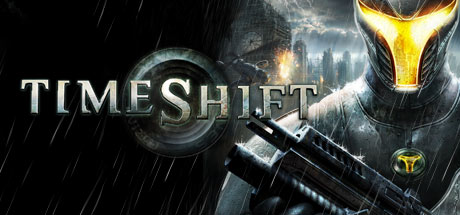
TimeShift™ shares that same claustrophobic urgency—the feeling of time not as a river, but as a collapsing tunnel. Dr. Krone’s “reckless act” mirrors Okabe’s first accidental email send: both are scientists who break causality before they understand its cost. The game’s description calls it a “disturbing alternate reality”—not alien or fantastical, but familiarly wrong, like walking into your own apartment and finding the furniture rearranged by someone who knows your secrets. That’s the dread of Steins;Gate’s divergence points: not dragons or lasers, but a changed train schedule, a shifted text message, the subtle tilt of Mayuri’s smile when she shouldn’t remember you. The player review calls it “a blast,” but only after “a little work to get it into a playable state”—a perfect metaphor for Okabe’s journey: the mechanics are broken, the tools unreliable, and survival depends entirely on persistence, not polish.
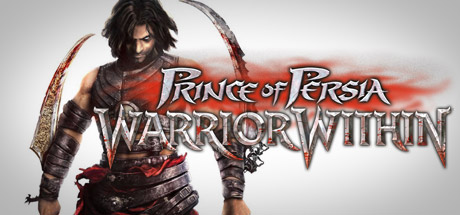
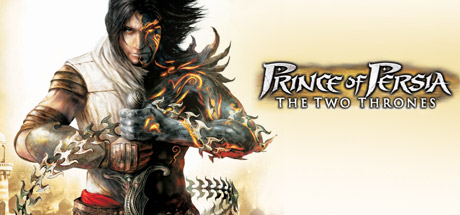
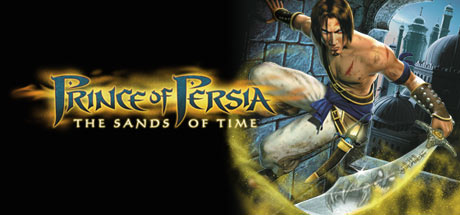
And then there’s the Prince of Persia trilogy—especially Warrior Within, where the Dahaka isn’t chasing the Prince through time, but as time’s consequence. Hunted by an “immortal incarnation of Fate,” the Prince doesn’t wield time like a tool; he’s haunted by it, his own past self literally clawing at his back. The player review calls the Dahaka chase “goated”—but what makes it unforgettable is how inescapable it feels, how personal, how bodily. Like Okabe hearing Mayuri’s voice echo from a timeline he’s deleted. The Sands of Time’s dagger doesn’t grant power—it demands penance. The Two Thrones forces the Prince to reconcile with his darker self, just as Okabe must finally stop running from the version of himself who let her die. All three games share that same adult reckoning: no coming-of-age arc, no triumphant final boss. Just a man, cornered, holding a device he built—and realizing the most dangerous variable was always him.
This pairing isn’t for fans of “cool time powers.” It’s for the ones who pause mid-gameplay when the music swells—not because something epic is happening, but because the silence after hits harder. For people who rewatch the lab scenes not for plot, but for the way Okabe’s shoulders slump when he thinks no one’s looking. Who understand that tragedy isn’t about tears—it’s about the muscle memory of dialing a number you know will end in static. If you’ve ever stared at your phone at 2 a.m., wondering what would happen if you sent that one message—and then remembered, with a jolt, that you already did—you’re already living inside this resonance.
🎮9 Games That Match the Vibe


Match Dimensions Explained
❓Frequently Asked Questions
Why is BioShock Infinite listed as similar to Steins;Gate when it’s not about time travel?
Great question — it’s not *about* time travel, but it nails the same mind-bending 'time & memory' dimension that makes Steins;Gate so gripping. Think of Elizabeth opening tears in reality, revealing alternate versions of Columbia — that’s pure layered causality, just like Okabe’s world lines fracturing with each D-Mail. And the adult, dark seinen tone? Booker’s guilt-ridden arc and the harrowing Comstock reveal hit with the same emotional weight as Kurisu’s lab scenes or Mayuri’s repeated deaths.
Is there a Steins;Gate anime adaptation of Prince of Persia: Warrior Within?
Nope — no anime adaptation exists for *Prince of Persia: Warrior Within*, and it’s definitely not a Steins;Gate spin-off! But they *do* share that intense, claustrophobic tension: remember how Dahaka hunts the Prince across crumbling palace corridors? That relentless, time-bent pursuit mirrors Okabe sprinting through Akihabara alleys after triggering a divergence shift — both games weaponize urgency and consequence in ways that feel deeply personal and high-stakes.
How does TimeShift compare to Steins;Gate in terms of time manipulation mechanics?
TimeShift’s time powers are way more tactile and immediate than Steins;Gate’s theoretical framework — you literally freeze, rewind, and slow time mid-combat as Dr. Krone, like having Okabe’s Phone Microwave turned into a combat HUD. It’s not about world lines or attractor fields, but the *feel* of time bending under your control (e.g., freezing enemies while vaulting over them) echoes the visceral ‘what if I’d just pressed send *earlier*?’ energy of Steins;Gate’s pivotal moments.
What’s the best game like Steins;Gate if I want that melancholy, late-night lab vibe with emotional weight?
Go straight to *Prince of Persia: The Sands of Time* — especially its quieter moments in the palace archives or when the Prince reflects on his choices with the Dagger’s whispering voice. It’s got that same lonely, thoughtful rhythm: tinkering with time mechanics (rewinding mistakes), carrying quiet regret, and slowly uncovering a tragic truth — all wrapped in atmospheric lighting and hushed dialogue that hits like Okabe muttering ‘El Psy Kongroo’ to himself at 3 a.m. in the lab.