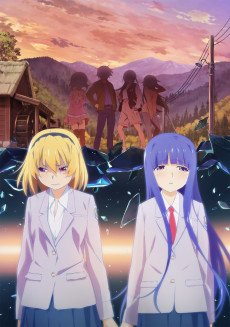
Higurashi: When They Cry - SOTSU
📺Anime Details
📝Editorial Analysis
The cicadas scream—not the gentle buzz of summer dusk, but a shrill, metallic shriek that vibrates in your molars as Keiichi stands frozen on the school rooftop, blood dripping from his own fingers onto the cracked concrete, while Mion’s laughter echoes—too bright, too wrong—just before the screen cuts to black. That silence after the laugh? That’s where Higurashi: When They Cry - SOTSU lives: not in jump scares, but in the dread of memory folding back on itself like broken glass.
This isn’t horror about monsters under the bed—it’s horror about trust curdling, about realizing the person holding your hand is the one who just whispered a lie you chose to believe. The atmosphere is thick with unreliability: every smile carries static, every shared bento box hums with subtext, every shrine bell rings like a warning you’re too late to heed. It makes you question your own recollection—was that line really said? Did she blink before or after the knife appeared? Time doesn’t loop cleanly here; it splinters. You don’t watch to solve the mystery—you watch to survive the weight of knowing what comes next, even as your brain screams no, not again, because the tragedy isn’t the gore—it’s the helplessness of watching love become weaponized, over and over, in slightly different keys.
That emotional DNA—the suffocating intimacy of time distortion fused with moral erosion—is why BioShock Infinite resonates so sharply. Its description names Booker DeWitt as “indebted to the wrong people,” hunted by consequence, forced to “rescue Elizabeth”—a phrase that mirrors Keiichi’s desperate, doomed attempts to save his friends from forces he can’t name. The player review admits bitterness about “the Bioshock Infinite we could have gotten,” echoing how SOTSU’s audience wrestles with versions of truth they wish were real—but aren’t. Both works trap you in cycles where memory isn’t data—it’s trauma dressed as nostalgia, and every revelation feels less like discovery and more like unpeeling skin.
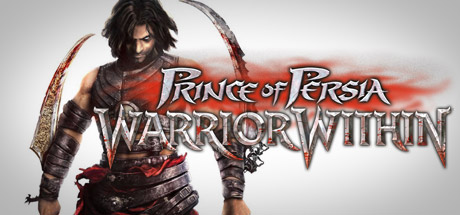
Then there’s Prince of Persia: Warrior Within, where the Prince is “hunted by Dahaka, an immortal incarnation of Fate.” Not a villain—Fate itself, relentless and personal, closing in across crumbling architecture and blood-slicked corridors. The player review calls the Dahaka chase “still as goated as it was before”—that raw, visceral persistence mirrors SOTSU’s core tension: no matter how many times Keiichi runs, hides, or pleads, the village’s rhythm pulls him back into the same fatal cadence. The game’s “dark underworld” isn’t metaphorical—it’s tactile, claustrophobic, just like Hinamizawa’s forest paths at dusk, where every rustle could be Rika—or something wearing her face.
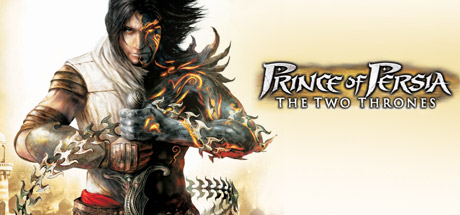
And Prince of Persia: The Sands of Time, with its young prince “drawn to the dark powers of a magic dagger,” lands with eerie precision. That dagger doesn’t just rewind time—it corrupts perception, making allies seem like threats, truths look like lies. The player review praises “tactical platforming… satisfying due to the locked directions”—a mechanical echo of SOTSU’s narrative structure: you must move forward in fixed sequences, unable to sidestep the next confrontation, each choice narrowing like a tightening noose. The dagger’s power isn’t freedom—it’s entrapment disguised as control, identical to how Keiichi’s growing awareness becomes his cage.
This pairing isn’t for casual fans who want clean resolutions or heroic arcs. It’s for the ones who lean in when dialogue stutters, who replay scenes not to catch clues—but to feel the texture of a character’s hesitation before they snap. It’s for players who keep their controller tight during Dahaka’s pursuit, not out of fear of failure—but because they recognize that chase as their own. It’s for viewers who rewatch SOTSU’s final arc not for answers—but to sit with the quiet exhaustion of someone who finally stops fighting the loop, and instead holds space for grief that has no ending. These stories don’t offer catharsis—they offer witnessing. And if you’ve ever whispered “I know what happens next—and I still can’t look away,” then this is your language.
🎮17 Games That Match the Vibe






Match Dimensions Explained
❓Frequently Asked Questions
Why is Prince of Persia: Warrior Within recommended for Higurashi fans despite having no supernatural mystery plot?
Because Warrior Within nails the same oppressive, time-loop-adjacent dread and psychological unraveling you get in SOTSU—especially during the Dahaka chase sequences, where your memory literally fractures under pressure. Like Keichi’s descent in 'Cotton Drifting', the Prince’s guilt manifests physically (the Dark Prince persona), and the game’s shifting architecture mirrors how Higurashi distorts reality across timelines.
Is there a visual novel adaptation of BioShock Infinite that captures the SOTSU-style branching paranoia?
No—BioShock Infinite is strictly a first-person narrative shooter, not a visual novel. But its core structure *feels* like a SOTSU arc: Booker’s fractured memories, the repeated 'lighthouse' reveals, and Elizabeth’s ability to open tears in time all mirror how Higurashi weaponizes unreliable narration and cyclical trauma—just with guns and sky-cities instead of rice crackers and shrine festivals.
How does Prince of Persia: The Sands of Time compare to Higurashi: SOTSU in terms of time-manipulation storytelling?
Sands of Time uses rewind as a *mechanic*, not a narrative device—unlike SOTSU, where time loops are psychological traps. But the emotional payoff hits similarly: when the Prince realizes he caused Kaileena’s death *because* he used the Dagger, it lands like Rika’s 'I will never die alone' moment—quiet, inevitable, and devastating. Both hinge on memory as both weapon and wound.
What’s the best game like Higurashi SOTSU if I want that slow-burn, suffocating dread with adult themes and zero combat focus?
BioShock Infinite—despite the shooting—is your best match for that vibe. Think of Columbia’s decaying grandeur echoing Hinamizawa’s idyllic surface hiding rot, or Elizabeth’s quiet horror at her own origins mirroring Mion’s suppressed trauma. The game doesn’t let you look away from moral decay, just like SOTSU forces you to sit with Keichi’s unraveling over 120+ minutes of dialogue and silence.