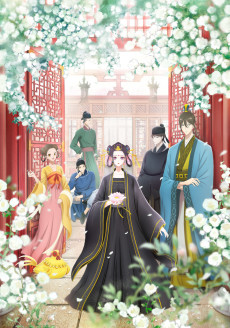
Raven of the Inner Palace
Deep within the inner palace lives a special consort who does not serve the emperor despite her position as a consort. She is known as the Raven Consort. People who have seen her say she looks like an old woman, while others say she looks like a young girl. Stories tell of her use of mysterious arts, and how she can take on any request, be it death curses or finding lost things. Koushun, the current emperor, goes to visit the Raven Consort with that intention. Without knowing that their fated meeting will become a taboo that will overturn history.
(Source: Shikkarito)
📺Anime Details
📝Editorial Analysis
The lantern light doesn’t flicker—it holds, suspended in the still air of the inner palace corridor, as Koushun steps past silk screens that whisper with the weight of unspoken histories. His sandals don’t echo. The silence isn’t empty; it’s charged, like breath held before a verdict. And then—there she is: the Raven Consort, neither young nor old, her face shifting at the edge of perception, her hands resting on a lacquered box that hums faintly with something older than dynasties. No music swells. No wind stirs the ink-brushed scrolls lining the walls. Just presence—dense, ancient, inescapable.
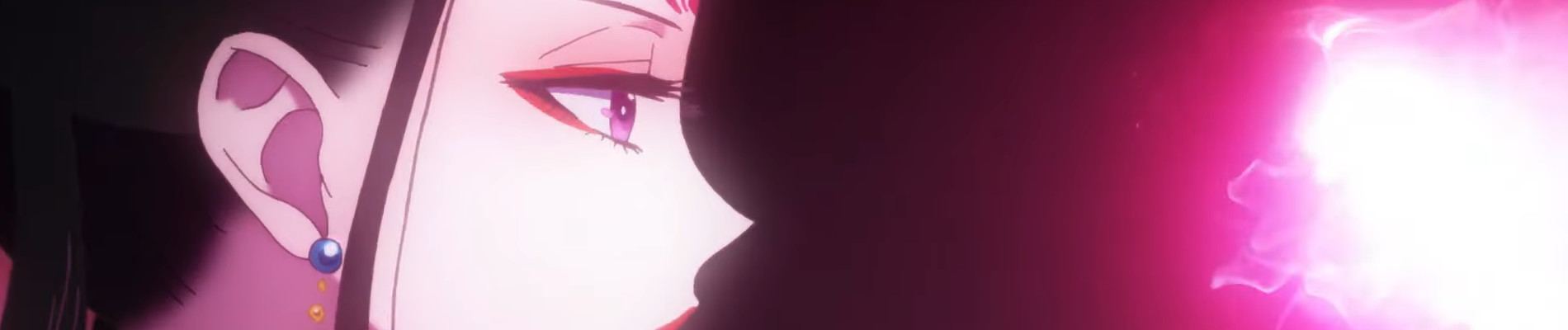
That silence isn’t absence. It’s accumulation. Raven of the Inner Palace doesn’t trade in spectacle or escalation—it trades in resonance. Every episode settles like dust on an altar: slow, deliberate, thick with implication. You don’t solve mysteries here—you inhabit them. The fantasy isn’t in fireballs or flying swords, but in the quiet certainty that every lost thing, every death curse, every whispered rumor carries its own gravity, its own moral weight. This is historical drama stripped of pageantry, supernatural fiction drained of flash—what remains is dignity, distance, and the aching weight of responsibility carried by someone who sees too much, speaks too little, and endures everything. It makes you feel like a guest in a temple where even your thoughts must bow.
That emotional DNA pulses strongest in Disco Elysium - The Final Cut, where the city of Revachol doesn’t just host a mystery—it is the mystery, layered with ideology, decay, and unbearable self-awareness. Like the Raven Consort, the detective is a vessel for forces larger than himself: memory fractures, political dogma, and the sheer exhaustion of bearing witness. The player review nails it: “Capital has the ability to subsume all critiques into itself.” That same suffocating, inescapable systemic weight lives in the palace walls—the way power isn’t seized, but settled, like sediment, and how truth isn’t uncovered, but unpeeled, layer by fragile layer. Both refuse catharsis. Both ask you to sit with discomfort until it becomes familiar.
Then there’s Assassin's Creed™: Director's Cut Edition, where the player moves across Jerusalem not as a conqueror, but as a witness in motion. The description calls it “melancholic exploration”—and yes, that’s the key. You scale minarets not for victory, but to see: the sun bleaching stone, the murmur of markets below, the quiet despair in a beggar’s eyes. Like Koushun walking the palace halls, you’re never quite in the world—you’re alongside it, haunted by its textures, its silences, its unresolved tensions. The player review admits the models are dated—but that very roughness deepens the melancholy, just as the anime’s restrained animation makes every glance from the Raven Consort land like a stone dropped into still water.
And BioShock™, with its “body horror & occult” dimension, shares something darker but equally vital: the horror of systems wearing human faces. Rapture isn’t ruined by monsters—it’s undone by its own logic, its own promises twisted into grotesque flesh. The Raven Consort operates in a similar architecture: necromancy isn’t gothic spectacle here—it’s bureaucratic, solemn, woven into the palace’s daily rhythm like incense smoke. The player review calls it “revolutionary”—not for its guns, but for how it makes ideology visceral. So does the anime: when a death curse is delivered, it’s not magic as power—it’s magic as consequence, as contract, as collateral. The horror isn’t in the blood, but in the calm acceptance of what must follow.
This pairing sings for the viewer who watches K-On! and feels restless—not because it’s light, but because it’s unburdened. They’re the ones who replay Shadow of the Colossus not for the battles, but for the hollow wind across the plains afterward. They linger in the pause between dialogue lines, savor the weight of untranslated kanji on a scroll, replay a BioShock audio log three times just to hear the tremor in the voice. They don’t want answers—they want atmosphere with teeth, stories that settle in the ribs and stay. Not escapism. Resonance. Not resolution. Recognition.
🎮38 Games That Match the Vibe













Match Dimensions Explained
❓Frequently Asked Questions
Why is Disco Elysium listed as similar to Raven of the Inner Palace when they’re set in completely different worlds?
Great question—it’s not about setting, but tone and structure: both lean hard into melancholic political intrigue where your protagonist (Detective Harrier Du Bois / Liang) uncovers layered conspiracies through dialogue-heavy investigation and morally ambiguous choices. The ‘Romance & Shoujo’ dimension shared with Raven shows up in Disco’s quiet, character-driven moments—like the tender, bittersweet scenes with Kim Kitsuragi or the haunting conversations in the Whirling-in-Rags tavern.
Is there an anime or live-action adaptation of Raven of the Inner Palace that fans of Assassin’s Creed: Director’s Cut Edition might enjoy?
No official adaptation exists yet—but if you love Assassin’s Creed’s blend of historical melancholy, rooftop traversal, and slow-burn political tension (especially Altaïr’s quiet isolation in Jerusalem’s sun-bleached alleys), the *Raven* anime nails that same vibe: Liang’s silent, observant movement through palace rooftops and shadowed corridors feels like a direct spiritual cousin to AC’s parkour-driven world-building and atmospheric dread.
How does BioShock compare to Raven of the Inner Palace in terms of body horror and occult themes?
BioShock leans into visceral, grotesque body horror—think splicers mutating mid-fight or the chilling reveal of Andrew Ryan’s ideology made flesh—while Raven uses subtler, more elegant occult symbolism: ink-based spirit binding, paper talismans that bleed when broken, and Liang’s own body becoming a vessel for ancestral memory. Both score high on ‘Body Horror & Occult’, but BioShock shocks with spectacle; Raven unsettles with restraint—like how the ‘Crimson Ink’ mechanic mirrors BioShock’s ADAM addiction, turning power into slow self-erasure.
What’s the best game like Raven of the Inner Palace if I’m craving that quiet, poetic loneliness and palace-scale exploration?
Prince of Persia (2008 reboot) is your perfect match—especially its mist-laced gardens, crumbling ziggurats, and the Prince’s wordless, graceful acrobatics echoing Liang’s silent, deliberate movement through forbidden halls. The shared ‘Melancholic Exploration’ and ‘Romance & Shoujo’ dimensions shine in moments like the Prince and Elika’s unspoken trust during gravity-defying leaps—or when Liang traces calligraphy on moonlit shoji screens. It’s less about combat, more about presence, poetry, and space.