BLAME!
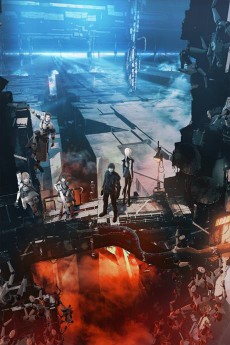
In the distant technological future, civilization has reached its ultimate Net-based form. An "infection" in the past caused the automated systems to spiral out of order, resulting in a multi-leveled city structure that replicates itself infinitely in all directions. Now humanity has lost access to the city's controls, and is hunted down and purged by the defense system known as the Safeguard. In a tiny corner of the city, a little enclave known as the Electro-Fishers is facing eventual extinction, trapped between the threat of the Safeguard and dwindling food supplies. A girl named Zuru goes on a journey to find food for her village, only to inadvertently cause doom when an observation tower senses her and summons a Safeguard pack to eliminate the threat. With her companions dead and all escape routes blocked, the only thing that can save her now is the sudden arrival of Killy the Wanderer, on his quest for the Net Terminal Genes, the key to restoring order to the world.
(Source: Official Website)
📺Anime Details
📝Editorial Analysis
The silence hits first—not absence of sound, but the weight of it: a low, subsonic thrum vibrating through steel girders taller than mountains, dust motes drifting in shafts of light that haven’t touched ground in centuries. Killy stands motionless on a rusted maintenance catwalk, his black coat flapping in a wind with no source, staring down into a chasm where city tiers vanish into absolute black—no floor, no horizon, just recursive geometry folding inward like a wound that never scabs. His rifle is cold. His breath is shallow. There is no music. No voiceover. Just the hum, the rust, and the slow, inevitable click-clack of something metallic climbing the far wall—unseen, unhurried, inevitable.
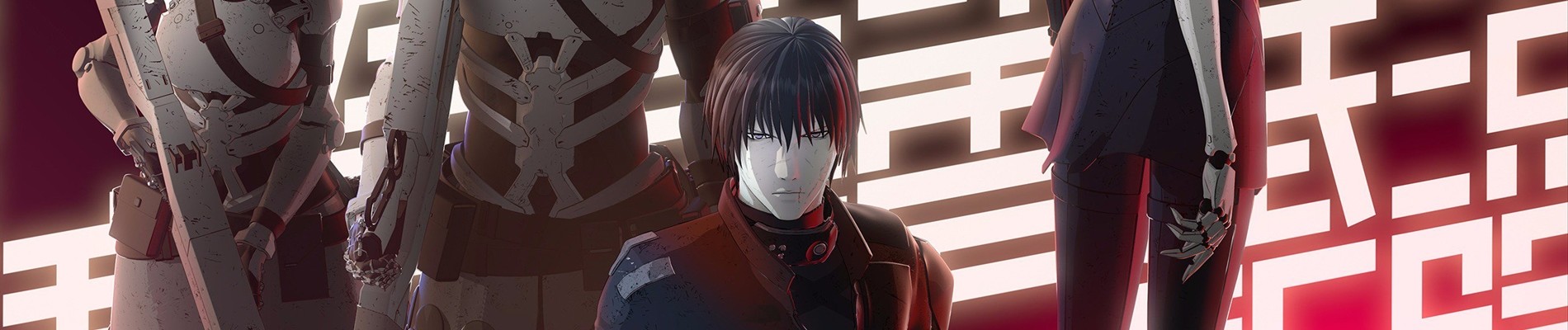
That’s BLAME!’s atmosphere—not dread as jump-scare adrenaline, but cosmic exhaustion. It makes you feel small, not in scale alone, but in significance: a single neuron firing in a brain too vast to comprehend itself. You don’t question if the Safeguard will find you—you wonder why it bothers. The horror isn’t gore (though the gore is clinical, precise, wet), it’s ontological erosion: humanity reduced to genetic fragments, memory stripped to biological noise, language dissolved into error codes. The city isn’t ruined—it’s functional, horrifyingly so. Its logic is alien, indifferent, self-perpetuating. You don’t survive against it—you persist inside its blind, humming metabolism. That’s the feeling: profound isolation inside infinite system.
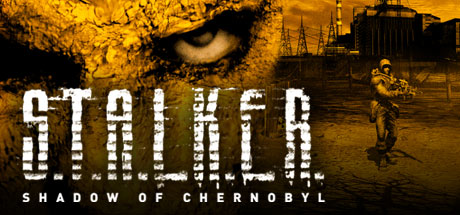
S.T.A.L.K.E.R.: Shadow of Chernobyl resonates because its Zone isn’t just dangerous—it’s alive in the wrong way. Like the Megastructure, it replicates, mutates, and punishes intrusion not out of malice, but protocol: radiation blooms like corrupted data; anomalies warp physics like faulty node-linking; the very air feels surveilled, judged. The player review nails it: “you fear not only the radiation, anomalies and deadly creatures, but other S.T.A.L.K.E.R.s”—because threat isn’t centralized. It’s ambient, systemic, layered. Just like Killy navigating decaying transit tubes while Safeguard drones phase through walls without warning, the player in the Zone turns a corner and finds a blood-soaked campsite not from combat—but from something else having passed through hours earlier. The map isn’t big—it’s deep, vertically and psychologically, echoing BLAME!’s endless stacking of dead zones and false exits.
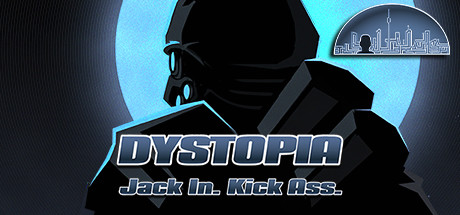
Dystopia, though now largely unplayable online, shares BLAME!’s adult, dark seinen texture—not in tone alone, but in architecture-as-antagonist. Its description cites “a high-tech world spanned by computer networks,” where combat isn’t about heroism but negotiated trespass: Punk mercenaries breach corporate firewalls like Killy breaches security gates, each corridor a potential kill-box governed by unseen logic. The player review’s wistful “Not a bad mod” carries that same melancholy—of systems built for purpose, now hollowed out, running on inertia. Both treat tech not as tool or toy, but as environmental law: you don’t hack the network—you navigate its consequences, step by step, bullet by bullet, in spaces designed to forget you existed.
Warhammer 40,000: Dawn of War - Anniversary Edition lands harder than expected—not for its space marines or orks, but for its scale of decay. Its description calls it “blood-soaked,” yes, but more crucially, it’s a real time strategy game where cities aren’t backdrops—they’re contested, crumbling infrastructure nodes. You don’t command armies on a map; you fight within cathedral-sized reactors and orbital slag heaps that feel grown, not built—like the Megastructure’s forgotten service levels. The player review’s focus on “DLC” and “modern PC” issues ironically mirrors BLAME!’s core tension: legacy systems, abandoned upgrades, interfaces that no longer speak your language. Victory here isn’t triumph—it’s temporary stabilization in a machine grinding toward entropy.
This pairing isn’t for fans of slick cyberpunk aesthetics or power-fantasy shooters. It’s for the person who watches Killy reload in silence for twelve seconds and feels relief, not boredom—who replays the Zone’s Cordon just to hear the wind whistle through collapsed reactor domes, who boots up Dawn of War not for conquest, but to stare at a ruined manufactorum spire piercing toxic clouds, knowing nothing up there answers. They love the heaviness of existence inside broken gods. They don’t seek escape. They seek recognition: that yes, the hum is real, the rust is deep, and sometimes, the most human thing you can do is walk forward—slow, quiet, and utterly, terribly aware.
🎮53 Games That Match the Vibe

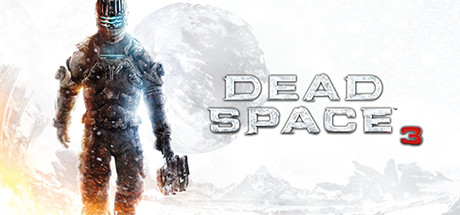


















Match Dimensions Explained
❓Frequently Asked Questions
Why does S.T.A.L.K.E.R. keep showing up in 'Games Like BLAME!' lists?
Because the Zone’s oppressive, decaying megastructure—full of silent ruins, invisible anomalies, and that constant dread of being watched—hits the same existential loneliness as BLAME!’s Megastructure. You’re not just fighting mutants or bandits; you’re navigating a sentient, indifferent environment like Killy does, with gear scavenged from dead stalkers and lore buried in PDA logs—just like finding fragmented data logs in BLAME!’s abandoned sectors.
Is there a BLAME! anime or game adaptation I can actually play right now?
No official BLAME! video game adaptation exists—but Dystopia (a Half-Life 2 mod) is the closest playable experience: it drops you into a grim, neon-drenched cyberpunk city where corporate enforcers and punk hackers duel in claustrophobic server rooms and rain-slicked alleyways, echoing the visual tone and adult, dark seinen weight of BLAME!’s world—though it’s technically a mod with dead multiplayer servers.
How does RAGE compare to S.T.A.L.K.E.R. for BLAME! fans who love atmospheric decay over car combat?
RAGE leans hard into explosive vehicle mayhem and vibrant wasteland set-pieces—think desert dunes and mutant brawls—not the quiet, suffocating dread of BLAME!’s endless corridors. S.T.A.L.K.E.R., on the other hand, nails that vibe: its Chernobyl Exclusion Zone feels like a living, breathing Megastructure fragment, where every rusted crane, flickering terminal, and anomaly-laced fog bank mirrors Killy’s lonely traversal through forgotten infrastructure.
What’s the best BLAME! alternative if I want that ‘wandering alone in a dead god-machine’ mood?
S.T.A.L.K.E.R.: Shadow of Chernobyl is your top pick—it’s got that same haunting scale and silence, where you’ll spend minutes just walking past collapsed reactor halls and abandoned labs, listening to Geiger clicks and distant howls, much like Killy moving through derelict sectors. Its 82 Metacritic score and player praise for ‘a big and beautiful’ map full of environmental storytelling make it the most resonant match for that specific, meditative isolation.