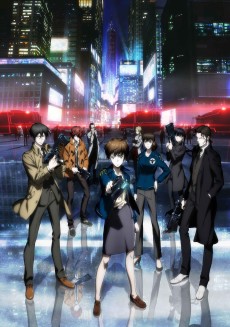
PSYCHO-PASS 2
Taking place one-and-a-half years after Psycho-Pass, having learned the true nature of the Sibyl System, Akane Tsunemori chose to obey the system, believing in both humanity and the legal order. She's part of a new police section and spends her everyday life facing down criminals. Unbeknownst to Akane, however, a monster who will shake the system to its core is about to appear before her.
(Source: Anime News Network)
📺Anime Details
📝Editorial Analysis
The fluorescent hum of the city never stops—not even at 3:47 a.m., when Akane Tsunemori stands alone in the observation deck of Division One, watching rain smear neon kanji across bulletproof glass. Her hand rests lightly on her Dominator, not drawn, not holstered—just there, warm from her grip, humming with latent authorization. She doesn’t flinch when the Sibyl System’s voice chimes softly in her earpiece, reciting crime coefficients like scripture. She breathes. She waits. Not for justice. Not for answers. For the next fracture in the silence—the one that proves the system isn’t flawless, just patient.

That stillness is what makes PSYCHO-PASS 2 ache so deeply. It’s not the gore—not the splatter of a decomposed corpse in a ventilation shaft, not the clinical disintegration of a latent criminal—but the weight before the trigger pull. It’s the dread of consent: choosing to uphold a law you know is built on harvested brains, anonymized guilt, and silent, surgical erasure. This isn’t paranoia—it’s exhaustion. The kind that settles behind your eyes after reading case files where victims scored “low risk” and perpetrators “stable,” yet bodies pile up anyway. You don’t feel hunted. You feel complicit, even when you’re holding the badge. And that complicity is quiet, inescapable, and inescapably adult—no coming-of-age arcs, no redemption montages, just Akane’s steady gaze meeting yours across the screen, asking nothing but whether you’d do the same.
That emotional gravity resonates sharply with Culpa Innata, whose World Union promises “prosperity as science” while hiding rot beneath sterile surfaces. Like Akane navigating Tokyo’s gleaming precincts, the player walks corridors of impossible order—only to find every door locked, every archive redacted, every “perfect society” humming with the same low-frequency lie. A player review calls it “run, run, run”—and yes, the fatigue is real, but it’s the same fatigue: the exhaustion of moving through systems designed to exhaust inquiry. You don’t sprint toward truth; you slog through bureaucratic labyrinths where logic curdles into absurdity—and that’s not gameplay friction. That’s tone as texture.
Then there’s Nikopol: Secrets of the Immortals, where France in 2023 bows to a “religious dictatorship” and a pyramid ship hangs over Paris like a judgment no one asked for. Its first-person perspective forces intimacy with decay—crumbling facades, whispered dissent in alleyways, cutscenes where light doesn’t illuminate but exposes. A reviewer notes how the “cyberpunk atmosphere gives it a nice vibe”—but it’s not nice. It’s suffocatingly coherent: faith weaponized as control, technology draped in ritual, rebellion dressed in myth. Just like Akane interrogating a suspect who quotes scripture and Sibyl’s diagnostic reports in the same breath, Nikopol makes ideology feel architectural—something you bump your head against, not argue with.
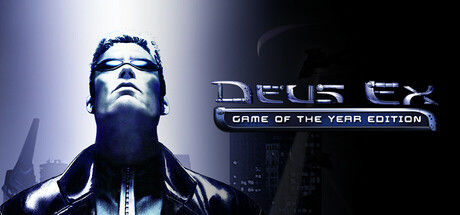
And Deus Ex: Game of the Year Edition—2052, economies collapsing, conspiracies older than memory—lands with the same gut-level recognition. Its opening doesn’t show guns or explosions. It shows you choosing your augmentations: not “what power do I want?” but “what part of myself am I willing to outsource to survive?” That mirrors Akane’s quiet daily bargain: her empathy, her doubt, her grief—all folded neatly into the system’s operational parameters. A player praises how the game “gives you all options with one hit of the esc key”—but the horror isn’t in the menu. It’s in realizing all options are already pre-approved by someone else. Like Akane’s Dominator, Deus Ex’s interface doesn’t liberate. It certifies.
These aren’t matches because they share “cyberpunk” or “dystopia” as aesthetic tags. They share the feeling of being professionally disillusioned: the detective who knows the file is falsified but must sign it anyway; the agent who upgrades their neural lace while wondering if the upgrade just made them easier to audit; the woman standing at the window, rain blurring the city’s perfect grid, thinking not about escape—but about how long she can hold this line before the line holds her.
This is for the viewer who watches Akane blink slowly after a clean arrest and feels that blink in their own throat. For the player who pauses mid-dialogue tree in The Longest Journey, not to pick a path—but to stare at April Ryan’s tired hands, remembering how often choosing means choosing which lie to sustain. For anyone who’s ever nodded along to authority while quietly memorizing its contradictions. Not because they crave revolution—but because they recognize the terrible, beautiful weight of staying awake inside the machine.
🎮82 Games That Match the Vibe



































Match Dimensions Explained
❓Frequently Asked Questions
Why does Culpa Innata keep coming up in PSYCHO-PASS 2 game recommendations?
Because both dive deep into a 'perfect' dystopia where social control masquerades as utopia—Culpa Innata’s World Union literally quantifies human worth like the Sibyl System, and its detective-driven narrative forces you to interrogate suspects while navigating morally gray surveillance states. The dark seinen tone, cyberpunk visuals, and heavy focus on systemic corruption (not just individual villains) mirror PSYCHO-PASS 2’s arc with Shinya Kogami’s descent and the Sybil System’s chilling logic.
Is there a PSYCHO-PASS 2 video game adaptation?
No—there’s never been an official PSYCHO-PASS 2 game adaptation. The closest licensed titles are mobile games like PSYCHO-PASS: Mandatory Happiness (which covers Season 1), but nothing directly adapts the second season’s plot with Akane’s leadership crisis or the Bifrost conspiracy. So fans turn to tonally aligned games like Nikopol: Secrets of the Immortals, where you investigate a pyramid ship over Paris under a religious dictatorship—just as tense, morally ambiguous, and visually soaked in neon-drenched dread.
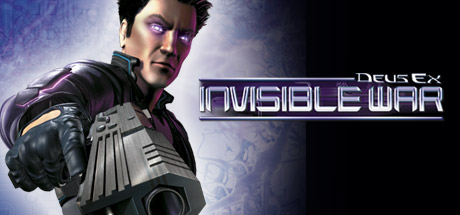
How does Deus Ex: Invisible War compare to Nikopol: Secrets of the Immortals for PSYCHO-PASS 2 vibes?
Nikopol nails the atmospheric dread and slow-burn political mystery—like when you’re piecing together the pyramid cult’s motives in Parisian alleyways, echoing PSYCHO-PASS 2’s layered conspiracies. Deus Ex: Invisible War leans harder into player agency and cybernetic identity crises (think Kazunari’s struggle with his own body), but its 20-year-later techno-nightmare setting lacks Nikopol’s tightly scripted noir pacing and visual storytelling—so if you want that ‘quiet tension before the system cracks’ feeling, Nikopol’s your pick.
What’s the best PSYCHO-PASS 2–like game if I want that ‘April Ryan questioning reality’ mood but with more cyberpunk grit?
The Longest Journey is *the* match—if you love April Ryan’s existential journey between parallel worlds, but crave sharper dystopian teeth, jump straight into its darker, grittier cousin: Deus Ex: Game of the Year Edition. Both hinge on a protagonist unraveling hidden systems (Sibyl vs. Majestic 12), but Deus Ex replaces April’s philosophical wonder with JC Denton’s augmented disillusionment—like when you hack a security terminal in Hong Kong’s smog-choked alleys and realize the ‘freedom’ you’re fighting for is already compromised.