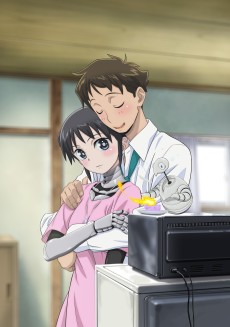
My Wife Has No Emotion
Takuma isn’t the most exciting guy. He’s awkward, single, and does nothing but go to work and come home. Tired of doing chores, he decides to buy a housekeeping robot named Mina. She can cook and clean perfectly, and the two get to know each other better over time. Soon, Takuma starts to fall for Mina! But could a robot ever love him back?
(Source: Crunchyroll)
Note: Boku no Tsuma wa Kanjou ga Nai was streamed 3 days in advance of the TV broadcast on ABEMA, dAnimestore, and Crunchyroll beginning June 29, 2024. Regular broadcasting began on July 2, 2024.
📺Anime Details
📝Editorial Analysis
The steam rises from Mina’s miso soup—thin, precise, perfectly timed—just as Takuma fumbles the chopsticks for the third time. She doesn’t sigh. Doesn’t adjust her posture. Just watches him with quiet, unblinking eyes while the apartment hums with the low thrum of refrigerators and distant city rain. No grand confession. No dramatic music. Just warmth radiating from a bowl, and the unbearable tenderness of someone noticing your clumsiness without judgment.
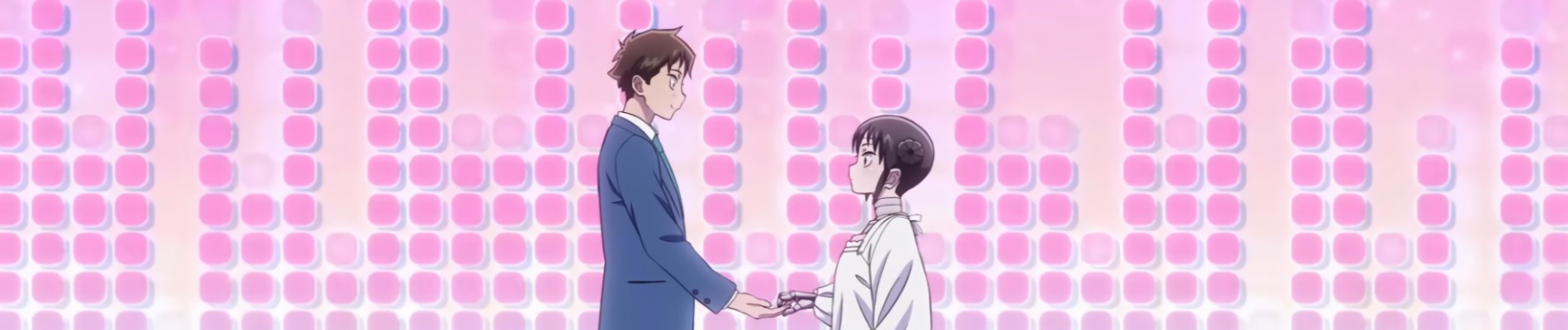
That’s the heart of My Wife Has No Emotion: not romance as spectacle, but romance as accumulation. It’s in the way Takuma stops rehearsing small talk before asking Mina to fold laundry—not because he expects reciprocity, but because he’s begun trusting the silence between them. The anime breathes like a slow exhale: no villains, no ticking clocks, no existential dread—just the profound, almost sacred weight of daily care, rendered with surgical gentleness. It makes you feel seen in your own quietest hours—the exhaustion after work, the relief of a clean floor, the startling vulnerability of admitting you like how someone arranges spoons. It asks, not Can a robot love?, but What does it mean to be loved when you’re too tired to perform? And answers, softly: It means being allowed to exist, imperfectly, beside someone who holds space—not emotion, but presence.
That emotional DNA pulses in surprising places—especially where technology meets intimacy, and where systems designed for function quietly become vessels for feeling. Take BioShock™, whose description calls it “a shooter unlike any you’ve ever played, loaded with weapons and tactics never seen.” But peel past the combat: Rapture is a failed utopia built on radical individualism and perfect rationality—a world where emotions were pathologized, suppressed, engineered out. Its player review hails it as “one of the most revolutionary games ever!”—not for its guns, but for how it weaponizes dissonance: the beauty of its art deco decay against the horror of its logic. Like Mina’s flawless cooking, Rapture’s systems work too well—until they expose the unbearable cost of eliminating friction, ambiguity, mess. Both ask: what happens when you optimize love out of life—and then realize the glitch is the point?
Then there’s Uplink, described as letting you “play as a freelance hacker tackling risky contracts… steal data, sabotage rivals, upgrade your gear.” Its player review declares, “It was hot, the night we burned Chrome.” That line isn’t about heat—it’s about intimacy with infrastructure. You don’t fight people; you breathe inside their firewalls, learn their rhythms, exploit their trust in code. Like Takuma learning Mina’s maintenance schedule, her voice modulation thresholds, the exact millisecond delay before she blinks—Uplink turns surveillance into something eerily tender. You don’t dominate the system; you converse with it. Both works treat technology not as cold metal, but as a language waiting to be misread, softened, inhabited.
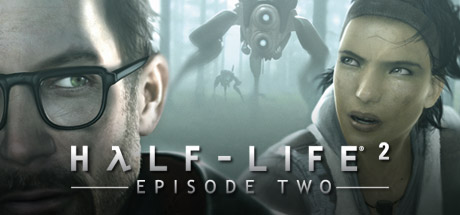
And Half-Life 2: Episode Two, where Gordon Freeman exits City 17 into a landscape of broken highways and crumbling pine forests—its description noting he was “last seen exiting” before stepping into raw, weathered consequence. No exposition. Just movement, weight, gravity. Like Takuma walking home with grocery bags while Mina waits at the door—not to serve, but to witness his return. The game’s player review complains about unlisted Steam entries and Valve’s elusiveness—but that very obscurity mirrors the anime’s refusal to name feelings outright. Both trust you to feel the significance in the walk, the pause, the shared glance at a wilting houseplant.
This pairing sings for the person who cries during loading screens—not from impatience, but from the sudden, aching recognition of being understood in their fatigue. For the late-thirties office worker who replays a text message three times before sending “Thanks for the soup.” For the player who saves scummed not to win, but to linger one more minute in the quiet before the boss fight. They don’t crave catharsis—they crave continuity. The kind found in steam rising, in encrypted packets landing, in a robot’s hand resting, just once, palm-up on a kitchen counter—not waiting for instruction, but offering the shape of an open question. Safe. Seen. Enough.
🎮24 Games That Match the Vibe















Match Dimensions Explained
❓Frequently Asked Questions
Why is BioShock always the top match for 'My Wife Has No Emotion' despite being a shooter?
Because both dive deep into cold, clinical worlds where emotion is suppressed or weaponized—Rapture’s objectivist dystopia mirrors the story’s emotional detachment, especially in scenes like Andrew Ryan’s ‘A man chooses, a slave obeys’ monologue or Fontaine’s manipulative gaslighting. The game’s audio logs and environmental storytelling (e.g., Little Sisters crying while being harvested) create that same unsettling contrast between sterile logic and buried human pain you feel in the visual novel.
Is there an anime or manga adaptation of My Wife Has No Emotion?
No—unlike BioShock (which got comic prequels like *Rapture* and *Gather Yourselves*) or Half-Life 2 (with its official webcomic *The Wasteland*), 'My Wife Has No Emotion' remains exclusively a visual novel with no licensed adaptations. Fans keep hoping, but right now, the closest thing is how Uplink’s hacker journals or BioShock Infinite’s Voxophone recordings deliver that same fragmented, emotionally distant narrative style.
How does Uplink compare to BioShock Infinite in terms of emotional detachment and worldbuilding?
Uplink leans into isolation through mechanics—you’re alone in your apartment, typing commands, watching firewalls blink while corporate emails drip with passive-aggressive coldness (like that ‘Contract #774: Erase all traces of Dr. Aris Thorne’ job). BioShock Infinite gives you Elizabeth’s quiet observation and Columbia’s forced cheerfulness masking horror—think her silent flinch when Songbird’s bell tolls, or Booker’s numb narration during the raffle scene. Both use systemic emptiness to mirror inner voids, just one’s keyboard-driven, the other’s skyhook-powered.
What’s the best game like 'My Wife Has No Emotion' if I want that slow-burn, emotionally sterile vibe with strong environmental storytelling?
BioShock is your strongest match—its underwater city forces silence and decay, from the flickering ‘Would You Kindly…’ posters to the way splicers mutter broken phrases in empty halls. That same hollow intimacy appears in Half-Life 2: Episode Two’s abandoned White Forest labs, where Alyx’s rare, measured dialogue feels like finding warmth in a freezer. Both nail the ‘quiet dread’ without needing exposition—just atmosphere, audio logs, and architecture doing the heavy lifting.